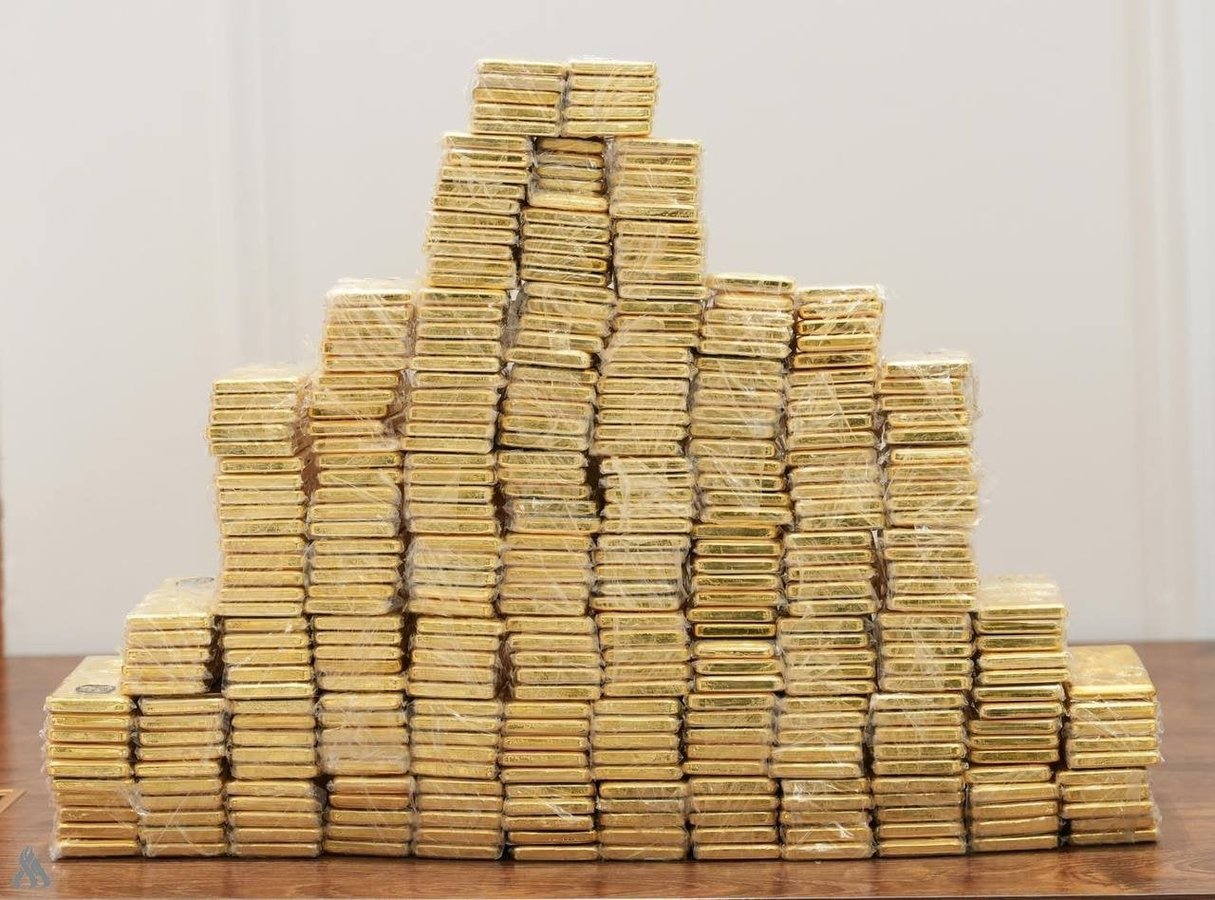

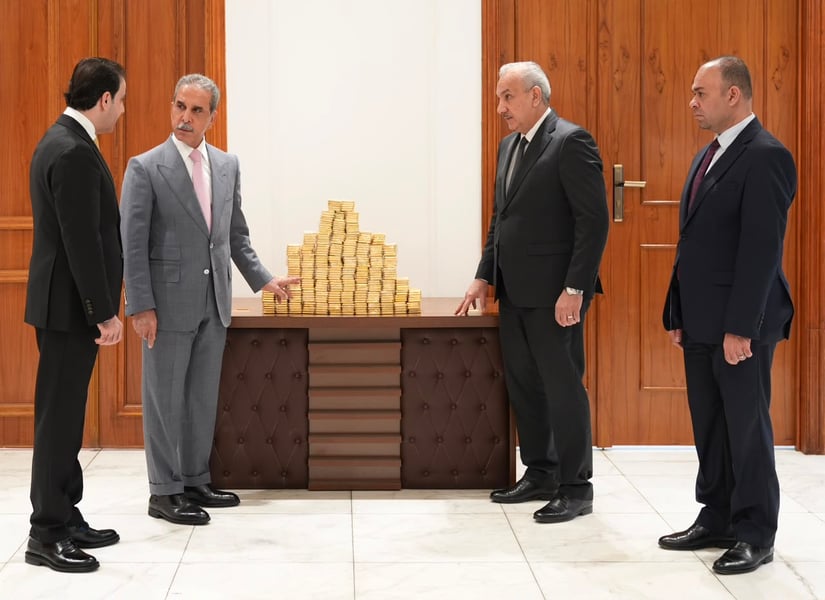
BAGHDAD – In a secured compound in Iraqi Kurdistan, authorities last week completed the transfer of 358 kilograms of gold bars to the Central Bank in Baghdad, the single largest financial seizure in the country’s modern history of corruption prosecutions. A separate cache of 17 kilograms was recovered through a parallel federal operation the same day, bringing the total to 375 kilograms of gold belonging to a single official.
Both seizures, confirmed Sunday by Iraq’s Supreme Judicial Council, are linked to Adnan Al-Jumaili, the country’s former Deputy Oil Minister, who was detained in May 2026 and formally dismissed from his post on June 2. The gold, valued at roughly $36 million at current market rates, represents only the most visually striking element of what prosecutors describe as a far larger pattern of misappropriation accumulated over years at the intersection of Iraq’s oil sector and state contracting.
The broader financial probe has uncovered an additional $96 million worth of Iraqi dinars, $24 million in foreign currency, multiple real estate properties across at least two governorates, a fleet of vehicles, and quantities of jewelry. Judge Dhia Jafar of the Supreme Judicial Council is overseeing the case. Al-Jumaili’s legal representatives have not issued a public statement. No trial date has been set.
The arrests and seizures are the sharpest results yet of “Operation Dawn,” the anti-corruption initiative launched by Prime Minister Ali Faleh al-Zaidi since taking office in May. Al-Zaidi came to power after years of parliamentary deadlock, running on an explicit promise to dismantle the patronage networks that have long diverted oil revenues away from public services. The Al-Jumaili case has given that promise its most concrete expression to date.
Haider al-Aboudi, the government’s chief spokesperson, framed Sunday’s announcement in terms designed to reach past procedural language. “The Iraqi street is looking forward to punishing those who wreaked havoc with public money,” al-Aboudi said in a formal government statement. The deliberate invocation of popular expectation rather than judicial procedure signals how the government is positioning the prosecutions: not as routine enforcement, but as a public settling of accounts.
The framing resonates in a country where the distance between oil wealth and daily life has become one of the defining political grievances. Iraq’s oil sector generates between $80 billion and $100 billion annually in government revenue, accounting for more than 90 percent of the state budget. Yet millions of Iraqis endure summer temperatures above 50 degrees Celsius with intermittent electricity, inadequate sewage treatment, and hospitals that report chronic shortfalls of basic supplies. Anti-corruption analysts have consistently identified revenue diversion and procurement fraud as primary drivers of the gap between what Iraq earns and what its citizens receive.
Al-Jumaili’s role as deputy oil minister placed him at a particularly sensitive junction in that system. The ministry oversees licensing agreements, international contractor payments, and procurement decisions for Iraq’s southern fields, which produce the bulk of the country’s output. Those decisions, across multiple successive governments, have attracted persistent allegations of inflated contracts, fictitious procurement, and direct kickbacks. Al-Jumaili has not publicly commented on the charges facing him.
The Kurdistan dimension of Sunday’s announcement adds complexity that official communications have not fully addressed. The 358-kilogram seizure was conducted through a joint operation with Kurdistan Regional Government authorities – a notably cooperative arrangement between Erbil and Baghdad in a domain where the two governments have historically operated at cross-purposes, particularly over oil revenue-sharing arrangements and resource control in disputed territories. Whether the coordination reflects a broader political alignment or was simply the product of where the assets were held is not clear from available information.
Al-Zaidi’s government has moved on multiple fronts simultaneously. Alongside the oil sector investigation, the prime minister has pursued a broader initiative to consolidate state authority and reduce the influence of armed factions operating outside the official military chain of command. Analysts have described this as an unusually assertive approach for a leader navigating Iraq’s fragile coalition politics. How far al-Zaidi can push Iraq’s reform agenda against entrenched interests remains the central uncertainty of his premiership.
Operation Dawn’s full scope remains officially undisclosed. The government has stated in broad terms that active probes extend beyond Al-Jumaili into other officials and sectors, without naming additional targets. Al Jazeera reported that the Supreme Judicial Council confirmed the gold’s transfer to the Central Bank and indicated investigations are ongoing. Observers who have followed Iraq’s previous anti-corruption campaigns note that the gap between arrest and conviction has historically been measured in years, and that early momentum has not always translated into sustained judicial action.
The gold is now in the Central Bank. Whether it marks the beginning of a genuine reckoning with Iraq’s entrenched oil sector corruption, or a vivid opening act whose final scenes remain unwritten, is the question Operation Dawn has not yet answered.