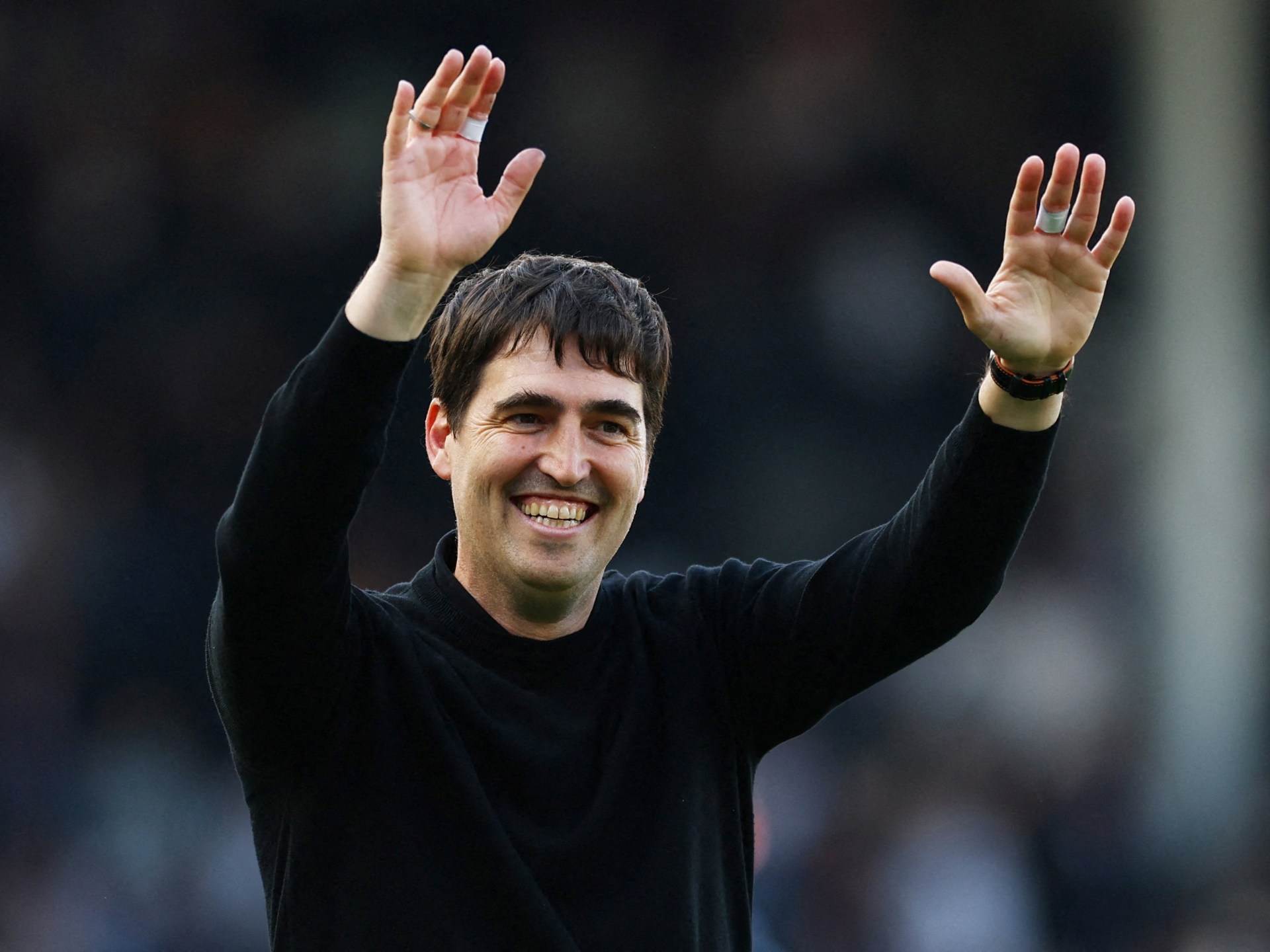
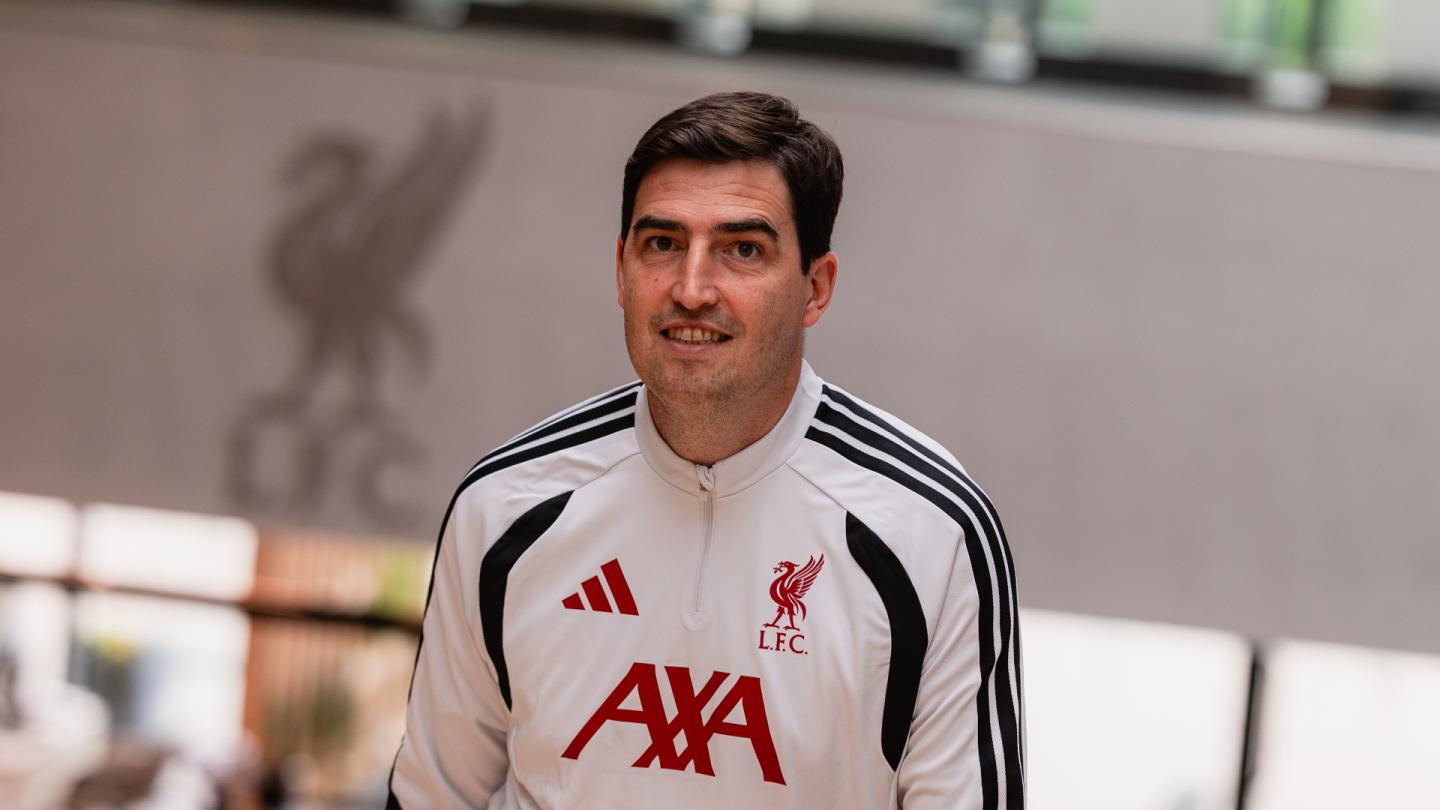
LIVERPOOL — He remembered a goal. Not a famous one, not one that had anything to do with Liverpool winning anything, but a last-minute strike from Federico Chiesa at the start of the 2025-26 Premier League season that sent Anfield into a frenzy when Iraola’s Bournemouth had thought, briefly, that they might escape with a draw. “The place erupted,” he said on Thursday, sitting at the AXA Training Centre in his first interview as Liverpool head coach. “It was crazy.” He has been on the wrong side of that noise. Now he wants to manufacture it.
Andoni Iraola, 43, was formally appointed as Liverpool’s new manager on Thursday, five days after Arne Slot’s dismissal ended a turbulent second season at Anfield. Liverpool offered no official confirmation of contract length, though British outlets reported a two-year deal. The Basque manager arrives after steering Bournemouth to a sixth-place Premier League finish and European qualification for the first time in the south coast club’s history — an achievement made more striking by the fact that he managed it while losing three elite defenders and two forwards in a single transfer window.
The appointment was quick because it was never really in doubt. Richard Hughes, Liverpool’s sporting director, had worked with Iraola at Bournemouth, and when Slot’s exit was confirmed last Saturday, the phone call came fast. “Obviously it helps a lot when on the other side of the table there is someone who you have already worked with,” Iraola told Liverpool’s official website. But he was careful to frame the decision around the institution rather than the personal connection. “In this case, I would say it’s about the club, it’s about Liverpool — it’s what really attracted me.”
Liverpool’s supporters spent much of Slot’s second season demanding a return to the pressing intensity that defined Jurgen Klopp’s nine years at Anfield — the German’s own description of his football as “heavy metal” became a phrase of longing rather than description, invoked by Mohamed Salah in the weeks before the Dutchman was dismissed. Iraola’s name has been attached to that inheritance since before Slot even arrived: the Basque manager was among the candidates considered before Klopp’s replacement was eventually confirmed in 2024. The fit, then, has been apparent for some time. What Thursday produced was the man himself explaining it, in his own words, for the first time.
“I have the advantage that I’ve been here already three years in the Premier League and people for sure have seen Bournemouth play,” he said. “There are some things that obviously we need to change coaching Liverpool. But I wouldn’t like to lose our identity — the intensity, the aggressiveness, the organisation. There are fundamentals that I also think match quite well what Liverpool has been during a lot of years.”
That convergence is not a coincidence. In the three seasons Iraola managed Bournemouth, the Cherries led the Premier League in shots created after winning the ball in the attacking third. Liverpool, in the same period, scored the most goals from high turnovers of any club in the division. Bournemouth had the fastest average upfield speed in the league; Liverpool finished 2025-26 leading all clubs in shots from fast breaks. The data suggests Iraola is not inheriting a foreign project — he is being handed a squad whose attacking instincts, at their best, already mirror what he has spent three years trying to build with far fewer resources.
What neither Iraola nor anyone else can yet say with certainty is how the style translates against the elite opposition that now comes every week rather than occasionally. Bournemouth played a high defensive line and an aggressive man-marking press. Against technically superior opponents, that system creates space in behind. Iraola’s two-year contract with Liverpool was widely read as a statement of shared philosophy rather than a transitional appointment — but the test of that philosophy begins against clubs that can exploit the risks his pressing system invites.
The FIFA World Cup, which begins in the United States this month and runs through July, offers an unexpected runway. A majority of Liverpool’s senior internationals will be absent until mid-summer, leaving the club’s pre-season American tour populated largely by academy players and loan returnees. Iraola described this not as a problem to manage but as a window he intends to use. “The young players that probably we don’t know as well — they will be an important part of the first part of pre-season,” he said. “Those trainings, those minutes will be very valuable for us to take decisions.”
His background shaped the architecture of that thinking. Iraola grew up in Usurbil, a small working-class town outside San Sebastian in Basque Country, and spent the majority of his playing career at Athletic Club — an institution defined, as Liverpool is, by a connection between club and community that extends beyond match days. “I have some experience with Athletic Club that I could in some ways familiarise,” he said, drawing the parallel carefully. The comparison is not about trophies. It is about the weight of what the badge means to people who will never play for either club.
His coaching journey began modestly. AEK Larnaca in Cyprus in 2018, a Cypriot Super Cup. Then Spain’s second division with Mirandes, promotion to La Liga with Rayo Vallecano, and eventually the Premier League with Bournemouth, where he arrived in 2023 to a squad that finished 12th in his first season and sixth in his third. The trajectory points upward, but Liverpool is a different order of magnitude. Slot’s farewell message to Liverpool supporters acknowledged the weight of the occasion but offered little explanation for a season that ended with the club 25 points behind champions Arsenal.
Iraola is aware of what that means. He was asked, near the end of his first interview, what he would say to Liverpool supporters watching around the world. “I cannot ask them for a lot. I know how they are. I can only say that I want to become one more of you.” The phrase was precise — not a promise about trophies, not a guarantee about style. A declaration of intent to belong, offered by a man who has spent three seasons coaching from the away end at a ground he now has to fill with something worth erupting for.
Whether he can deliver that remains to be seen. What the numbers and the interview both suggest is that the mismatch between Slot’s controlled, low-intensity approach and the club’s natural constitution was always the problem — and that whatever else Iraola turns out to be, a low-intensity manager is not it.