
PARIS — The number that has followed Alexander Zverev around every major tournament he enters is not found on a scoreboard. It is zero. Zero Grand Slam titles, despite three finals, despite a season record of 28 wins and just nine losses, despite being the last top-ten player standing in a draw that shed Jannik Sinner, Carlos Alcaraz and Novak Djokovic before the second week was done.
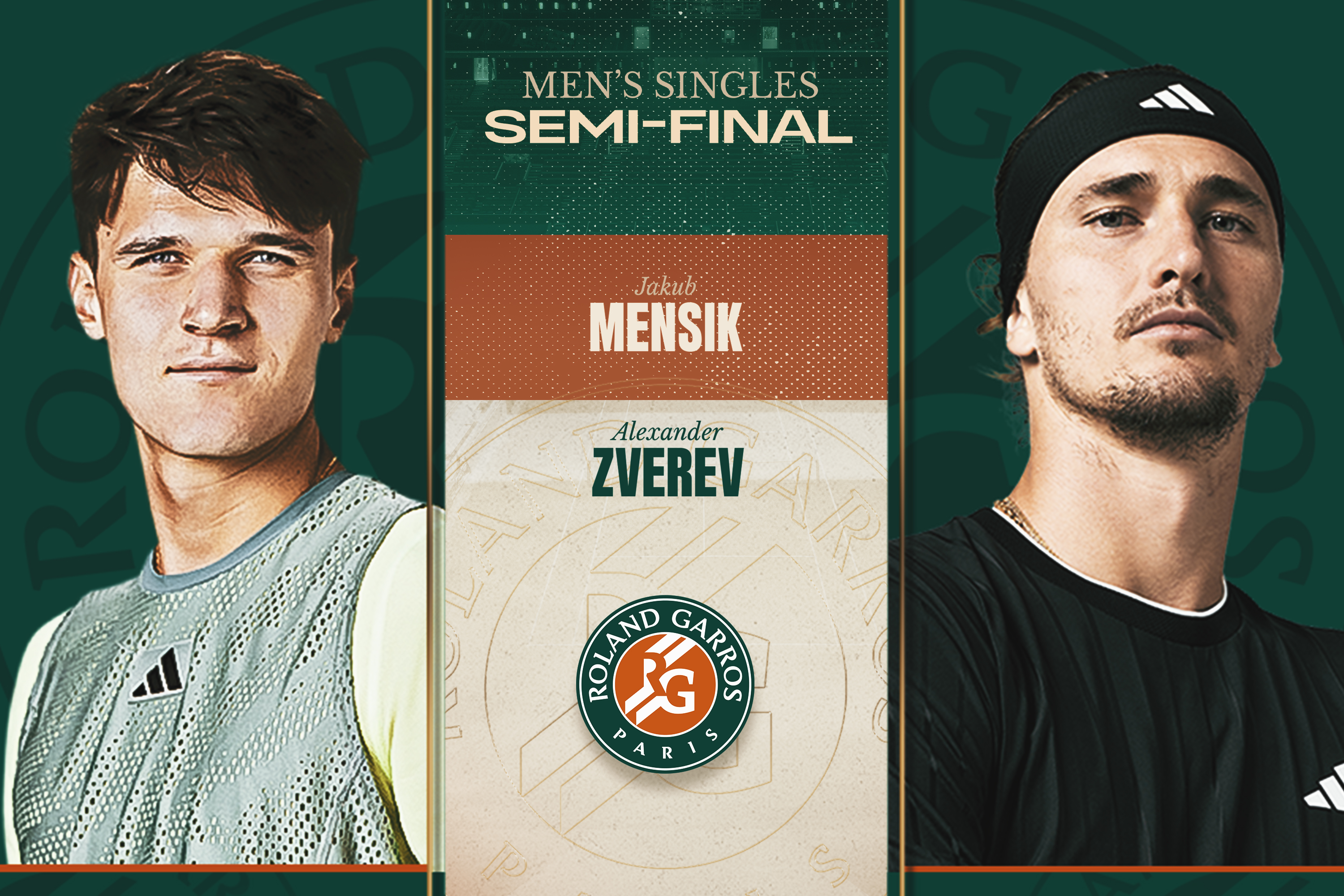
On Court Philippe-Chatrier on Friday, with 26th-seeded Jakub Mensik on the other side of the net, Zverev stepped into what could be his most consequential afternoon in tennis. He dropped the first set.
The Czech 20-year-old, whose Roland Garros campaign began with a five-hour second-round war against Mariano Navone that ended with him staggering off court surrounded by medics, has turned physical and mental adversity into something resembling a competitive method. He won that match. He then came back from two sets up against Andrey Rublev, lost the momentum, and forced a fifth. Won that too. In Tuesday’s quarterfinal against João Fonseca, he survived six match points in a tiebreak before finally closing it out. “I kept the momentum on my side,” Mensik said afterward. “The last 20, 30 minutes of the match, it was just really insane the level from both of us.”
Zverev’s path to this semifinal has looked nothing like that. The German, ranked third in the world, dropped just one set in five matches. He is attempting to reach his fifth final at this specific tournament — he lost to Carlos Alcaraz here in 2024 in five sets, having led in the fifth — and his fourth Grand Slam final overall. His record in those three finals reads: finalist, finalist, finalist.
The two played once this year, in Madrid in April, where Zverev won 6-4, 6-7(4), 6-3. Mensik took note. “I’m excited and I’m happy we played in Madrid so I could catch some rhythm and get to know him a little bit on the court,” the Czech said before the match. Zverev, asked what he needed to do, gave an answer that sounds simple only until you consider its implications. “I think I really have to trust my game,” he said. “If I play well, then I think that’s 99 per cent of the work.”
The other one per cent has a name. It is the Grand Slam final, and the road to it through Mensik.
Through five matches, the numbers tell an intriguing story about each player’s game. Mensik has produced 249 winners but also 264 unforced errors — a high-risk, high-reward baseline game that has worked, mostly. Zverev’s totals are tidier: 211 winners and just 156 unforced errors, a measured tempo that fits red clay. On break points, Zverev has converted 25 of 55 opportunities, a 45.5 per cent clip. Mensik created more — 77 break point chances — but converted 25 of them for 32.5 per cent. He finds the door, then occasionally hands back the key.
The second semifinal on Chatrier, scheduled for no earlier than 7 p.m. local time, will write its own chapter regardless of who wins it. Tenth-seeded Flavio Cobolli and Matteo Arnaldi will contest the first all-Italian men’s semifinal in Grand Slam history. It follows a year in which Roland Garros already staged an all-Italian last four — Sinner and Lorenzo Musetti both reached the semifinals in 2025, though on opposite sides of the draw. Friday’s match is different. The two Italians are in the same half, and one of them will reach Sunday’s final.
The draw was not supposed to look like this. Sinner came to Paris on a 29-match winning streak, having finished last year’s Roland Garros final against Alcaraz one point shy of the title. He is absent now, knocked out by Francisco Cerundolo in one of the more shocking early-tournament upsets of the clay season. Musetti did not return due to injury. That left a path wide open for players further down the rankings, and Cobolli and Arnaldi have walked through it.
Cobolli, 24, has lost only two sets in five matches this fortnight. He defeated fourth seed Felix Auger-Aliassime in four sets in the quarterfinals, his biggest win at a major. Arnaldi, ranked 104th in the world, has been a different story entirely — grinding five-set battles that have left him with the most court time of any player remaining in the draw. He has spent more than 17 hours on court to reach this stage, a figure extraordinary even by Roland Garros standards for attrition. He advanced past compatriot Matteo Berrettini in the quarterfinals when Berrettini retired due to a left hip injury, with Arnaldi leading 7-5, 5-2 in the second set.
Their head-to-head record stands at 1-1. Cobolli won the most recent meeting, at this same tournament last year. They come from the same sport, the same country, and have had entirely different routes through this one.
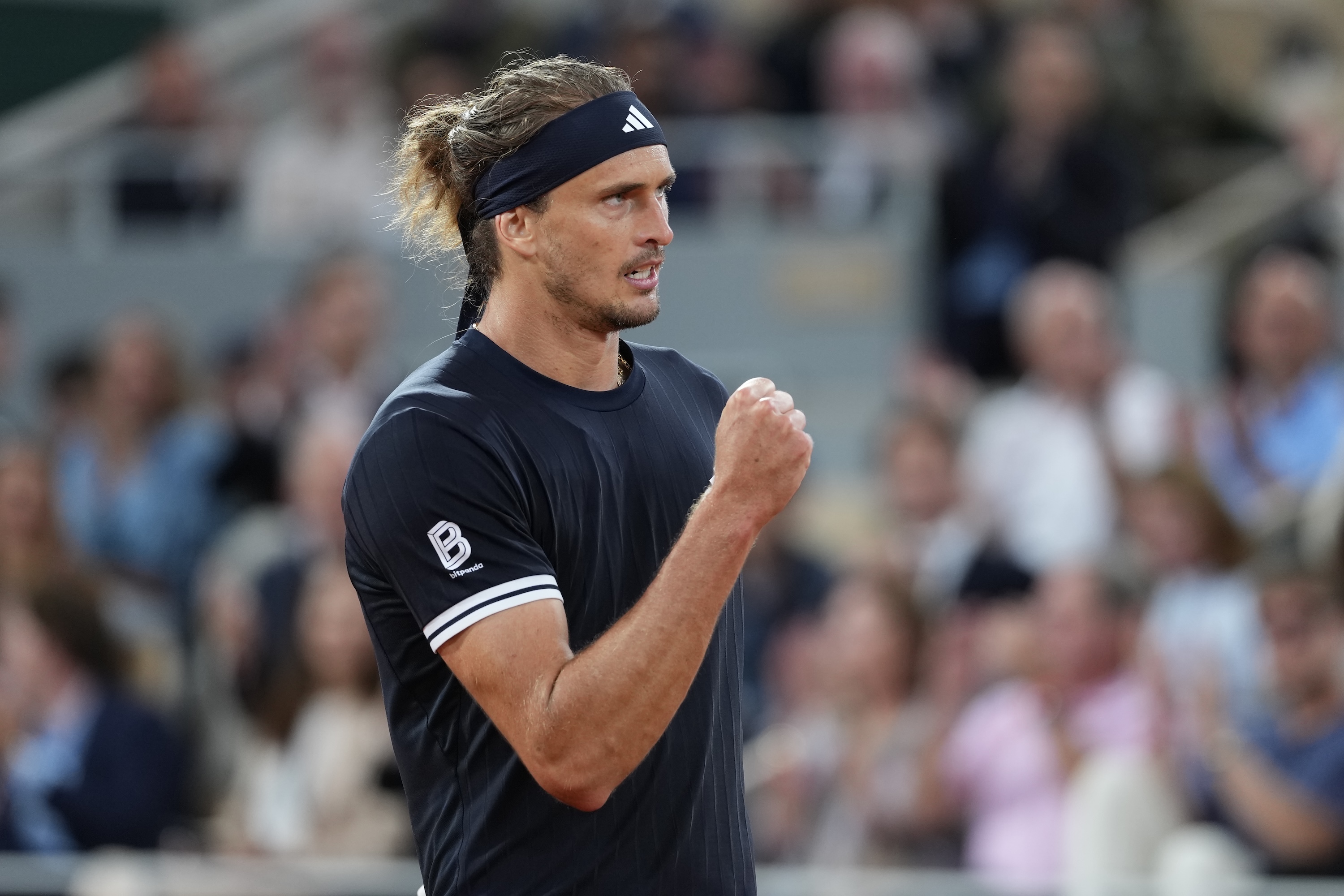
What none of the three challengers shares with Zverev is Grand Slam final experience. The German is the only player among the four semifinalists who has stood in a major championship match. Cobolli, Mensik and Arnaldi are all here for the first time. That gap cuts two ways — the pressure of the occasion can expose inexperience, or it can liberate a player who arrives with nothing to lose and no scar tissue. Mensik, who collapsed on the court in the second round and still found his way to the last four, seems to have absorbed that lesson already.
The tournament has delivered surprises at every turn. The women’s draw saw Ukraine produce historic results when Mirra Andreeva and Marta Kostyuk both reached the semifinals in the same edition. On Thursday, Maja Chwalinska became the first qualifier to reach a Roland Garros final in the professional era, defeating Shnaider to complete one of the tournament’s more improbable runs. The men’s draw has kept pace.
There is one more detail about the all-Italian semi that gives it weight beyond the head-to-head. It has been exactly 50 years since an Italian man won the French Open. Adriano Panatta claimed the title in 1976, and the French Tennis Federation asked him to present the Coupe des Mousquetaires trophy this year. Cobolli comes from the same Roman tennis club as Panatta — the Tennis Club Parioli. He may yet be asked to receive what Panatta is there to hand over.
The prize for reaching Sunday’s final is €1,400,000 and 1,300 ATP ranking points. For Cobolli, a place in the final also guarantees a debut in the top ten when rankings update on Monday. For Zverev, the prize is harder to denominate. He has been a finalist at three different Grand Slams and left all three without the trophy. This is the draw he needed — the one without Sinner, without Alcaraz, without Djokovic. He knows it. Everyone in Paris knows it.
Whether that knowledge helps or haunts him is the question that Court Philippe-Chatrier is currently in the process of answering.