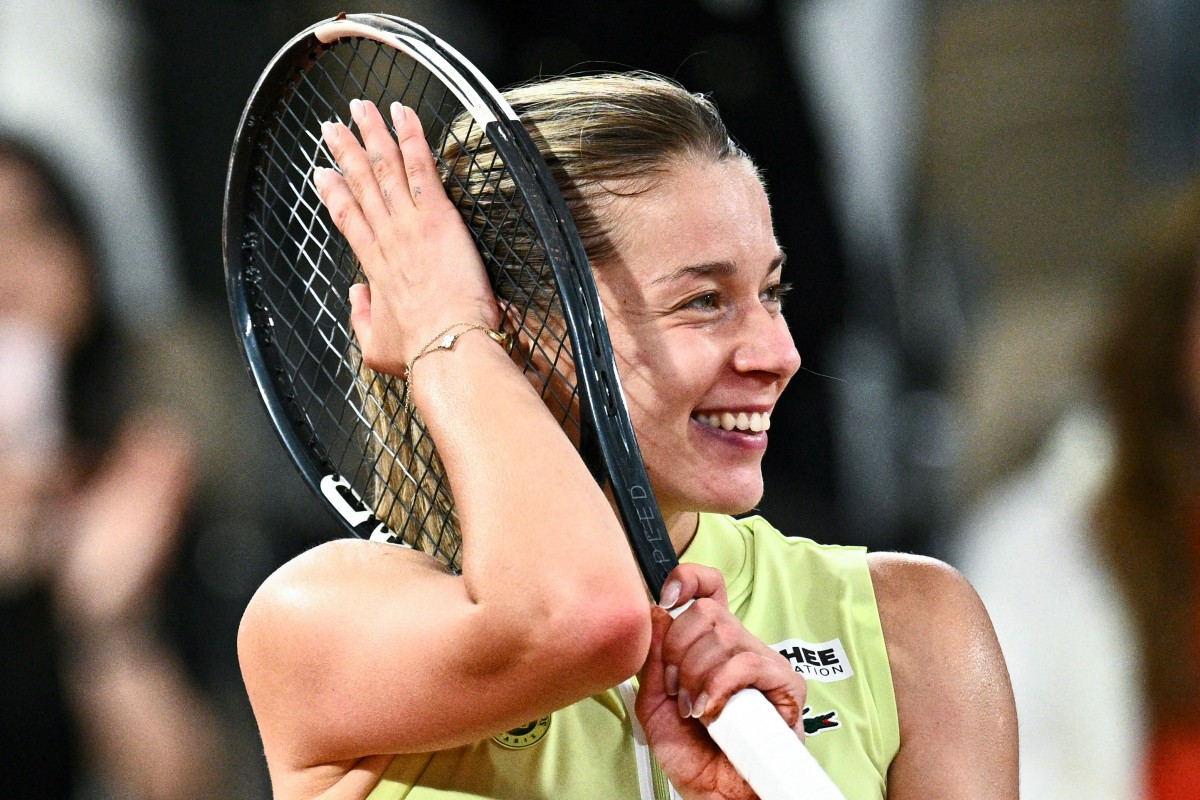
PARIS — The forehand came down the line with the kind of authority that ends arguments. When it landed, Maja Chwalinska let her racket fall, pressed both hands to her face and stumbled backward. For a long moment she just sat in her chair with a towel over her head, trying to locate a sentence. “Like a dream, honestly,” she managed. “I don’t know what’s going on.”
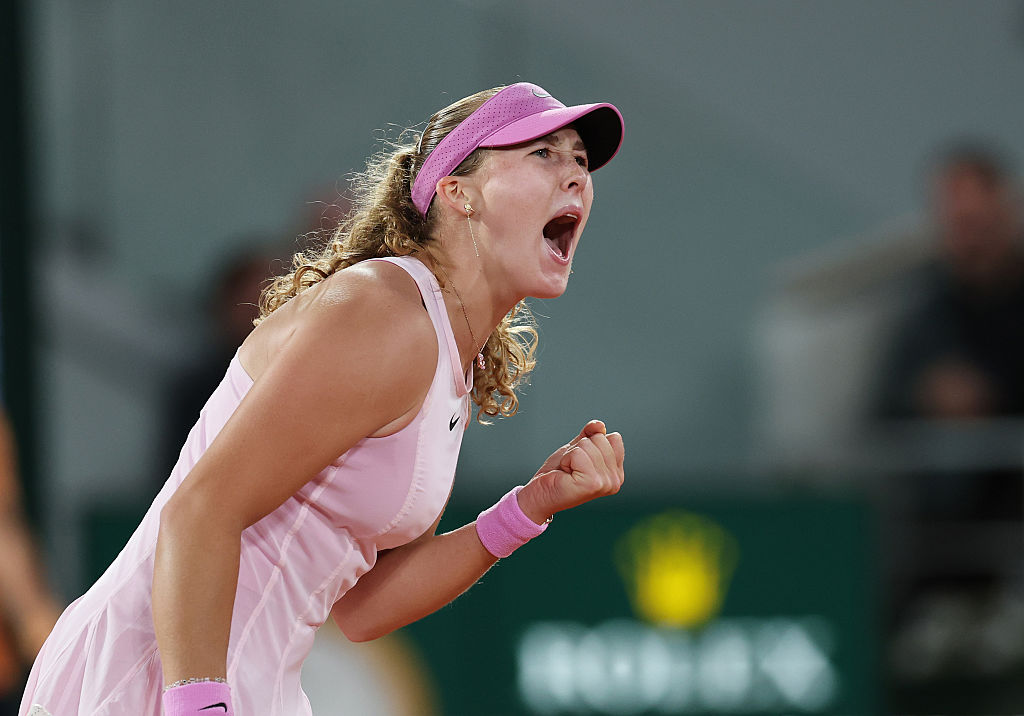
What was going on, statistically, had not happened at Roland Garros in the professional era. Chwalinska, ranked 114th in the world, a qualifier who had spent three rounds just earning the right to enter the main draw, beat Diana Shnaider 7-6 (4), 6-4 on Thursday to become the first player in history to reach the French Open final from the qualifying rounds. She will face Mirra Andreeva in Saturday’s championship match on Court Philippe-Chatrier.
According to stats provider Opta, as Al Jazeera reported, only one other player — Emma Raducanu at the 2021 US Open — has reached a Grand Slam singles final from qualifying in the Open Era. Raducanu did not stop there. She won the title without dropping a set. That precedent is, at this moment, the most dangerous piece of context Chwalinska carries into Saturday.
The comparison has structural limits. Raducanu was in New York. Chwalinska is in Paris, on clay, against a 19-year-old who has spent the better part of this fortnight dismantling opponents on this surface as efficiently as anyone in the draw. Andreeva defeated Marta Kostyuk 6-1, 6-3 in the other semifinal Thursday, winning in just 76 minutes, and entered the tournament with 20 clay-court wins in 2026 — more than any other player in the semifinals. The Russian is seeded eighth and has lost only one set across six matches in Paris.
But Chwalinska has lost one set in nine matches, including three qualifying rounds. That is the number that unsettles the conventional read of how this tournament was supposed to go.
She has beaten four players ranked inside the top 50 in the main draw. Shnaider, ranked 25th, had eliminated Aryna Sabalenka in the quarterfinals. Sabalenka lost 10 consecutive games in that match and told reporters she wanted to “quit tennis.” The win over Sabalenka was supposed to signal that the bottom half of the draw was Shnaider’s to close. Then Chwalinska walked out, won a tiebreak in the first set with a drop shot and lob sequence that had nothing to do with brute force, and held her nerve in the ninth game of the second set to serve out the match.
“All the kudos to Maja,” Shnaider said afterward. “She moves incredible on the court. She covers a lot. Even if you think that you won the point, she’s there.”
That is not the description of a lucky qualifier. It is the description of a player whose ranking has been a lagging indicator of something her game already knew.
A neat drop shot and lob had given her set point in the tiebreaker, and she clinched the first set when Shnaider’s backhand sailed wide. Shnaider called for a medical timeout after the seventh game of the second set, flexing her left leg as she lay on her back at the baseline. She dropped serve in the ninth game. Chwalinska served out the match on her first opportunity.
Polish tennis has a context for this moment. Iga Świątek has won the French Open four times. The country’s relationship with clay runs deep and its development system has produced at least one generational talent in the past decade. Chwalinska and Świątek have known each other since they were 10 years old — two players from the same country, the same surface, now on opposite ends of the tournament’s history.
Chwalinska’s ranking will jump from 114th to 14th if she wins Saturday, according to the WTA. Her total career prize money entering Roland Garros was $864,030. Reaching the final alone earns her 1.4 million euros. A title on Saturday becomes 2.8 million. Those numbers describe the distance between where she was two weeks ago and where she is now more precisely than any match score.
Before Paris, her best result at a Grand Slam was the second round at Wimbledon in 2022. She is 24 years old, playing only her third major. There is no obvious explanation for why this particular fortnight fell the way it did, which is the only thing that makes it fully believable as sport rather than as narrative construction.
What remains unresolved is whether Saturday holds. Andreeva is in form, on her best surface, at a tournament where she reached the semifinals two years ago as a teenager. She plays with the patience of someone who expects long points and wins them anyway. Chwalinska has not faced anyone at this level in nine matches. The argument that she should not be here is the same argument that has been wrong, consistently, for two weeks.
Qualifying for a Grand Slam final and winning it are different problems. Raducanu solved both in New York in 2021. How Chwalinska approaches the difference — whether as a player who has earned the right to be dangerous, or as one who has already exceeded every reasonable expectation — is the question Saturday’s match will answer, one way or the other.