PARIS — She walked off without turning back, pausing only to wave and blow kisses to a crowd draped in Ukrainian flags. There was no handshake. There was no joint photo with the ballkids. There was, by now, nothing unexpected about any of it.
Marta Kostyuk had just lost her first match on clay in nearly two months, eliminated from the French Open in straight sets by Russia’s Mirra Andreeva, and the absence of the customary net greeting made explicit what the tennis had already made uncomfortable: that for Kostyuk, competing against a Russian opponent at a Grand Slam is not a sporting occasion. It is a negotiation with conscience.
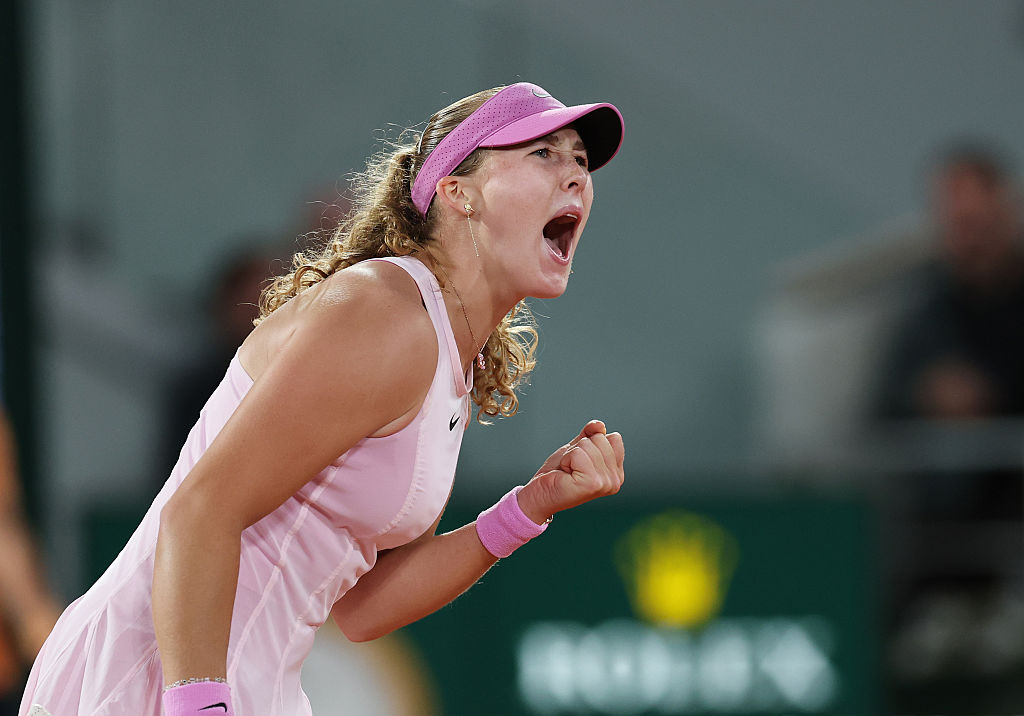
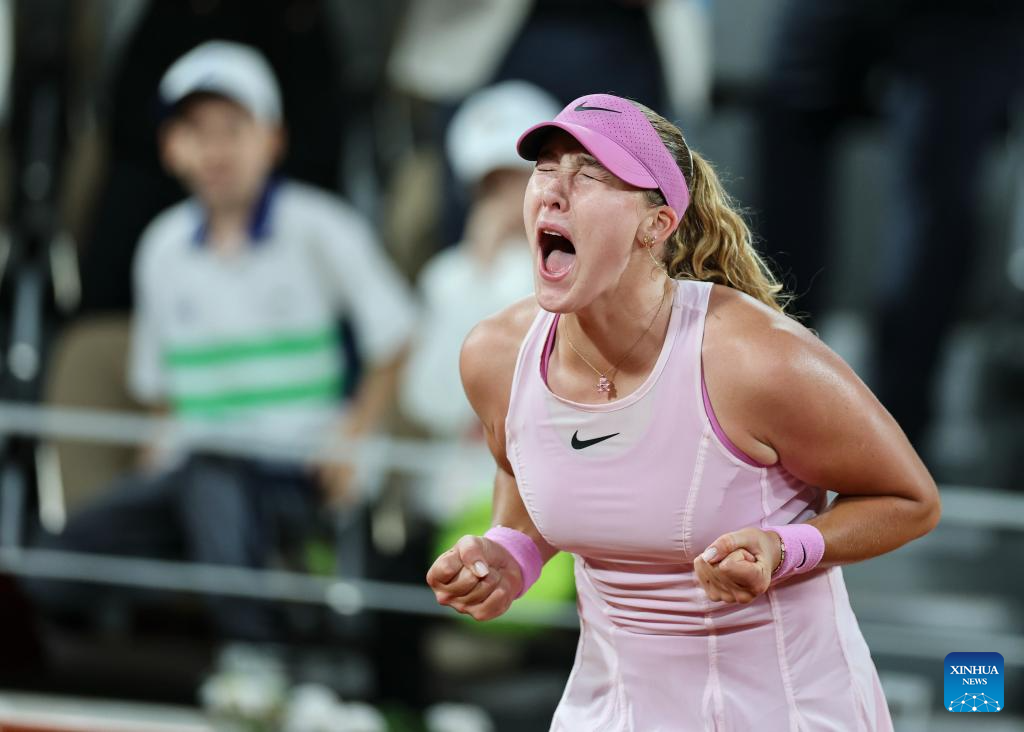
Andreeva won 6-1, 6-3 in 76 minutes Thursday on Court Philippe-Chatrier, ending Kostyuk’s 17-match clay winning streak and punching her ticket to her first Grand Slam final at 19. She will face Polish qualifier Maja Chwalinska — world No. 114 before this tournament, the first qualifier in Roland Garros history to reach the final — on Saturday.
The match itself was one-sided from the first game. Andreeva saved three break points at 0-40 in her opening service game, then tore through the next four games without dropping one. Kostyuk, the 15th seed, had won the Madrid final against Andreeva just six weeks earlier in straight sets; Thursday, she could barely find the court. She accumulated 34 unforced errors against Andreeva’s 22 over the duration of the match — a disparity that told the story more cleanly than any single point.
Kostyuk did hold briefly in the second set, breaking for 4-3 after an uncharacteristic double fault from Andreeva, and for a moment the atmosphere at Philippe-Chatrier shifted. Andreeva broke straight back. She served out the match without further alarm.
“I’m still very nervous, very nervous coming into this match as she’s had an amazing season, she hadn’t lost on clay, so that put pressure,” Andreeva said afterward, according to Al Jazeera. “I’m happy I got revenge for the Madrid final, and to reach my first Grand Slam final. All of these feelings combined, I’ve never felt anything like this.”
What Andreeva will not discuss — has not discussed, across a full clay swing in which her Russian nationality has repeatedly become the story — is the war. Days before the semifinal, Kostyuk had spoken at Roland Garros about how that silence lands. “They know what’s going on, they have phones, they have Instagram, they have news,” she told reporters, referring to Russian players on tour. A Russian missile strike on Tuesday had killed at least 22 civilians in Ukraine. Another had struck a building 100 meters from her parents’ house in Kyiv earlier in the fortnight, the morning of her first-round match, and Kostyuk had been in tears before she walked on court.
Kostyuk has maintained the no-handshake policy with Russian and Belarusian opponents since the Russian operation in Ukraine began in February 2022, joining compatriots Elina Svitolina and Dayana Yastremska in treating the net gesture as inseparable from what is happening off the court. She has never asked opponents to take a side, only noted that taking no side is itself a choice. The policy has not changed once — not in Brisbane, not in Madrid, not on the biggest stage she has stood on as a professional.
As Eastern Herald reported, Andreeva and Kostyuk had both reached the Roland Garros semifinals with draws that eliminated most of the top seeds early, making Thursday’s collision feel inevitable since the bracket was set. The tension around the match was plain before a ball was struck: the pre-match photo ritual, in which both finalists typically pose together with ballkids at the net, was handled with the two players standing on opposite sides, photographed separately.
Andreeva is the third-youngest woman to reach the Roland Garros final in the 21st century, behind Coco Gauff at 18 in 2022 and Kim Clijsters at 17 in 2001. She entered the tournament having posted more clay-court victories in 2026 than any other semifinalist — 20 wins heading in, dropping only one set across six rounds in Paris and giving away just 32 games. Her coach is Conchita Martínez, the 2000 Roland Garros runner-up, and the continuity of that lineage from the same red clay is not a detail lost on the French crowd.
Her final opponent arrived at Roland Garros through the qualifying draw and has not lost a set since the second round. Chwalinska, 25, defeated Russia’s Diana Shnaider 7-6(4), 6-4 in Thursday’s other semifinal, converting break points in the closing stages after Shnaider called a medical timeout for her back. The win made Chwalinska the first qualifier in the tournament’s history to reach the final — a path that, as Bleacher Report noted, has only one precedent at any major: Emma Raducanu at the 2021 U.S. Open. Her ranking will jump from No. 114 to at least No. 14 if she wins Saturday, according to the WTA.
For Andreeva, Saturday offers something that has eluded her in each of her previous WTA meetings with Kostyuk this year: the chance to close without leaving a question open. The Madrid final — the last time she and Kostyuk shared a court before Thursday — ended with a Kostyuk title and the same silent walk-off. This time, Andreeva walked off as the winner, into a final that, whatever else it carries, will not carry that particular weight.
Whether she will be asked about the war again before Saturday, and whether her answer will differ from every previous answer, is the one thing Thursday’s performance left unresolved. Kostyuk, for her part, did not address the no-handshake in her post-match news conference. She waved to the crowd, blew them kisses, and left the court. The Ukrainian flags in the stands stayed up until the last fan had gone.
Earlier Thursday, the collapse of Aryna Sabalenka against Shnaider in the quarterfinals had already confirmed that the women’s draw would produce a first-time Grand Slam champion. The draw’s chaos — which had been building since the tournament’s second week — reached its conclusion on a day when the sport and the war arrived, once again, at the same place at the same time, and neither knew how to leave the other behind.