
Charukesi, the Tamil musical family drama adapted from Y.G. Mahendran’s celebrated stage play of the same name, arrived in theatres on June 12 under the direction of Suresh Krissna. The film, which carries a U certification and runs 146 minutes, represents the veteran director’s return to Tamil cinema with material that sits closer to the classical tradition of Shankarabharanam and Sindhu Bhairavi than to the action spectacles that defined his most commercially successful work. Y.G. Mahendran reprises his stage role as a renowned Carnatic musician whose battle with Alzheimer’s disease strips away the art that defined his identity, while the people around him reveal themselves through how they respond to his decline.
The casting positions Charukesi as an unusual gathering of Tamil cinema veterans working in a register that the industry rarely attempts at theatrical scale. Sathyaraj, Suhasini Maniratnam, and Samuthirakani anchor the ensemble alongside Mahendran, with Ramya Pandian and Raj Ayyappa completing the principal cast. For Suhasini, the project carries a particular resonance: her decades of work in films that treated art and artists with seriousness, from Sindhu Bhairavi itself to Mani Ratnam’s early dramas, make her presence here feel less like casting and more like continuity. The film’s willingness to trust this ensemble with a story driven by music and memory rather than commercial formula is its most distinctive quality.
Suresh Krissna is best known for directing Rajinikanth in four films that shaped the superstar’s screen persona across the 1990s and early 2000s: Annamalai in 1992, Veera in 1994, Baashha in 1995, and Baba in 2002. Those films were exercises in mass commercial filmmaking at its most confident, built around Rajinikanth’s charisma and designed to fill theatres across South India. Charukesi represents a deliberate pivot from that legacy, a film where the drama emerges from the quiet devastation of a man losing his connection to the music that gave his life meaning, not from action set pieces or punch dialogues.
The source material has been a fixture of Tamil theatre for years. Y.G. Mahendran, who has performed in over 7,000 stage shows across six decades as an actor, playwright, and comedian with the United Amateur Artists theatre group, created Charukesi as a vehicle that explored Carnatic music’s emotional and spiritual dimensions through the lens of personal loss. The play toured internationally, including performances in Philadelphia and other diaspora cities, earning a reputation as one of Tamil theatre’s most affecting contemporary productions. The film adaptation retains the play’s central premise while expanding it for the cinematic form, with Pa. Vijay writing the dialogue and lyrics.
Music composer Deva, known to Tamil audiences as Thenisai Thendral, scores the film. His involvement is significant given the subject matter: Charukesi takes its name from a Carnatic raga, and the film’s dramatic tension depends on the audience understanding what it means for a musician to lose access to the art form that constituted his deepest self. Deva’s background in both film and folk music traditions positions him to navigate the score’s demands, which require moving between classical Carnatic passages and the emotional textures of a family confronting irreversible loss. Cinematographer Sanjay B.L. and editor Richard complete the core technical team.
Rajinikanth personally launched the trailer and audio on May 21, praising the team’s effort in bringing what he called a culturally rich and music-driven project to the screen. His endorsement carries weight beyond the ceremonial: the event drew attention to a film that might otherwise struggle for visibility in a release calendar dominated by action tentpoles. The producers have compared Charukesi to Shankarabharanam, K. Viswanath’s 1980 Telugu classic about a traditional musician facing a changing world, and to Sindhu Bhairavi, K. Balachander’s 1985 exploration of classical music and marital crisis, both of which succeeded commercially despite their serious subject matter.
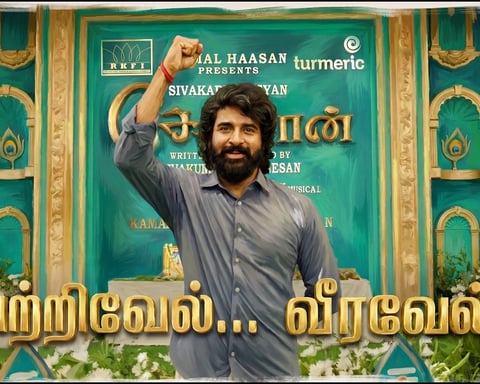
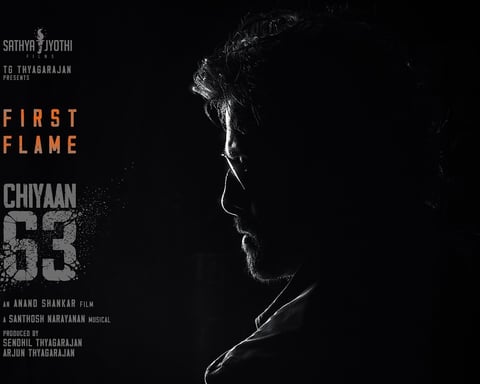
The film arrives during a week where Tamil cinema is simultaneously producing large-scale commercial projects like Sivakarthikeyan’s Seyon and Chiyaan Vikram’s Chiyaan 63, making Charukesi’s quieter ambitions both a counterpoint and a reminder that the industry’s creative range extends well beyond its most visible productions. Produced by R. Arun under the Arun Visualz Productions banner in association with Madras Cine Production and Suresh Krissna Productions, with worldwide distribution handled by E5 Entertainments, the film’s commercial prospects depend less on opening weekend numbers than on whether the audience that sustained the stage play will translate into theatrical attendance.
For Y.G. Mahendran, Charukesi represents the kind of opportunity that Tamil cinema rarely offers its theatre veterans: a leading role in a film that treats their signature material with respect rather than reducing it to comedy relief or supporting-cast filler. The film’s exploration of Alzheimer’s through the specific anguish of a musician losing his art adds a dimension that purely medical or domestic dramas about the disease often miss. Whether Charukesi finds a theatrical audience large enough to justify its ambition will say something about the space Tamil cinema is willing to make for stories that prioritize emotional depth over spectacle, a question that the industry’s commercial structure makes difficult but not impossible to answer in the affirmative.