Artificial intelligence was supposed to democratize medicine. Instead, it is exposing a dangerous gap between information and truth — one that cancer patients are now falling into with alarming frequency.
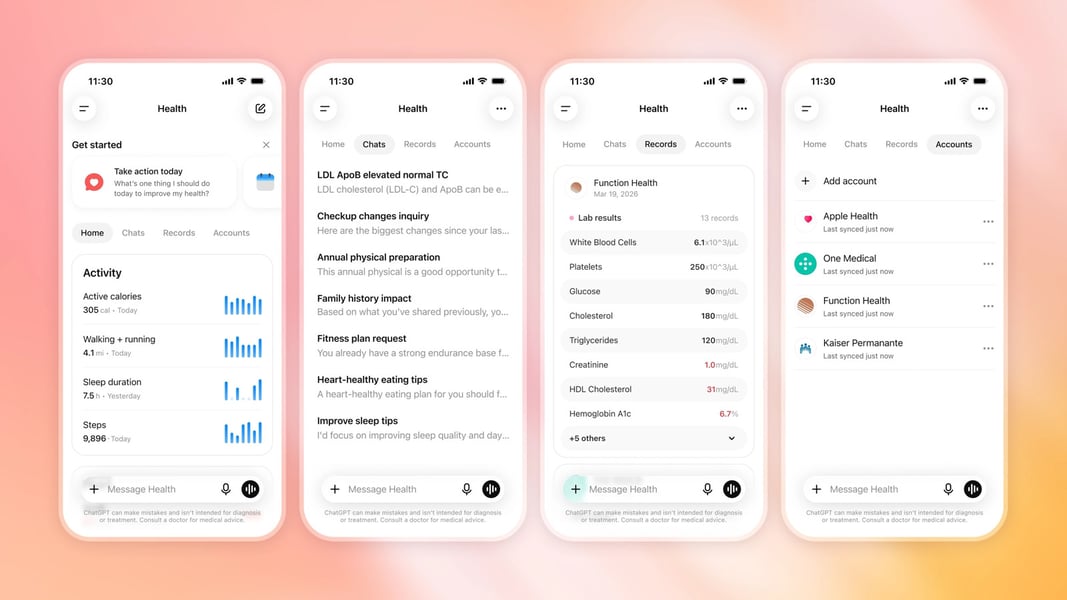
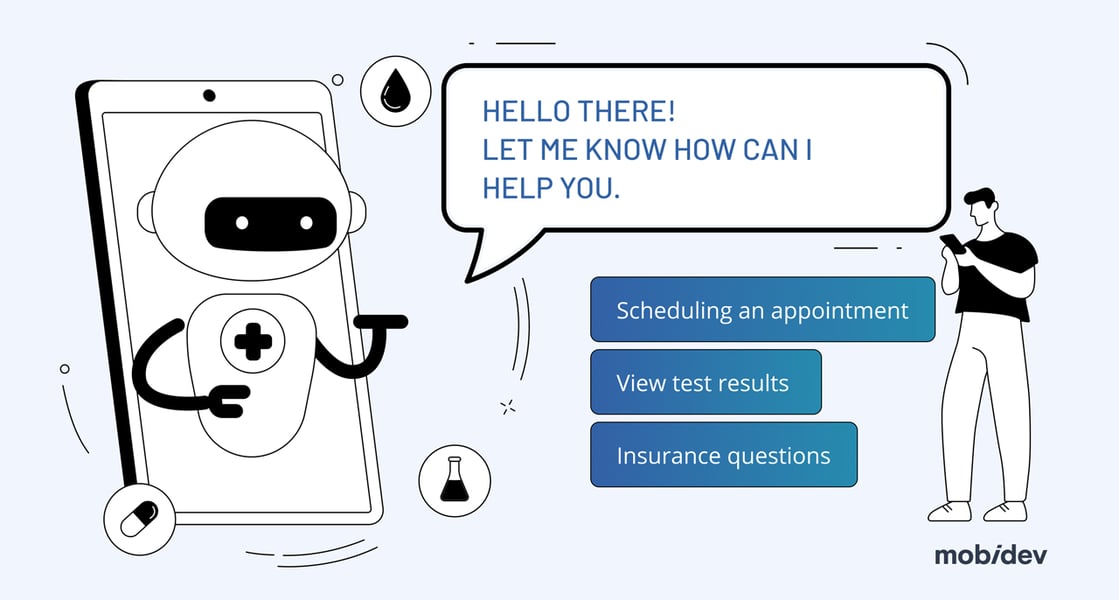
A growing body of research, highlighted in a recent report by The New York Times, suggests that AI chatbots are increasingly being used by patients to interpret diagnoses, evaluate treatments, and seek reassurance in moments of vulnerability. But the results are inconsistent, and at times, perilous.
The appeal is obvious. Cancer is a language of complexity — pathology reports dense with jargon, treatment plans layered with uncertainty. For many patients, AI offers something medicine often does not: immediate, fluent explanations. According to a 2024 survey cited by the American Association for Cancer Research, roughly one in six adults in the United States now use AI chatbots monthly for health-related questions.
Yet beneath that convenience lies a structural flaw.
Fluent, Confident — and Frequently Wrong
Recent studies evaluating chatbot responses to cancer-related queries reveal a pattern that is difficult to ignore. While answers are often broadly accurate, they are also routinely incomplete, outdated, or misaligned with clinical guidelines.
This is not simply a margin-of-error problem. It is a systemic design issue.
AI models are engineered to produce coherent language, not verified truth. They optimize for plausibility — the ability to sound right — rather than for medical accuracy. The result is a form of synthetic authority: responses that read like expert guidance but may diverge subtly, and sometimes dangerously, from evidence-based care.
The Illusion of Medical Expertise
For patients navigating cancer, that distinction can be fatal.
Unlike a physician, an AI chatbot does not know when it does not know. It does not hesitate, does not defer, does not recommend a second opinion. Instead, it fills gaps with probabilistic guesses — what researchers call hallucinations.

That illusion is already shaping real-world decisions. In multiple documented cases, patients relied on chatbot interpretations of their condition, sometimes downplaying urgency or misunderstanding treatment timelines.
A Tool That Understands Language, Not Consequence
Even when AI responses are technically correct, they frequently fail another test: clinical usability.
Cancer care is not just about information — it is about context, precision, and rapidly evolving treatment science, as seen in cancer care is not just about information but about integrating complex variables like genetics, staging, and patient history.
Chatbots, operating without access to full medical records or the ability to perform physical evaluation, cannot integrate these variables. Instead, they generalize.
That generalization can distort risk. A treatment appropriate for one subtype of cancer may be irrelevant — or harmful — for another. Without the guardrails of clinical judgment, AI outputs can flatten these distinctions into dangerously simplified advice.
The Expanding Risk Landscape
The expanding risk landscape extends far beyond oncology.
Across healthcare, AI chatbots are being tested for roles once reserved for clinicians — from triaging symptoms to managing prescriptions. The implications are profound, and the margin for error is vanishingly small.
The pattern is consistent: AI scales access to information, but also scales the consequences of error.
A Role — But Not Authority
None of this means AI has no place in cancer care.
Used correctly, it can serve as an intermediary — helping patients decode medical terminology, prepare questions for doctors, and engage more actively in their treatment.
But the boundary is non-negotiable.
AI can inform. It cannot diagnose. It can assist. It cannot decide.
The controversy adds to growing scrutiny in AI healthcare risks and medical misinformation trends shaping digital medicine globally.
The Bottom Line
What is unfolding is not a failure of technology, but a mismatch of expectations.
AI chatbots are being used as if they are medical authorities. They are not. They are probabilistic text engines operating in one of the most high-stakes domains imaginable.
In oncology, where timing, precision, and context define outcomes, that distinction is not academic.
It is existential.
Until AI systems can reliably align with clinical standards — and transparently acknowledge their limits — their role in cancer care will remain what it is today: powerful, persuasive, and not yet safe enough to trust.