Heart rate variability, or HRV, has moved from clinical cardiology into the center of consumer health technology. Once measured only in intensive care units and research laboratories, it now appears daily on smartwatches and recovery dashboards, translating complex autonomic nervous system activity into a single digestible score.
At its physiological core, HRV describes the millisecond fluctuations between consecutive heartbeats. Even at a steady pulse, the heart does not operate with mechanical uniformity. These variations are generated by the constant interaction between the sympathetic and parasympathetic branches of the autonomic nervous system, which regulate stress response and recovery balance.
This biological mechanism is increasingly being reframed through consumer technology ecosystems. In modern devices, HRV is no longer just a research metric. It is embedded in broader systems of wearable health analytics and digital biomarkers, where physiological signals are continuously translated into behavioral recommendations.
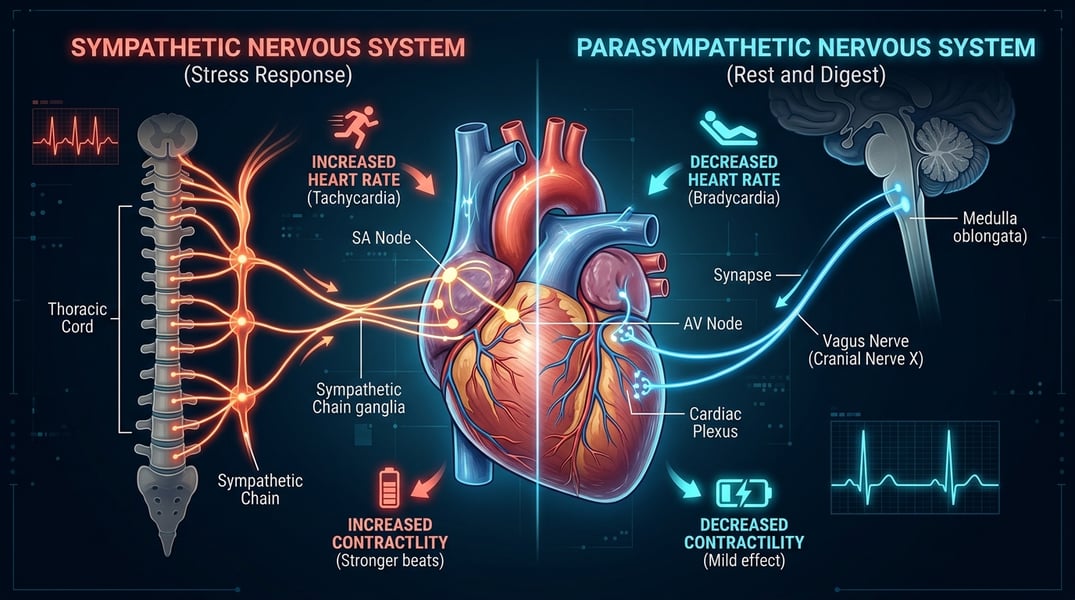
Clinically, HRV has long been associated with cardiovascular adaptability. Research from Harvard Health Publishing on heart rate variability highlights its relationship to stress regulation and cardiac resilience, while cautioning that it is not a standalone diagnostic measure.
The scientific foundation of HRV is tied directly to the autonomic nervous system, which governs involuntary physiological processes including heart rate modulation, vascular tone, and stress response. Variations in HRV reflect how efficiently this system adapts to internal and external demands.
What has changed in the past decade is not the science itself, but its delivery. Consumer devices such as smartwatches now estimate HRV continuously through optical sensors. Apple, for instance, documents its HRV calculation methods through wearable devices that rely on heart rate interval sampling during rest and sleep.
This transformation has enabled a new layer of interpretation known as recovery scoring. Platforms like WHOOP convert physiological data into structured feedback systems that estimate readiness for physical and cognitive load. These systems are increasingly referred to as readiness score models, blending HRV with sleep and strain metrics.
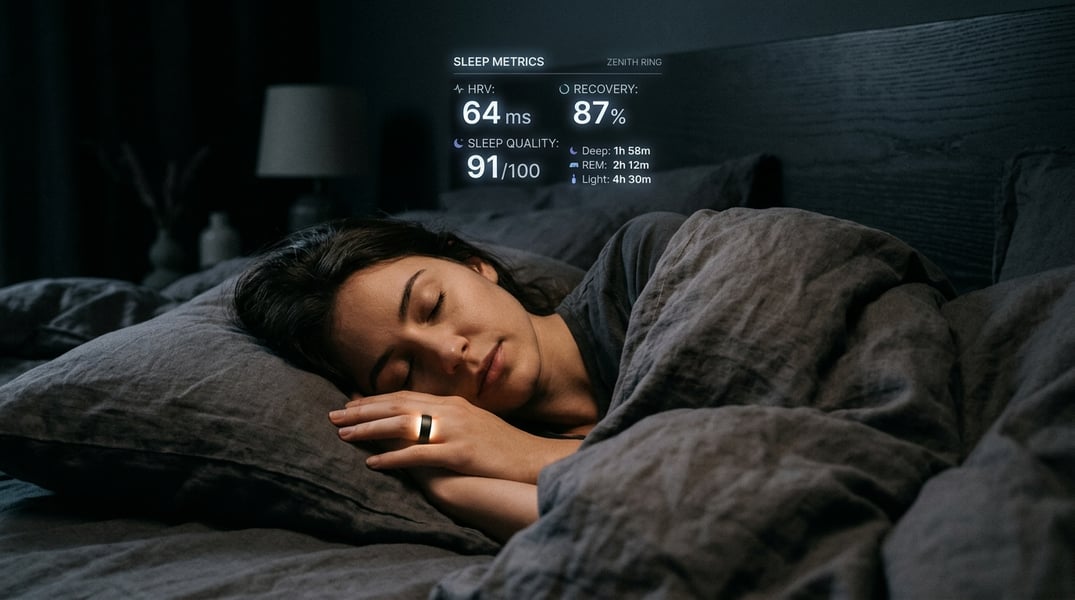
However, interpretation remains complex. HRV is highly sensitive to variables such as alcohol consumption, acute stress, hydration levels, and physical exertion. Even small disruptions can alter readings significantly, making single data points unreliable without longitudinal context.
This is where behavioral science intersects with physiology. HRV is increasingly being used as a proxy for stress and recovery patterns, a concept supported by cardiovascular research from the American Heart Association on stress and recovery, which emphasizes the relationship between autonomic balance and cardiovascular strain.
The expansion of HRV into consumer health culture reflects a broader technological shift toward continuous biometric monitoring. What was once a static clinical measurement is now embedded in everyday life, influencing how individuals perceive fatigue, performance, and recovery capacity.
In parallel, companies are extending HRV analysis into broader ecosystems of predictive health monitoring. For example, Garmin integrates HRV trends into its training systems, linking physiological variability to workload adaptation and fitness readiness. This reinforces the role of HRV as a dynamic, rather than static, signal.
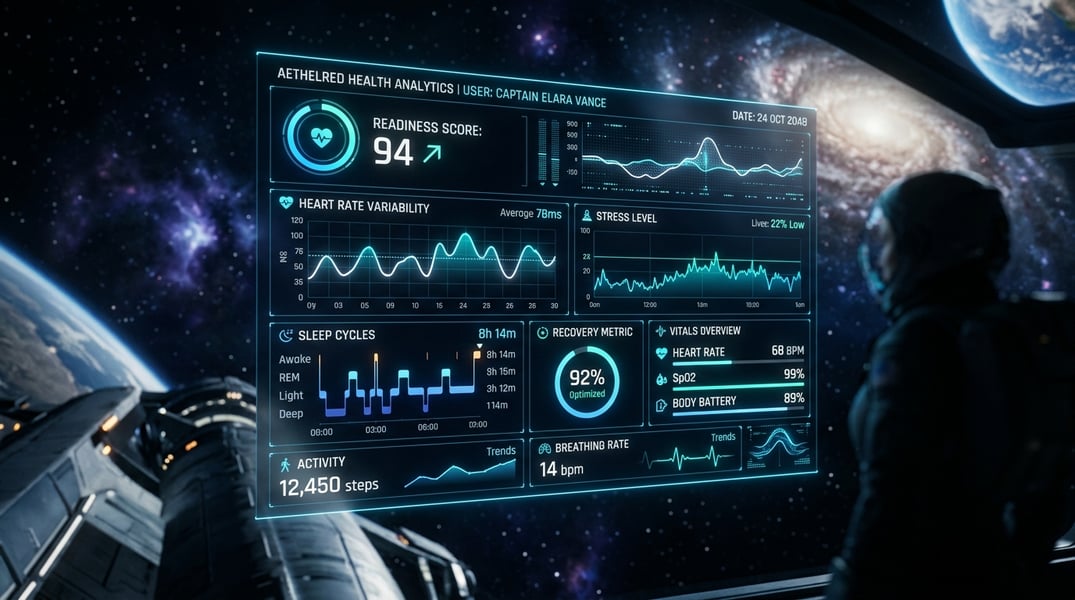
This trajectory is visible across emerging health technologies and experimental systems documented in autonomic nervous system optimization and biofeedback trends, where sleep, temperature regulation, and cardiac variability are combined into adaptive environments.
Similarly, the integration of AI into biological monitoring systems extends beyond human health alone. Experimental applications of machine learning in biological systems, including diagnostic modeling, reflect a wider shift toward computational physiology, as seen in projects such as machine learning in personal health monitoring.
Despite its growing sophistication, HRV remains fundamentally limited by context sensitivity. It is not a universal score of health, nor a deterministic predictor of illness or performance. It is, instead, a dynamic reflection of how the nervous system responds to changing conditions over time.
The challenge now is interpretive rather than technological. As HRV becomes more deeply embedded in consumer health ecosystems, the distinction between meaningful physiological insight and algorithmic abstraction becomes increasingly difficult to maintain.
What was once a specialized cardiological measurement has become a daily behavioral signal. Its influence lies not only in what it measures, but in how it reshapes the relationship between individuals and their own physiology.