NEW DELHI – India can track its GDP to three decimal places, measure rainfall to the millimetre, and rank its cities by pollution index. Yet the country has no formal framework to quantify how its 2,000-year cultural inheritance translates into economic weight, social capital, or international standing.
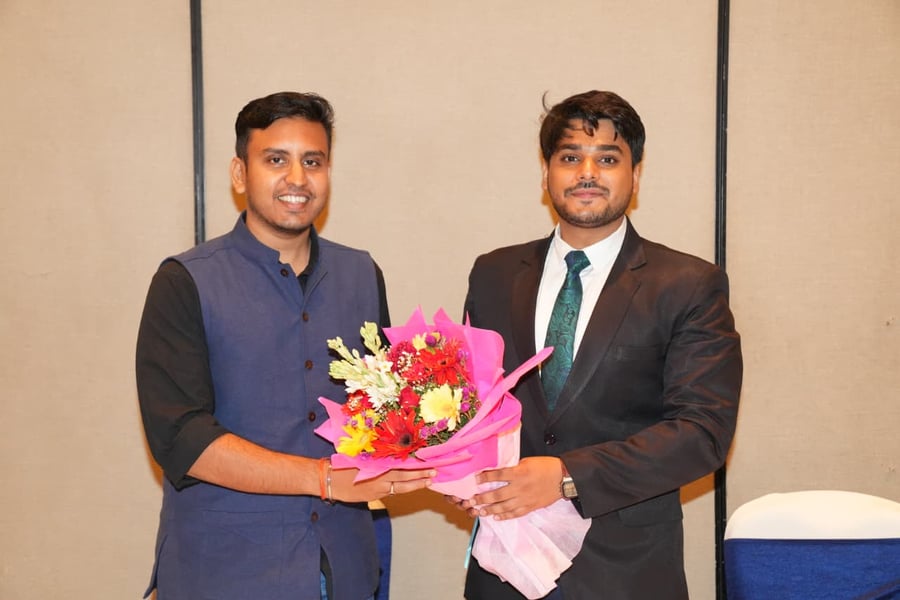
That absence was placed squarely on the table this week at the Visvaniti Foundation’s 1st Annual Meeting, held at The Grand in New Delhi. The gathering brought together cultural practitioners, policy architects, and institutional leaders to examine what India’s creative sector lacks, not in output, but in the tools of accountability and measurement.
Founded to bridge the distance between India’s living cultural traditions and the policy frameworks that govern public investment, the Visvaniti Foundation has positioned itself as a platform for cultural governance. Its first annual meeting was described by organisers as the beginning of a recurring effort to build the institutional architecture that India’s arts and heritage sector has long been without.
At the meeting, the Bharat Art Conclave introduced a proposal for a Cultural Index of India: an eight-pillar measurement framework designed to benchmark cultural development across states and regions. The index would track cultural GDP contribution, the number of active institutions, performing arts infrastructure, the size of the creative workforce, government policy engagement, and cultural export volumes.
The proposal arrives at a moment when India’s cultural heritage tourism sector and performing arts economy are generating substantial output without any system to capture the aggregate. The country counts some 3.5 million registered cultural workers, a figure cited frequently but without any comparable estimate for revenue, output, or institutional reach. Where UNESCO’s Culture|2030 Indicators give member states a formal tool to measure culture’s role in sustainable development, India has no domestic equivalent.
Under the Bharat Art Conclave’s framework, the Cultural Index would function as a state-level ranking system, enabling comparisons across regions in the way economic surveys benchmark industrial output and social development. Cultural mapping, state funding levels, literary output, and the reach of traditional art forms would all feed into the composite score. Representatives said the index could guide budget allocations at the state level and help track the cultural returns on infrastructure investment.
India’s Ministry of Culture launched its National Mission on Cultural Mapping more than a decade ago to catalogue art forms, artisans, and cultural sites. That effort produced records but not benchmarks. The Visvaniti Foundation was explicit about the distinction: data collection is not the same as policy-grade measurement, and the Cultural Index proposal is designed to cross that threshold.
The gap is not unique to India. UNESCO has found that even among nations with sophisticated statistical agencies, cultural data remains siloed from economic planning. What distinguishes the Bharat Art Conclave proposal is its emphasis on the sub-national level, creating pressure not only on Delhi but on state capitals, which receive public funding for cultural programmes without any standardised expectation of reporting outcomes.
The Visvaniti Foundation’s 1st Annual Meeting was notable for the scope of voices it assembled. Cultural diplomats, foundation leaders, and representatives from India’s performing arts ecosystem spent the day examining frameworks that could formalise what has long been understood informally: that culture is an economic sector, a foreign policy instrument, and a public good that currently operates in a policy vacuum compared to agriculture, manufacturing, or technology.
What the meeting did not settle is the question of implementation. A Cultural Index requires data collection at the state level, standardised definitions that must cut across an extraordinary diversity of art forms and traditions, and political will from governments that have rarely prioritised cultural data-gathering. The Visvaniti Foundation has framed the project as long-term, but the pathway from an annual meeting to a functioning national index remains unmarked. India has proposed cultural measurement frameworks before; whether an institution outside of government can provide the continuity that government agencies alone have not is the question Thursday’s meeting raised without answering.
The urgency has a demographic dimension. India’s fertility rate has dropped below replacement level across several major states, shifting the country’s long-term challenge from population size to the quality and coherence of what its people produce and transmit. A generation from now, cultural output may matter more than headcount, and measurement is the first step toward a deliberate national answer to that question.
The Visvaniti Foundation did not leave New Delhi with an index or a policy. What it did was make the absence of one visible, named, and debated by people with the institutional standing to do something about it.