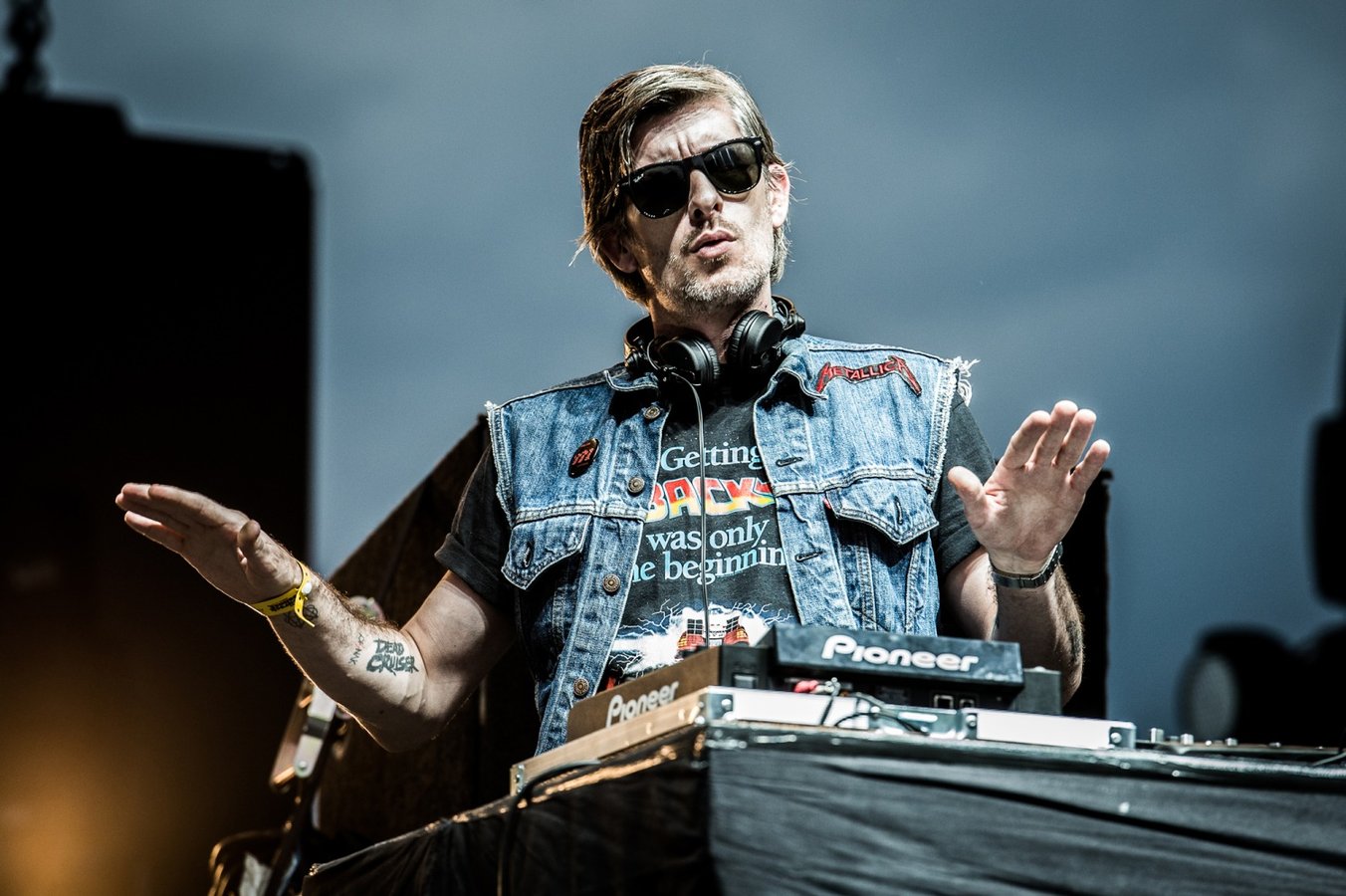

PARIS – He invented a character who could not die. In Kavinsky’s self-made mythology, a young man named Vincent crashed his Ferrari Testarossa somewhere outside Paris in 1986, returned from the wreck as something between a ghost and a machine, and spent the decades that followed making music from a place no one else could locate. On Tuesday night, the Paris prosecutor’s office confirmed what that mythology had always treated as an impossibility: Vincent Belorgey, the man inside Kavinsky, was found dead at his apartment in the French capital. He was 50.
The cause of death has not been determined. A judicial investigation is open, the prosecutor’s office said, noting that no suspicious elements were found at the scene on Tuesday evening. A police source cited by French broadcaster BFMTV reported that Belorgey had been complaining of headaches for several days before his death, with a possible stroke among the explanations under consideration. What is not in question is that electronic music lost one of its most stubbornly original architects, an artist who built an entire creative existence around the premise that the most interesting place to make music was somewhere between memory and machinery.
Belorgey was born in Seine-Saint-Denis in 1975 and initially looked toward acting before music absorbed him entirely. The Kavinsky persona, when it arrived, was not a marketing strategy but a complete fictional infrastructure: the 1986 crash, the undead driver, the vintage Yamaha DX7 on which his early recordings were made, the debut single called “1986” that established both the mythological timeline and the sonic template. Everything that followed was an extension of that premise.
His wider audience found him through a different kind of crash. As NBC News reported, Nicolas Winding Refn’s Drive, released in 2011 with Ryan Gosling as a nameless stuntman who works nights for the wrong people, opened on “Nightcall,” a track Kavinsky had released the previous year. In it, he sang, in processed English, about returning to someone after dark with everything unexplained. Refn found the track before the film had a single frame cut and built the opening sequence around the music rather than the reverse. The match held. By the time Drive had secured its place in the canon of essential crime filmmaking, “Nightcall,” the scorpion jacket, and Gosling’s unreadable face had fused into a single image in the cultural archive. The song went diamond in France and gold in the United Kingdom.
Kavinsky did not become the kind of artist who spends the decade after a breakout moment chasing it. His 2013 debut album Outrun, a title borrowed from the Sega arcade game already embedded in his aesthetic, expanded the Testarossa narrative into a full-length world. The record included “Odd Look,” a collaboration with The Weeknd that became one of the new wave standouts of that year. The Weeknd, writing on X on Wednesday, described the news as heartbreaking and said Kavinsky had been “an inspiration to so many, including myself,” pledging to “continue to honour your name and your music.” The pair had discussed a further collaboration, according to a recent NME interview in which Kavinsky suggested it could arrive “soon.”
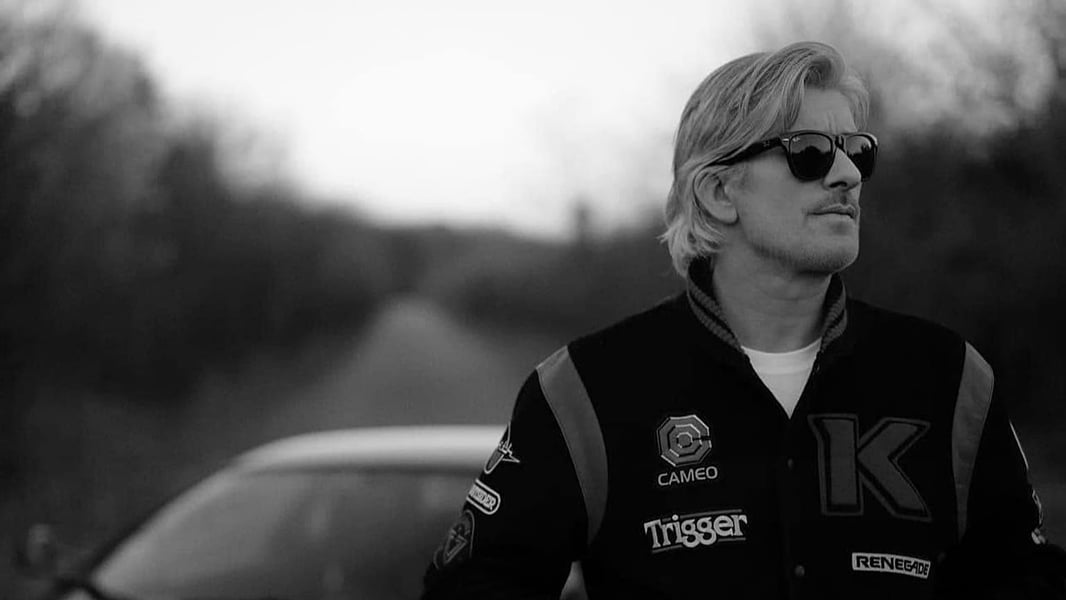
The tributes reflected the particular texture of his influence, felt most acutely by other artists and routinely underestimated by the wider public understanding of how the electronic music landscape of the 2010s actually functioned. French President Emmanuel Macron, writing on Facebook, called Kavinsky “a source of French pride forever.” Catherine Pégard, writing on X in an official capacity, said that “with Kavinsky’s sudden departure, France loses one of its most unique voices.” The Belgian singer Anglèle, who had stood alongside him on one of the most-watched stages of his career, expressed what she described as “immense sadness.”
That stage had been the closing ceremony of the Paris 2024 Olympics. Kavinsky performed “Nightcall” with Phoenix and Anglèle before a television audience of hundreds of millions, one of the more significant live appearances of his career, and one he marked with a rereleased version of the track. For an artist who had always maintained a deliberate distance built into his mythology, it was an unusual moment of visibility: the undead Ferrari driver standing under Olympic lights in the city the song had always circled.
The same week brought its own reminder of what can happen when music escapes the person who made it. Katy Perry publicly objected when the White House used “Firework” to soundtrack a TikTok about the Iran strike, a reminder that the relationship between a song and what it comes to mean is never fully the artist’s to determine. Kavinsky, whose “Nightcall” became synonymous with a film, a genre, and eventually an Olympiad, understood that dynamic better than most.
Belorgey worked within a French electronic music tradition, alongside Daft Punk, Justice, and Cassius, that had made Paris one of the most improbable centers of global sound in the past three decades. What distinguished him within that cohort was the completeness of his internal mythology: others built catalogs, but he built a world and released music from inside it. The world outlasted the catalog, which is either a limitation or a different kind of success, depending on how you measure these things.
The questions around his death remain open. The same week also brought Carly Simon’s announcement of a Parkinson’s diagnosis alongside news of her first original album in 18 years, a different kind of reckoning with what a body eventually does to even the most enduring artists. Belorgey left no such announcement. He left a song that plays at the start of a film about a man who disappears into his own silence, and a character who was supposed to be more durable than the person behind him.