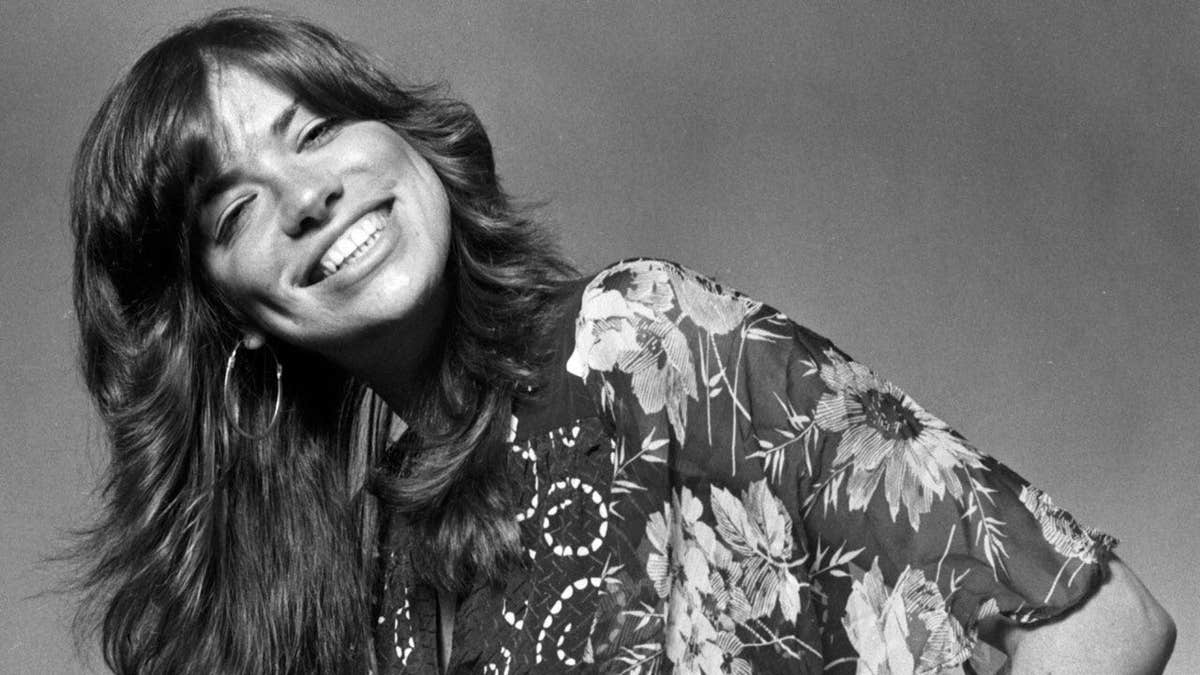

NEW YORK — On the days Carly Simon cannot move, the recording sessions wait. On the days she can, she finishes another track.
In a letter to People magazine, reported by CBS News on July 27, the singer – 83, Grammy-winning, and absent from live performance since a Carnegie Hall appearance in March 2018 – disclosed that she has Parkinson’s disease and was treated for basal cell carcinoma on her face. The letter arrived alongside a release date: August 14, and an album titled Comes in Waves, her first collection of original songs in 18 years. She did not separate the health announcement from the creative one. She presented them as two aspects of the same period of her life.
For an artist whose professional identity has always been inseparable from personal experience, the timing was not incidental. No Secrets, the 1972 album that carried “You’re So Vain” to number one, established the posture early – that the personal, rendered with sufficient craft, ceases to be merely personal. She was not writing Sunday’s letter to announce a retirement or ask for patience. She was explaining where she had been, and showing what she had made while she was there.
The Parkinson’s diagnosis followed what initially appeared to be a different kind of medical problem. After joint replacement surgeries on both knees and one hip, her mobility continued declining in ways those procedures could not account for. She sought evaluation at the Mayo Clinic, where Parkinson’s was confirmed. The letter does not specify when that evaluation took place.
Parkinson’s disease – a progressive neurological condition affecting movement, balance, and in many patients, mood – offered her no predictability. “There is no tidy or predictable schedule to the illness,” she wrote. “It does not consult my calendar.” Some days she could not rise from low furniture or walk without considerable help. Other days gave her, as she described it, “a little more room to move, think, work, and feel like myself.” The apathy that often accompanies the condition she characterized with unusual precision: it was as though “the part of the brain that sends out invitations to participate in life has temporarily misplaced the guest list.”
A second diagnosis compounded the withdrawal from public life. The basal cell carcinoma surgery altered her facial appearance, and Simon acknowledged the effect it had on her willingness to be seen. The convergence of mobility limitations and self-consciousness about her changed face produced the near-disappearance that had prompted many people, she said, to write asking what had become of her. She declined to frame her condition as anything other than what it is. “I do not consider Parkinson’s a gift or a blessing,” she wrote. “It is neither. It is difficult, frustrating and sometimes frightening.”

What she did not step away from was the studio. Comes in Waves was recorded at her longtime home on Martha’s Vineyard and produced by Paul Samwell-Smith, who worked with Simon in the early years of her career. Her children Ben and Sally Taylor contributed to the sessions; Sally also designed the cover art. The lead single, “Howl,” had already been released in June, several weeks before any public mention of her health. Simon described the recording not as a triumph over her condition but as something more structural. “Working on the music gave shape to days that did not always have much shape,” she wrote. “Music has always known when to arrive. It has rescued me more times than I can count.”
Those rescues have a long history. Simon survived breast cancer in 1997 and a stroke in 2004. In 2022 – the year the Rock and Roll Hall of Fame inducted her, 26 years after she first became eligible for consideration – both of her sisters died within days of each other, both from cancer. That accumulation of loss did not produce silence. Never Been Gone, her previous studio album, arrived in 2009. Comes in Waves arrives 17 years later, against considerably steeper odds.
The career the Hall of Fame eventually recognized began in earnest with No Secrets. “You’re So Vain” reached number one as a single in 1972 and launched a decades-long public conversation about its subject – one Simon extended in 2015 when she confirmed that the second verse referred to Warren Beatty. “Anticipation,” written the year before during a wait for a date that turned out to be with Cat Stevens, became something considerably larger than its occasion. “Nobody Does It Better,” the theme from The Spy Who Loved Me in 1977, showed that her instincts extended comfortably into orchestrated film work. As The Hollywood Reporter noted in its coverage of Sunday’s announcement, the Rock and Roll Hall of Fame induction that came in 2022 was widely regarded as years overdue.
The letter does not say when the Parkinson’s diagnosis was confirmed, only that it followed evaluation at the Mayo Clinic. It does not describe how much of Comes in Waves was recorded before the illness’s most difficult periods and how much was built around them – whether the album preceded the disease’s progression or was made alongside it. Those are not questions Simon chose to answer. “I have not stopped living, and I have not stopped working,” she wrote, and added, separately, that she is still learning how to live with the diagnosis. The present tense in that last phrase does the most honest work of the letter.