MADRID — Spain is once again confronting the grim consequences of a major rail disaster after the death toll from the derailment of two high-speed trains in the southern province of Córdoba climbed to 10, according to Spanish media reports. At least 25 more passengers remain seriously injured, many fighting for their lives in hospitals across Andalusia, as investigators begin the painstaking task of determining how one of Europe’s most advanced rail systems failed so catastrophically.
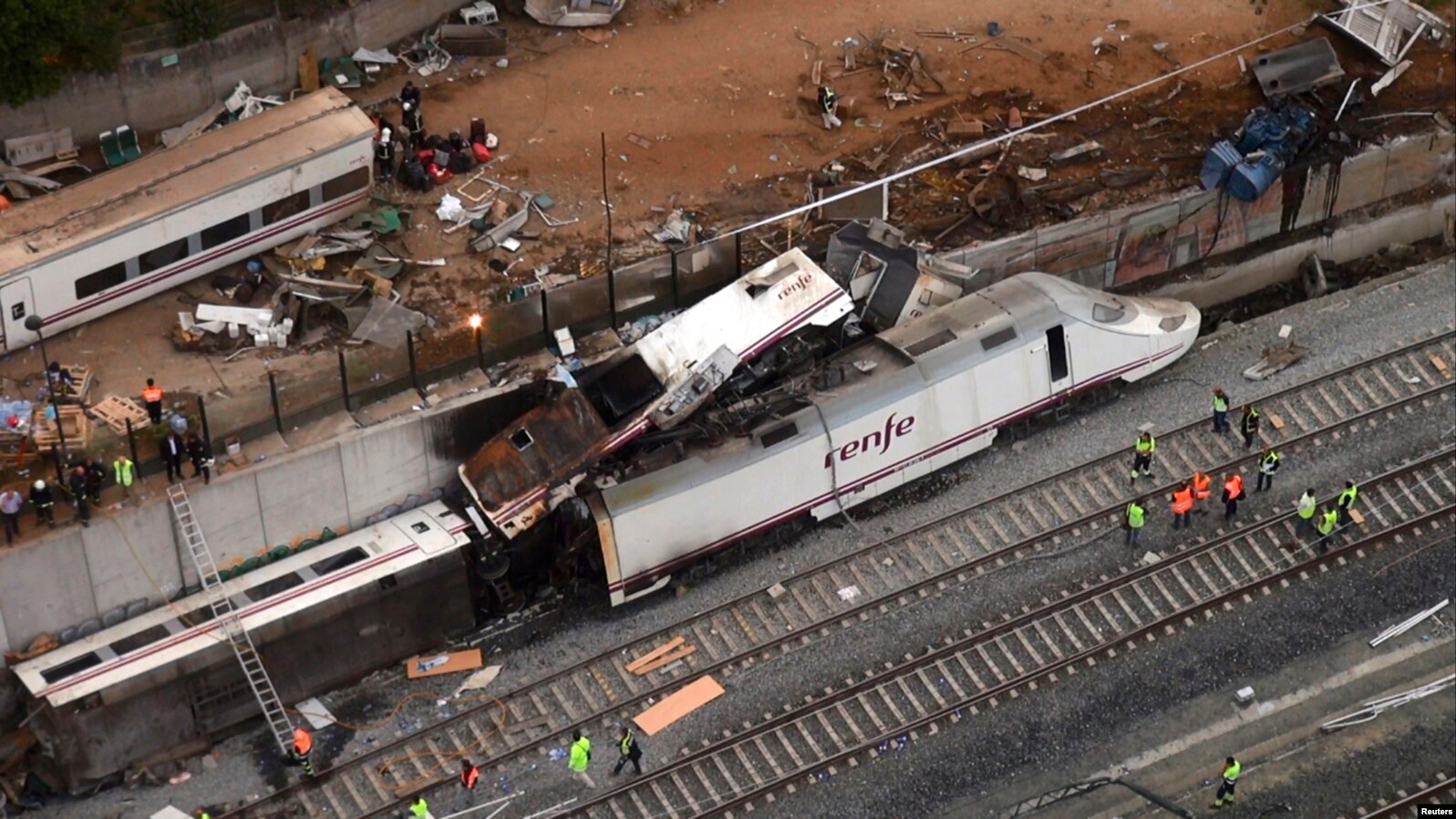
The crash occurred on a critical stretch of track linking Málaga and Madrid, a route traveled daily by thousands of commuters, tourists, and business travelers. According to Spain’s rail infrastructure operator Adif, the initial derailment involved a high-speed train that left the tracks and slid onto an adjacent line, directly into the path of another oncoming service. What followed was a violent chain reaction of metal, glass, and human vulnerability.
Emergency officials described scenes of devastation more reminiscent of wartime wreckage than civilian transport. Train carriages were twisted and partially overturned, luggage scattered across the tracks, and survivors stumbled through the darkness searching for loved ones. For a country that prides itself on rail safety and technological sophistication, the psychological shock has been profound.
Spain’s high-speed rail system—often held up as a continental benchmark—now finds itself under uncomfortable scrutiny. While fatal rail accidents remain rare, when they occur they expose structural weaknesses that glossy infrastructure announcements tend to obscure. History shows that rail disasters do not emerge from a vacuum; they are usually the end result of overlooked warnings and institutional inertia, a pattern seen repeatedly in major rail disasters across the world.
What We Know So Far
Preliminary findings indicate that the Málaga–Madrid service derailed at speed before intruding onto a neighboring track. The second train, traveling in the opposite direction, was unable to avoid the obstruction. Both trains were carrying hundreds of passengers, turning a localized failure into a mass-casualty event. Investigators say that, according to preliminary investigations, no single factor has yet been ruled out.
Emergency services were mobilized within minutes. Firefighters, medical teams, and police units worked through the night to extract passengers trapped in mangled carriages. Helicopters ferried the most critically injured to trauma centers in Córdoba, Seville, and Málaga, while hospitals activated mass-casualty protocols.
A Network Under Pressure
The derailment has disrupted one of the most important arteries in Spain’s transport system. Services between Madrid and southern Spain were suspended, leaving thousands stranded and forcing a scramble for alternative transport. For an economy that relies heavily on reliable intercity mobility, the implications stretch far beyond the immediate tragedy.
Spain boasts the second-largest high-speed rail network in the world, and its expansion has long been framed as a triumph of European engineering. Yet the Córdoba crash raises questions about whether scale has outpaced resilience. As analysts note, Europe’s high-speed rail network is only as safe as its weakest operational link.
Safety, Oversight, and Accountability
Attention is now turning to whether existing safeguards were sufficient. Investigators are examining track conditions, signaling systems, and speed controls, measuring them against European rail safety standards. Any deviation could carry serious legal and political consequences.
Spain’s transport minister moved quickly to address public concern, stating that a full inquiry would be conducted and that responsibility would be assigned without hesitation. As Spain’s transport minister pledged, “there will be transparency, and there will be consequences.” Such assurances, however, ring familiar to families who remember past tragedies where accountability arrived slowly, if at all.
The issue of accountability has become central to the national debate. Critics argue that infrastructure policy has prioritized expansion and political prestige over rigorous safety audits. Similar critiques have surfaced before in moments of national crisis, including during large-scale public emergencies examined in this analysis of accountability failures in other systems.
The Human Cost
Behind every statistic lies a personal tragedy. Survivors have described seconds of chaos as the train lurched violently, throwing passengers from their seats. Some spoke of helping strangers climb through shattered windows, others of the eerie silence that followed the initial impact.
Psychologists warn that the emotional scars will linger long after physical wounds heal. Survivors may face years of trauma, while families of the deceased grapple with grief compounded by unanswered questions.
A Reckoning Ahead
The Córdoba derailment is shaping up to be a defining test for Spain’s rail governance. If investigators uncover systemic failures, the political fallout could be severe. If human error is identified, it will raise questions about training, fatigue, and operational pressure within an industry often portrayed as automated and fail-safe.
For now, Spain mourns its dead and prays for the injured. Memorials have sprung up near the crash site, candles flickering beside handwritten notes demanding justice. Modern rail technology may promise speed and efficiency, but the Córdoba tragedy is a stark reminder that safety is never automatic—it must be enforced, audited, and defended relentlessly.