For years, drug addiction was the crisis Kashmir refused to name. While the world watched militancy and borders, a quieter catastrophe spread through the Valley’s homes behind drawn curtains, in the hollowed eyes of teenagers who had stopped going to school. Heroin had arrived, and it had come to stay. That silence is now breaking, and it is breaking loudly.
The numbers are sobering. A 2022 IMHANS survey of Kashmir’s ten districts estimated more than 52,000 people living with drug dependence, most of them young, aged between 17 & 33, according to one account. Earlier this year, the J&K government told the Legislative Assembly that around 70,000 people, mostly youth, are affected by substance use, with nearly 50,000 identified as heroin users, as reported. The scale of the epidemic has also been laid bare in earlier reporting.
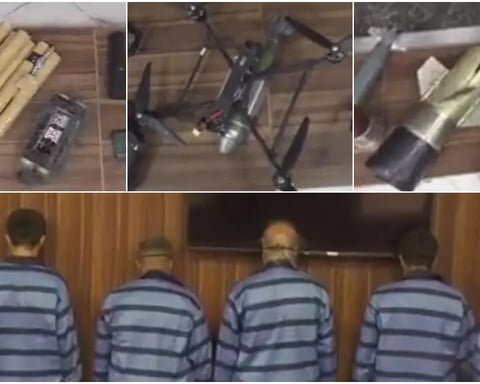
The method is as alarming as the scale. A majority of users now inject the drug and clinicians estimate tens of thousands of syringes are used daily, driving Hepatitis C prevalence at treatment centres as high as 72 percent. A single heroin habit can consume close to ₹90,000 a month; a sum that ruins households and pushes some users toward crime. Doctors call their caseload “the tip of the iceberg,” with stigma keeping countless families from ever seeking help. Kashmir’s geography deepens the vulnerability: the Valley sits close to the “Golden Crescent” heroin belt, as global monitoring has long mapped in detail, and security agencies have repeatedly intercepted narcotics dropped by drones across the Line of Control.
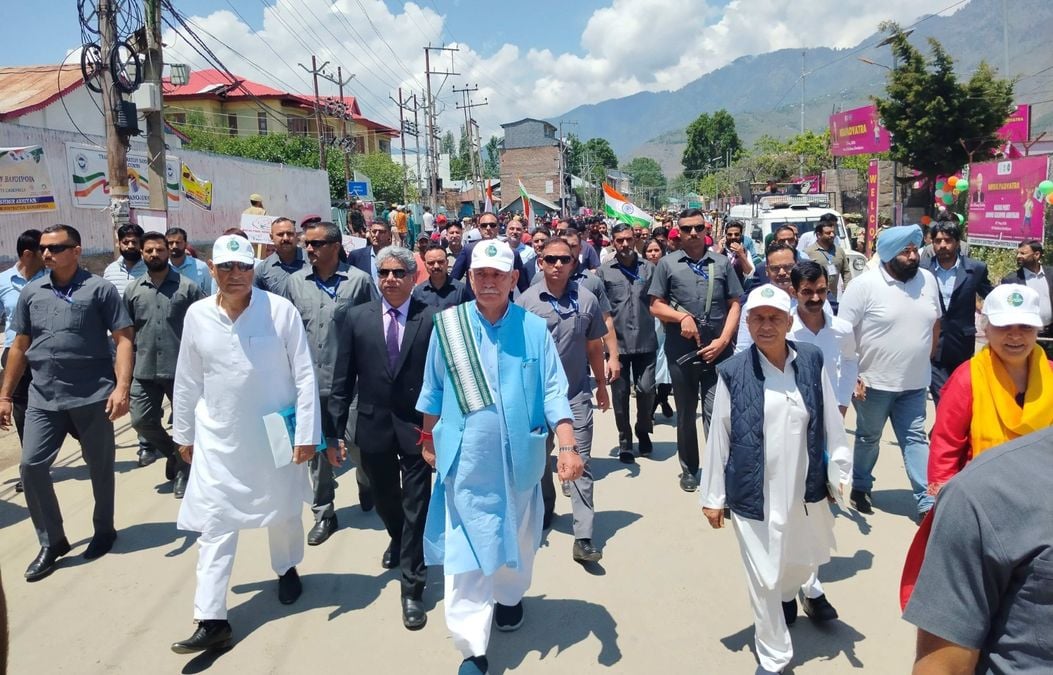
It is against this backdrop that Lieutenant Governor Manoj Sinha launched the 100-Day Nasha Mukt Jammu & Kashmir Abhiyan on April 11, 2026, from Jammu’s Maulana Azad Stadium, per official statements. What sets the campaign apart is the visibility of its leadership. Rather than confining the effort to police statements, Sinha has personally walked padyatras through Reasi, Budgam, Anantnag, Pulwama, Shopian, Kupwara, Baramulla and, on May 25, Bandipora, joining students, traders, religious leaders and ordinary citizens in foot marches against addiction. His message has been blunt: drug trafficking and terror financing, he argues, are “two hands of the same enemy”, drug money builds palaces while it destroys families. With the drive now past the halfway mark of its 100 days, that message has, by the administration’s own account, hardened into a mass movement.
The enforcement figures are striking. By late May, with the campaign in its seventh week, officials cited close to 800 FIRs registered and around 900 drug smugglers and peddlers arrested, with 49 immovable properties attached and 45 demolished, according to figures cited. The passports of 18 traffickers have been recommended for cancellation, while the driving licences of 382 offenders and the registrations of 386 vehicles have been revoked; across both divisions, more than 5,000 chemist shops have been inspected and over 200 drug-store licences suspended. In Anantnag district alone, more than 100 FIRs were registered in a single month and around 250 kilograms of contraband seized, per local reporting. Sinha has also signalled the cancellation of passports and Aadhaar cards of offenders, while insisting the crackdown will not target the innocent and urging anyone wrongly implicated to approach the IGP Kashmir directly.
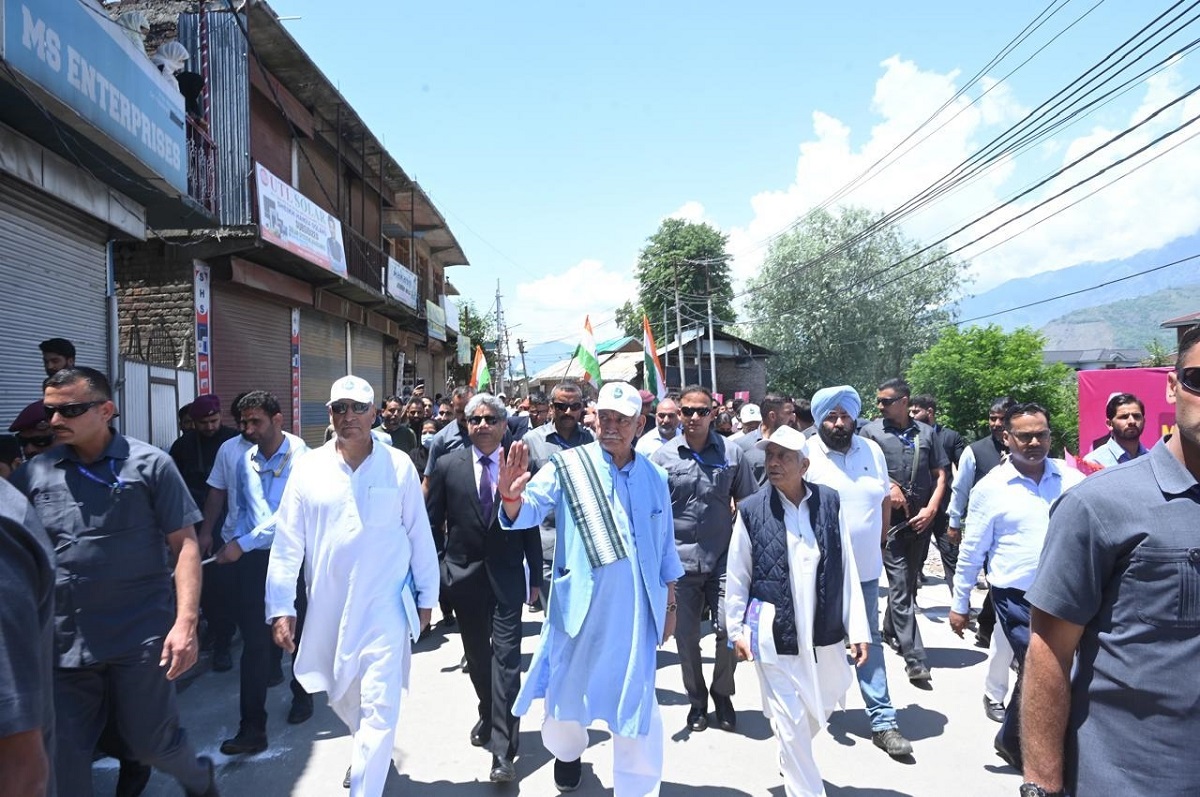
Mobilisation is the campaign’s other arm. Since April 11, more than 1.6 million awareness programmes have been conducted, drawing participation of more than one crore people, as documented; over 7,000 village women’s committees and nearly 3,000 youth clubs have been formed, and over 52,000 individuals reportedly treated at recovery facilities, with new inpatient de-addiction units being developed in government medical colleges.
The most recent phase of the campaign suggests the administration has heard a familiar criticism. On May 25, leading a mega padyatra in Bandipora, Sinha struck a notably different note from the language of seizures and arrests. The campaign’s real success, he said, would be counted not in FIRs but in “the youth who return to life, in the families that are rebuilt.” On the same day he inaugurated a Waqar Knowledge Centre in the district — a rehabilitation and reintegration hub offering recovering users a library, sports facilities and guidance on education, jobs and skilling — with similar centres planned in every block, details here. The administration, he added, is preparing a comprehensive rehabilitation policy that would tie de-addiction to employment, so that those who recover are not simply returned to the circumstances that failed them. The operational drive, meanwhile, has not slowed: on May 26, police attached fresh properties worth around ₹2.25 crore in Anantnag and Kathua districts, a reminder that enforcement and rehabilitation are now being pushed in parallel, see coverage.
As someone who studies the region’s economy, I would add a caution. Enforcement can disrupt supply, but it cannot by itself heal an addicted generation or repair the economic damage — lost productivity among young workers, drained household savings, and a mounting burden on the health system. Sustainable recovery will depend on treatment capacity, trained counsellors, long-term rehabilitation, and the dismantling of stigma. A user pushed off heroin without support too often returns to it. The same pattern of drugs destroying the creativity of youth has played out wherever supply-side crackdowns outran the support systems meant to catch those they displace, and a parallel debate over compassionate paths to lasting recovery from addiction is unfolding elsewhere in India.
That the administration now frames its own success in these terms is itself a shift; Sinha has also said the effort will outlast its 100 days. Whether the Naya Kashmir promise of a Valley reclaiming its youth and its future endures will be measured not in rallies or FIRs, but in how many of today’s patients stay clean, and how firmly the supply chain stays broken. For now, Kashmir has done the hardest thing first. It has stopped looking away.