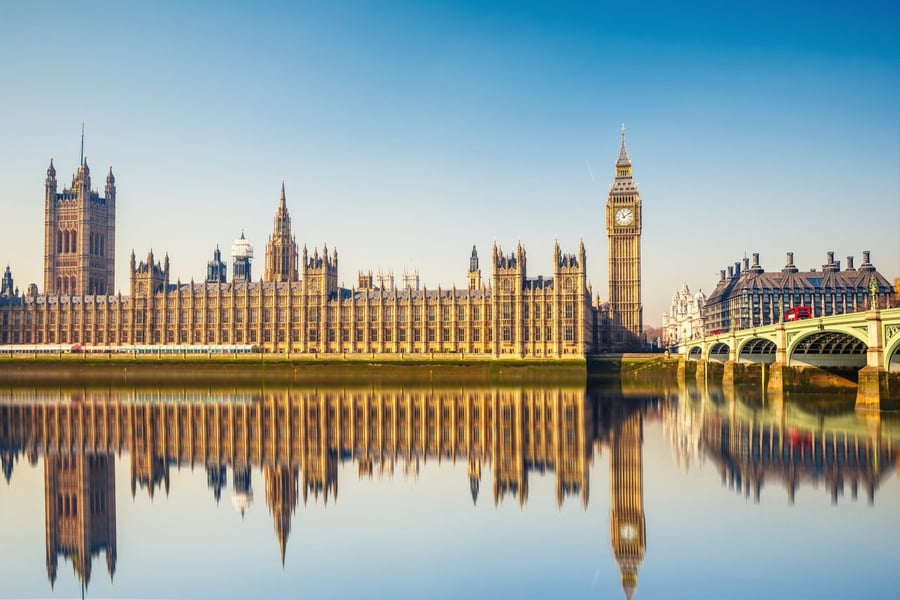

A staggering £325 billion in illicit money is flowing through the UK every year, according to a bombshell financial crime report that is intensifying scrutiny of London’s role as one of the world’s most important hubs for money laundering, offshore secrecy, corruption-linked wealth, and hidden financial networks.
The explosive findings, detailed in a report released by the Finance Innovation Lab, estimate that dirty money moving through Britain now equals more than 10% of the country’s entire GDP. The report argues that the UK’s global financial dominance, combined with weak enforcement, offshore territories, shell company secrecy, and growing crypto expansion plans, has transformed the British financial system into what critics increasingly describe as a “global laundromat” for illicit wealth.
When Britain’s British overseas territories and crown dependencies, including Jersey, the Cayman Islands and the British Virgin Islands, are included, the figure surges to an eye-watering £788 billion annually.
The revelations arrive at a politically sensitive moment for Prime Minister Keir Starmer’s government, which recently postponed its long-awaited Illicit Finance Summit until December while simultaneously backing plans to expand London’s role as an international cryptocurrency hub. Anti-corruption campaigners say the contradiction exposes deep structural problems inside Britain’s financial model.
The report warns that illicit financial flows connected to the UK include money laundering, corruption proceeds, tax evasion, sanctions evasion, illegal trade financing, organized crime revenue, and opaque cross-border wealth transfers hidden through complex corporate structures. Researchers argue that London’s status as one of the world’s leading financial centers has also made it uniquely vulnerable to becoming a gateway for hidden global capital.
Jesse Griffiths, one of the report’s authors, directly challenged official narratives surrounding Britain’s financial sector, warning that the City of London is increasingly enabling criminal and abusive financial activity rather than serving broader public interests.
The findings are likely to reignite longstanding criticism of Britain’s offshore financial ecosystem, particularly its network of overseas territories and dependencies that have repeatedly faced allegations of facilitating secrecy for wealthy individuals, multinational corporations, oligarchs, and politically exposed elites.
The British Virgin Islands, Cayman Islands, Bermuda, Jersey, and other jurisdictions connected to the UK have long attracted criticism from transparency advocates for allowing anonymous shell companies and hidden beneficial ownership structures. Earlier investigations found that several British overseas territories failed to meet transparency deadlines intended to crack down on dirty money and offshore secrecy.
Critics argue that these offshore structures allow vast sums of wealth to move quietly across borders with limited public accountability. Anti-corruption groups say the system has enabled kleptocrats, organized crime syndicates, tax evaders, and sanctions violators to shield assets through British-linked financial channels.
The report also raises alarm over the UK government’s continued push to turn London into a global crypto assets center despite mounting international concerns about cryptocurrency-related laundering and hidden transactions.
Campaigners warn that crypto markets, decentralized exchanges, anonymous wallets, and cross-border digital asset systems could further complicate efforts to trace illicit financial flows. Transparency advocates argue that Britain risks opening another major pathway for hidden capital at a time when enforcement agencies are already struggling to keep pace with traditional financial crime.
The Finance Innovation Lab called for a pause in Britain’s crypto expansion plans, warning that weak safeguards could intensify existing vulnerabilities in the financial system.
At the center of the controversy is the growing perception that British enforcement agencies lack the funding and political support necessary to tackle industrial-scale financial crime.
The report backs calls for increased funding for the National Crime Agency and the Serious Fraud Office, arguing that under-resourced investigators cannot effectively challenge sophisticated laundering networks operating across multiple jurisdictions.
The concerns come amid a broader government crackdown on businesses suspected of laundering criminal cash through UK high streets. British authorities recently announced new operations targeting barber shops, vape stores, mini-marts, and American candy stores allegedly used as fronts for organized crime groups.
The National Crime Agency estimates that at least £12 billion in criminal cash is generated annually within the UK itself, with around £1 billion laundered through cash-intensive retail businesses.
Authorities have already conducted thousands of raids under nationwide operations targeting suspected laundering fronts. Police seized millions in cash, illegal goods, counterfeit products, and narcotics during recent enforcement actions.
However, anti-corruption experts argue these measures barely scratch the surface compared with the scale of financial activity moving through Britain’s banking system, property markets, offshore networks, and corporate service industry.
Transparency advocates have repeatedly warned that “professional enablers” within Britain’s legal, accounting, and financial sectors continue to play a major role in facilitating suspicious financial flows.
Law firms, accountants, corporate formation agents, wealth managers, and consultants have all faced scrutiny over allegations that weak oversight and fragmented regulation allow questionable money to enter the UK financial system.
Earlier investigations linked British institutions to major international laundering schemes involving post-Soviet oligarch networks, offshore shell companies, and luxury London real estate purchases routed through complex financial transactions.
Transparency International previously identified more than £325 billion in suspicious funds tied to hundreds of corruption and laundering cases involving UK-linked entities over the past three decades.
Much of that money reportedly flowed through banks, legal firms, offshore structures, and shell companies connected to Britain and its overseas territories.
Luxury London real estate has also faced repeated allegations of functioning as a safe destination for hidden wealth. Critics argue that opaque ownership systems have allowed politically connected elites and foreign actors to quietly move large amounts of money into high-end UK property markets.
The issue has become increasingly geopolitical as Western governments impose sanctions on Russian, Middle Eastern, African, and Asian elites while simultaneously facing accusations that their own financial systems enabled global capital concealment for decades.
Britain has often promoted itself as a leader in transparency and anti-corruption efforts internationally. Yet critics say the country’s offshore architecture, financial lobbying power, and historically permissive regulatory culture have undermined those claims.
The report’s release is expected to intensify political pressure on Labour ministers ahead of the postponed Illicit Finance Summit later this year. Campaigners are demanding tougher corporate transparency laws, public beneficial ownership registers, stronger crypto regulations, harsher enforcement against shell companies, and expanded funding for financial crime investigators.
Phil Brickell, chair of the parliamentary anti-corruption group backing the report’s recommendations, argued that Britain must stop being “part of the problem” and finally confront the role its financial ecosystem plays in enabling economic crime worldwide.
The Treasury has not publicly commented on the findings.