MANCHESTER — The goal count was two. The verdict was damnation.
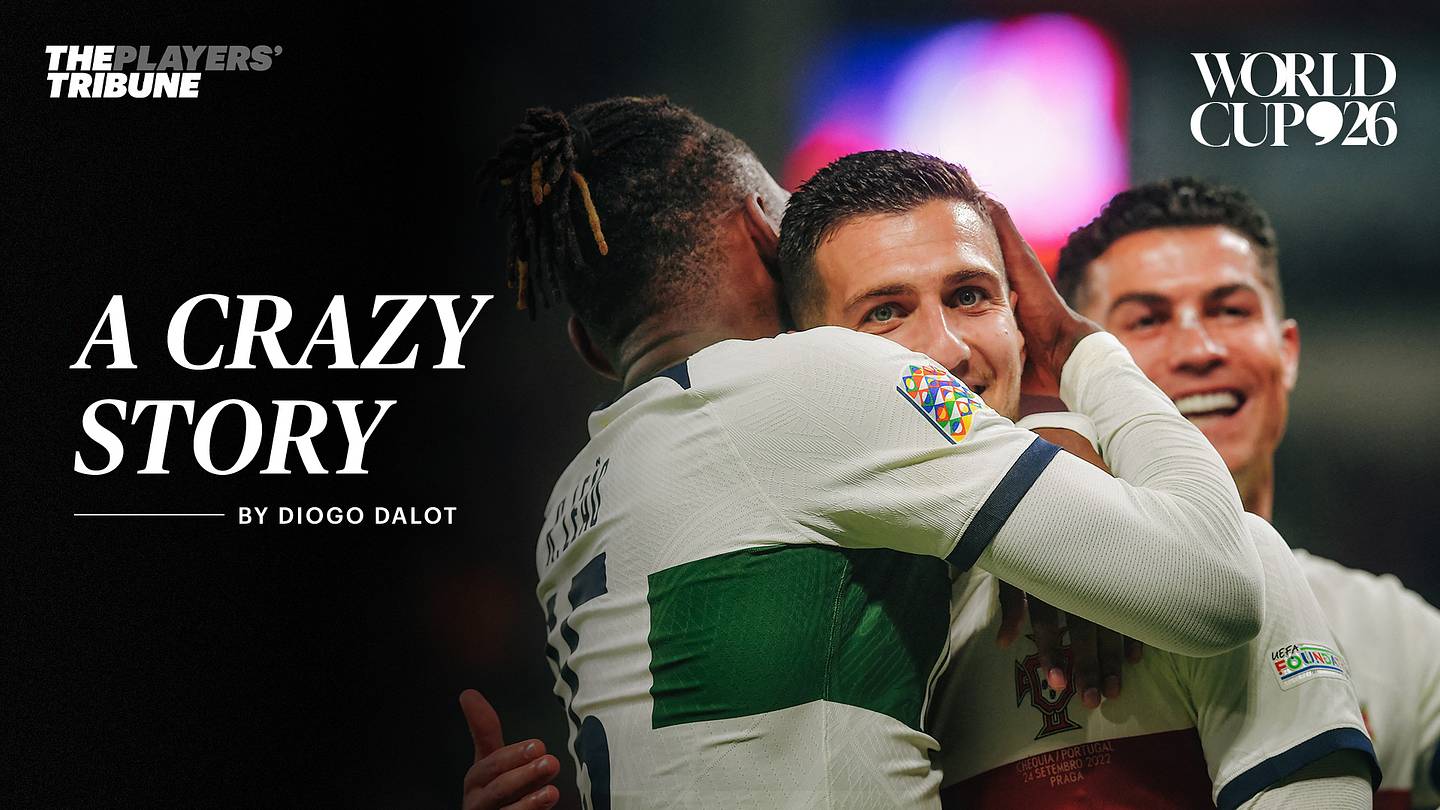
In a first-person essay published Thursday by The Players’ Tribune, Manchester United right-back Diogo Dalot recounted a moment from the 2021/22 season that says more about Cristiano Ronaldo’s internal standard than any goal tally could. A United striker had scored twice in a single match. Ronaldo pulled Dalot aside and delivered his prognosis with the flat certainty of a man reading a chest X-ray.
“He’s not gonna make it here.”
Dalot pushed back. “Cris, he scored two goals today!” The reply came without pause: “Yeah, but he didn’t have the fire to go for the third.”
Dalot declined to name the player. During Ronaldo’s only full season back at Old Trafford, the strikers on United’s books were Mason Greenwood, Edinson Cavani, Anthony Martial, and Marcus Rashford — each of whom, in different ways, has since become a footnote in a reconstruction still underway. What Dalot made clear is that Ronaldo had already written the footnote before the season was half over.
The anecdote has dominated football coverage since Thursday, but what the headlines have largely stripped away is the context that makes it meaningful. Dalot did not offer this moment as gossip. He offered it as the single clearest lesson he drew from a year spent studying the most decorated forward of his generation at close range — a lesson about what separates players who endure at the highest level from those who plateau once the obvious rewards arrive.
“That season with Cristiano was when I really started to grow as a player and as a person,” Dalot wrote. “I lost count of the number of predictions he got right, because he knows so well what it takes to go to the top.”
The essay, running to several thousand words, covers Dalot’s entire arc from Porto to Old Trafford — José Mourinho recruiting him over pancakes in Braga, a career-threatening knee surgery that Mourinho waved aside, three seasons spent watching games from the directors’ box or the dressing room television, a loan to AC Milan where Paolo Maldini’s quiet belief rebuilt him, and finally the text from Ronaldo that brought him back: “Kid, stay. I’m coming back to Manchester.” Dalot was weighing offers from at least two other clubs at the time. Ronaldo’s message, and what it implied about what Old Trafford could still become, settled the question.
What Dalot describes in the year that followed is less a tactical education than a psychological one. Ronaldo’s gym sets were logged. His pre-match nerves — a trembling leg under the lunch table before a Champions League group game, even with five winners’ medals already in the cabinet — were observed and internalized. His processing time after being dropped: exactly three hours, by his own account, after which the anger was acknowledged and then set aside. “Do you think this will affect the rest of my day?”
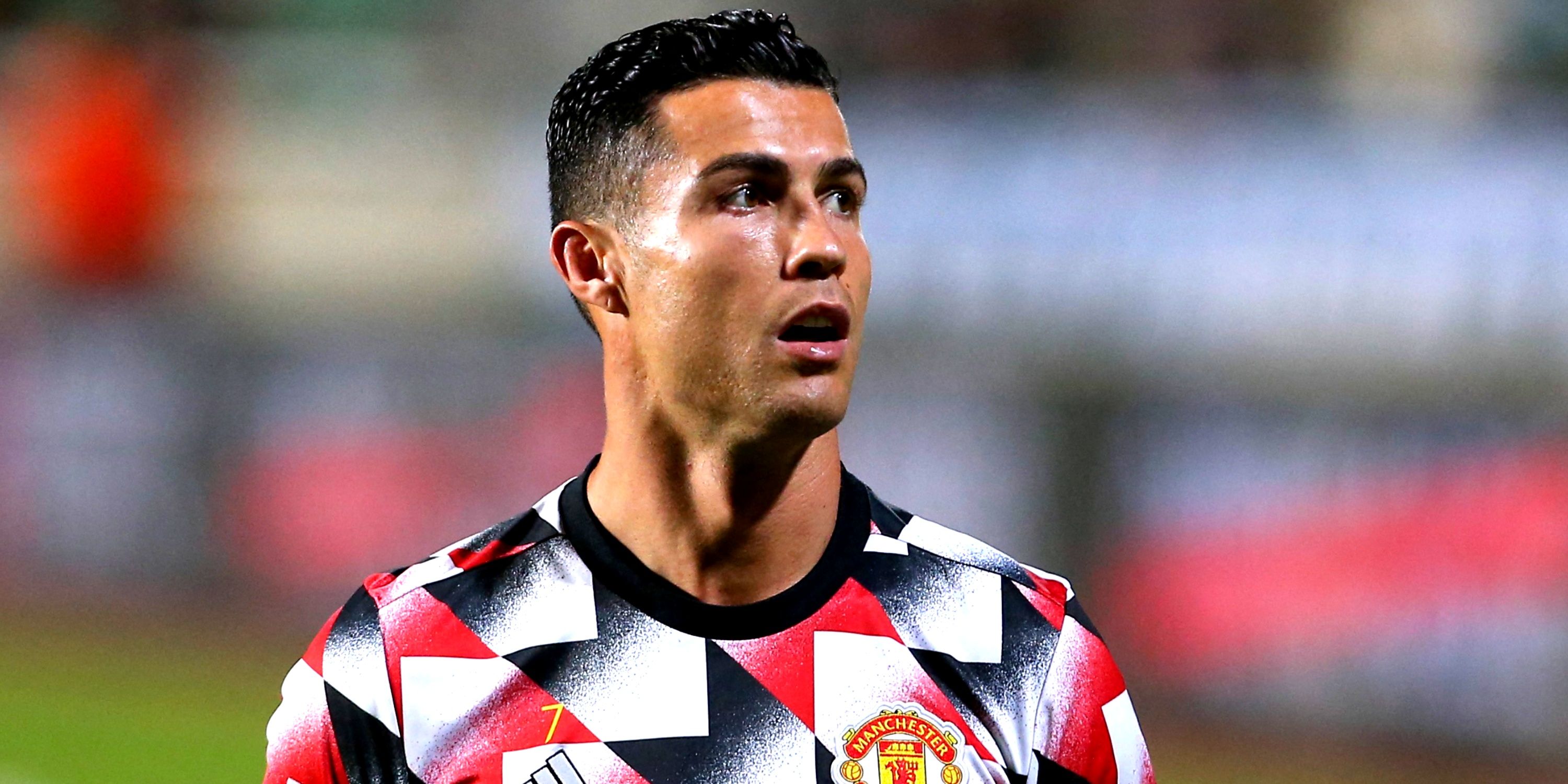
The striker verdict, read inside that framework, is less a dismissal than a diagnostic. What Ronaldo was measuring was not the goals already scored but the desire for the goal that hadn’t been scored yet — the fire that doesn’t extinguish when the job is nominally done. That standard, Dalot suggests, is not something most players at Old Trafford had ever encountered from the inside before.
Whether the unnamed striker was Cavani, whose Old Trafford career ended that summer, or Rashford, who would spend parts of the following two seasons in and out of form before departing to Barcelona on loan in January 2025, or one of the others, Dalot did not say. The point was not the identity but the principle. At his current club, Manchester United have since moved aggressively to reconstruct their attack, with the summer window now open and multiple striker targets under evaluation.
The essay also carries an undercurrent that the transfer headlines will not carry: Dalot’s own near-exit from the club. He had spent 2020/21 on loan at Milan, fallen in love with the project there, and was actively considering staying. It was Ronaldo, not a director or a manager, who made the decisive pitch. The relationship that had formed at Portugal’s national team camps — Dalot had been called into the senior squad mid-tournament without ever having played a senior game, completely unfit, and Ronaldo had spent hours in hotel lobbies and at dinner tables with him — had already given the right-back a read on what Ronaldo expected of people around him.
“When your rival is Messi, nothing is ever enough,” Dalot wrote, immediately after recounting the two-goal exchange. That sentence is not a boast. It is the explanatory clause for everything that follows — and, arguably, for much of what United’s post-Ferguson era failed to provide.
Ronaldo’s second spell at Old Trafford ended acrimoniously in November 2022, with a televised interview that Ronaldo himself later reflected on as a difficult chapter. He has since spoken about the circumstances of his departure and what he learned from it. The essay does not touch on any of that. Dalot’s account stops at the season together and the things it taught him — a deliberate editorial choice that says something about how the right-back wants to frame his own relationship with that period.
Dalot is now 27, under contract at United through 2028, and preparing to represent Portugal at the World Cup this summer. The essay is timed to that tournament — its emotional centre is not Ronaldo but the death of Diogo Jota last summer, and Dalot’s account of how Portugal’s squad is carrying that grief into the competition. “We won’t just be fighting for our country,” he wrote. “We’ll be fighting for Diogo.”
The Ronaldo material, for all the attention it has received, occupies perhaps four paragraphs of an essay that is really about something else: what it means to survive a career full of near-misses, not-quite-readies, and sideline Saturdays, and still believe the thing you’ve devoted your life to is worth the cost. Dalot’s answer is not sentimental. It is mechanical — mechanisms, he and Ronaldo call them, the mental and physical routines that keep elite athletes functional in environments that routinely break less deliberate people.
Whether the unnamed striker ever found those mechanisms is a question that remains open. Ronaldo’s read, from one afternoon’s observation of a man who had just scored twice, was that he had not. What happened next, in most of the relevant careers, suggests the prediction was not wrong.
Dalot has made 246 appearances for Manchester United. The gym records, he noted, are still his.