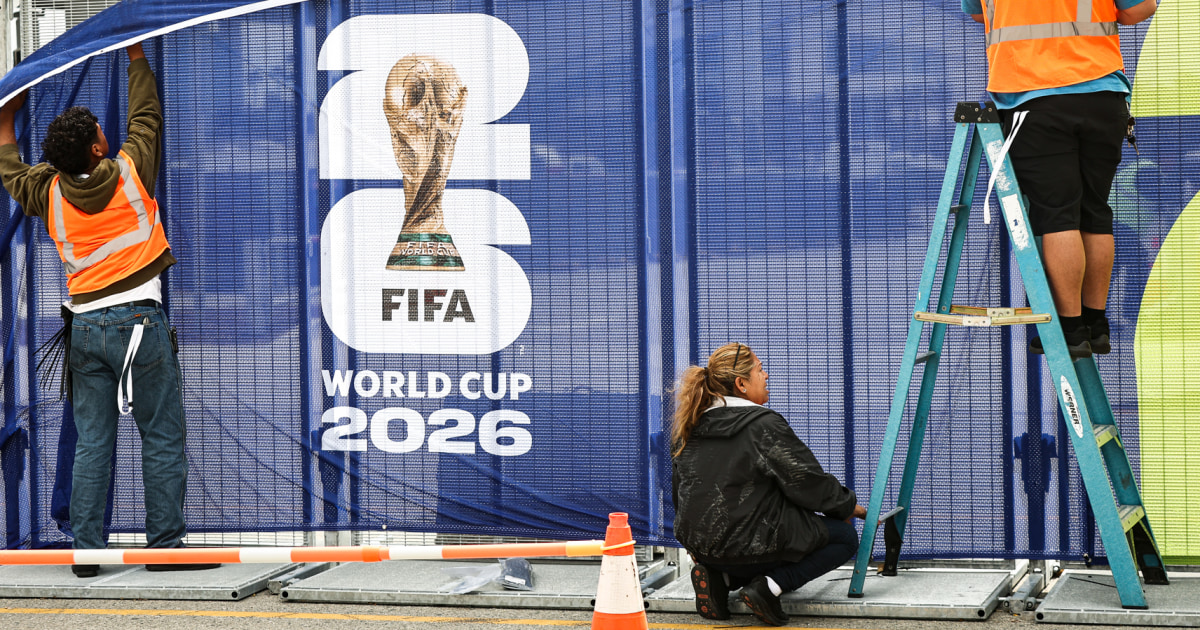

CORAL GABLES, Fla. — The stadium at Hard Rock in Miami offers precious little shade. Neither does AT&T Stadium in Arlington, where summer afternoons regularly push past 90 degrees Fahrenheit in June. Days before the 2026 FIFA World Cup’s June 11 kickoff, fans heading to those venues received word that they will not be allowed to bring a bottle of water inside.
In a last-minute reversal buried in an updated version of its Stadium Code of Conduct, FIFA this week removed a provision it had previously guaranteed — that fans could bring transparent, reusable bottles of up to one liter into any of the 16 tournament stadiums. The new language is blunt: “for the avoidance of doubt, reusable water bottles may not be brought into the stadium.” The same document also bans vuvuzelas, the plastic horns that became synonymous with the 2010 World Cup in South Africa and that have trailed the tournament as a sonic signature for 16 years.
The two decisions landed in the same week, from the same document. Together they drew a portrait of a governing body trimming the fan experience in ways that happen to align with its commercial partnerships. All beverages at World Cup stadiums — water, soda and juices — will be supplied exclusively by Coca-Cola, FIFA’s longtime sponsor. The company’s bottled water brand, Dasani, is expected to be among what’s on offer inside.
FIFA’s stated reason for the water bottle ban is safety. “FIFA made the decision to prohibit bottles to prevent risk and injury to players and attendees,” a spokesperson told NBC News in a statement Thursday. The organization noted that several of the 16 stadiums had already prohibited outside bottles under their own house rules, so applying the restriction uniformly across the tournament made sense. Cups, jars, cans and glass containers are similarly banned on the same grounds — they can be thrown.
That framing did not land well with supporters’ groups. The Free Lions, an England fan organization affiliated with the Football Supporters’ Association, said in a statement that in all prior discussions with FIFA, access to free water inside stadiums was a condition it had been explicitly assured would be met. “Naturally, the immediate thought from supporters is this is just the latest money-grab,” the group wrote. “For all of the effort they are going to with ‘drinks breaks’ for the players, this is such a strange, late change.”
The drinks-breaks criticism is pointed. FIFA announced earlier this year that every match in the 48-team tournament would include a mandatory three-minute hydration pause midway through each half — effectively turning soccer games into four-quarter affairs. The governing body said the breaks were a response to expected heat. Broadcasters, who benefit from additional advertising windows during those stoppages, said nothing publicly in opposition.
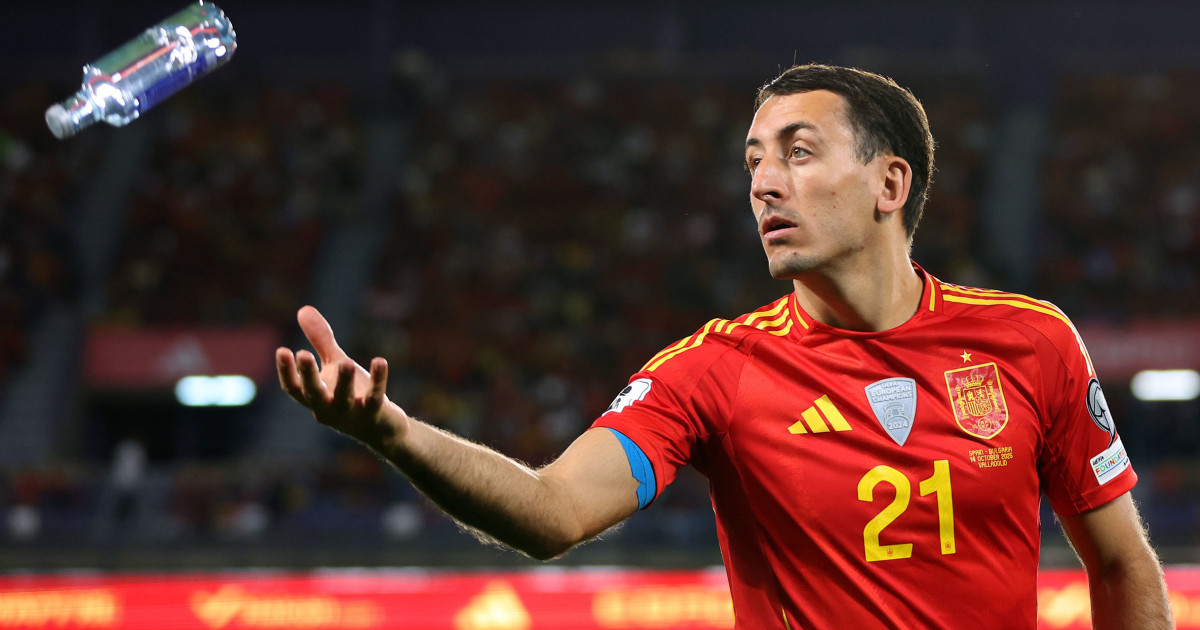
Scientists have been warning for months that the heat dimension is not a marginal concern. Researchers at Imperial College London and World Weather Attribution found that roughly one in four of the 104 scheduled matches are set in cities where temperatures could reach the threshold at which the body’s ability to cool itself begins to fail. A separate health alert earlier this tournament cycle flagged the risks of concentrated crowds moving between outdoor settings in high-humidity American cities. Five games are projected to approach or exceed the wet-bulb globe temperature level — a combined measure of heat and humidity — at which FIFPRO, the international players’ union, has formally recommended postponing play.
Andrew Giuliani, executive director of the White House Task Force for this year’s World Cup, acknowledged the policy is still in motion. Speaking to reporters including the Associated Press at a Miami kickoff event Thursday, Giuliani said conversations with FIFA are continuing. He cited both the safety rationale — a frozen bottle could be weaponized — and the hydration concern in the same breath. “Understanding these games are going to be very hot. We want to make sure that fans have access to water,” he said. “We also want to make sure that everybody is safe.” FIFA President Gianni Infantino was also present at the Miami event but did not take questions from reporters.
What Giuliani did not say — and what FIFA has not clarified — is what fans will pay for that water. The governing body said stadium pricing “will remain consistent with other events held at each stadium,” which at major NFL and college football venues in the southern United States means upwards of five dollars for a small bottle. It is not nothing in a tournament where ticket prices for group-stage matches have already drawn scrutiny from supporters’ groups in Europe, and where attorneys general in New York and New Jersey have launched a formal investigation into FIFA’s ticket sales practices.
The vuvuzela prohibition, by contrast, carries no pretense of a safety rationale. The Code of Conduct bars “devices that produce noise or other excessively loud sounds, such as vuvuzelas, whistles, air horns, loudspeakers, etc.” South African fans invented the instrument’s place in World Cup lore in 2010; it featured at Brazil 2014 and, to a lesser extent, Russia 2018. FIFA has periodically discouraged it without banning it outright. The 2026 edition of the Code makes the prohibition explicit and uniform.
The practical effect is a World Cup that arrives in North America stripped of two things that had previously defined it: the right of a fan to carry their own water through a summer afternoon in Texas heat, and the brass-and-plastic sound of a South African invention that reminded 90,000-seat venues that global soccer had arrived somewhere. Whether that trade lands as reasonable security protocol or as an object lesson in FIFA’s relationship with its sponsors depends entirely on which end of the water price you’re standing at.
The tournament runs from June 11 to July 19. Pre-tournament controversies have not been limited to fan conduct rules — FIFA has also faced questions over its decision to dismiss a long-running bribery prosecution connected to the tournament’s commercial ecosystem. Hotel bookings in several host cities have also fallen short of projections, raising questions about how many international fans ultimately make the trip. Exceptions to the bottle ban exist for baby formula, sterilized water for infants, and liquids required for documented medical purposes up to 500 milliliters, provided a medical certificate in English, French or Spanish accompanies the fan through the gate.
FIFA has said misting stations, hydration stations and cooling tents will be available around stadium exteriors. Those measures apply to the plaza outside. They stop at the turnstiles.