
RABAT — The accusation that arrived Monday from Amman was the bluntest statement anyone inside the game had made out loud. Prince Ali bin Hussein, Jordan’s football association president and former FIFA vice president, announced publicly that FIFA had offered to resolve his federation’s outstanding grievances in exchange for endorsing Gianni Infantino’s re-election campaign. The offer, Prince Ali said, concerned unpaid prize money from the 2025 Arab Cup, visa difficulties for Jordanian supporters, and inequitable cost burdens that smaller nations had been absorbing for months. “The whole situation amounts to blackmail,” Prince Ali said, “and we refuse to give in to that.”
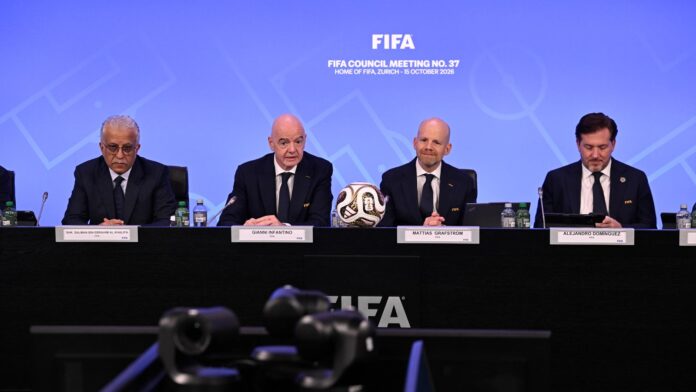
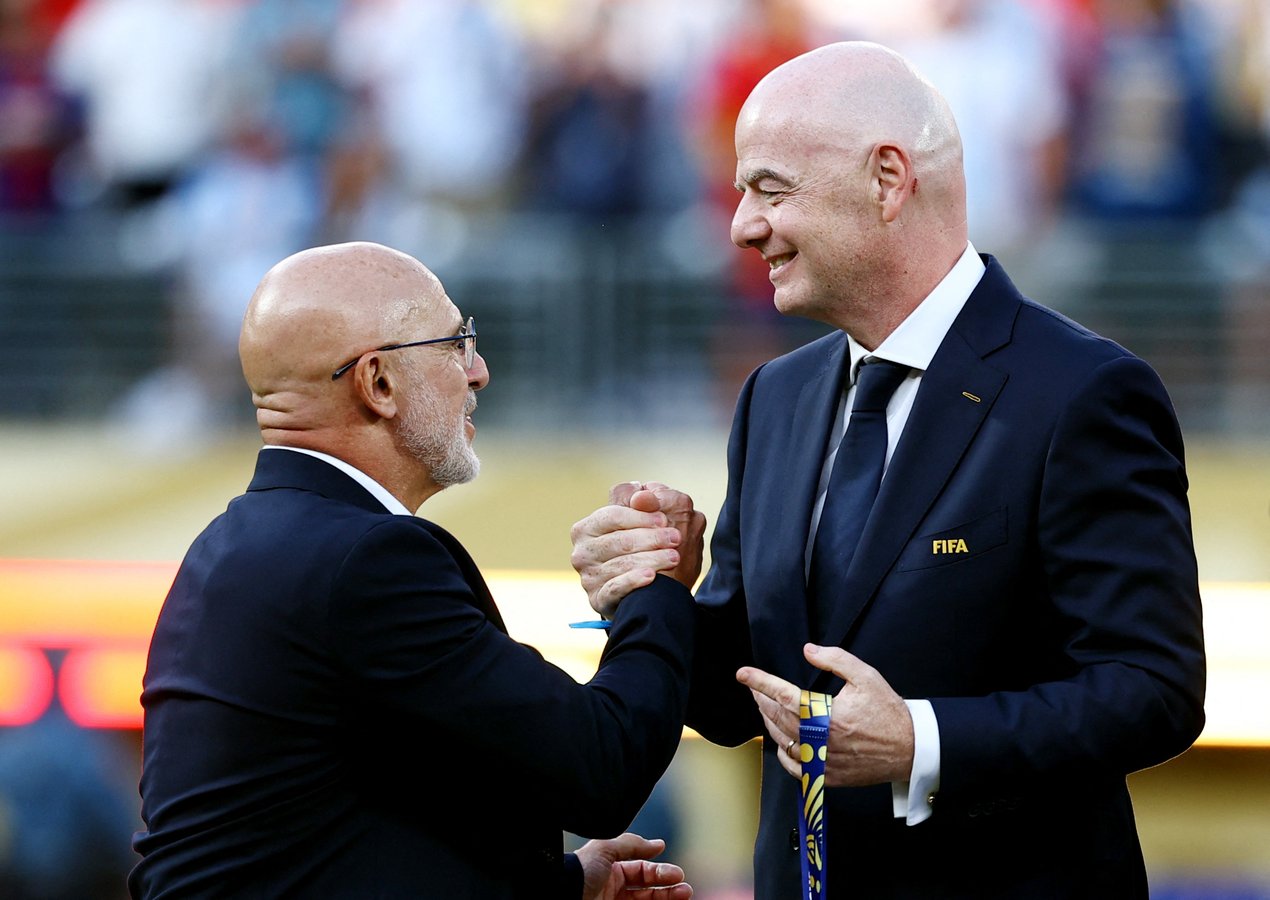
Infantino was in Morocco when the statement landed. He had been there for the better part of two weeks, working contacts among national association executives at the African Football Confederation’s regional office in Salé, a city across the Bouregreg estuary from Rabat. On Wednesday, he summoned FIFA’s senior leadership for an emergency session at the same location, a meeting that took on the character of a command post rather than a boardroom. His presidency, once considered unassailable entering the year of the World Cup he had spent years reshaping, was in open crisis.
The crisis traces back to a proposal Infantino had quietly assembled over several months: a plan to sell 20 percent of a new World Cup commercial rights vehicle to a group of private investors for $4.2 billion. The deal was structured to direct $20 million to $40 million in annual dividends to national associations that backed it. The investors were to be recruited by Thrive Eternal, a fund associated with Joshua Kushner, the entrepreneur and younger brother of Jared Kushner. The family’s political relationship with U.S. President Donald Trump drew scrutiny the moment Kushner’s name appeared in FIFA documents.
The plan collapsed before it reached a vote. UEFA called it “selling the soul of the game” and declared it had “no confidence” in Infantino’s leadership. CONCACAF and the Asian Football Confederation joined that position, forming a bloc that together represents well over 43 of FIFA’s member associations, according to Al Jazeera. Under FIFA’s statutes, that number is the threshold required to formally petition for an Extraordinary Congress.
Infantino withdrew the proposal last Friday. The retreat bought him nothing. FIFA Secretary-General Mattias Grafström sent an internal memo describing “the sad and reproachable series of events” that led to what he called the plan’s “permanent abandonment.” Chief Operating Officer Kevin Lamour told staff they had been “deceived” and called it “the project of one person.” Carlos Cordeiro, a senior FIFA adviser, resigned in protest. Arsene Wenger, FIFA’s Chief of Global Football Development, said publicly he had been “not aware” of the proposal’s contents before it was announced.

What Infantino has preserved is a second geography of loyalty. Morocco, the 2030 World Cup co-host, has remained with him. Qatar, Kuwait, Lebanon, Sri Lanka, and Indonesia have pledged support, and several African association administrators traveled to Salé this week to demonstrate solidarity in person. The African continent’s federation as a whole is unsettled; sub-regional blocs have sent mixed signals and individual positions remain in flux. His supporters argue that the confederations opposing him represent institutional interests more than member sentiment, and that rank-and-file associations will not rush to sign a formal petition against a president who controls their financial lifelines.
The number that matters most is 43. That is how many of FIFA’s 211 member associations must formally request a special session before FIFA’s rules require one to be convened. Infantino scrapped his stake-sale plan after the confederation opposition crystallized, but requesting an Extraordinary Congress is a formal act with real political costs. Smaller associations dependent on FIFA disbursements may calculate that publicly crossing the president carries risks that make them hesitate, regardless of private sympathies.
Infantino faces a presidential election in March and has no declared opponent. Prince Ali ran against him in 2015 and 2016, losing both times. UEFA President Aleksander Ceferin, Nasser al-Khelaifi of Paris Saint-Germain, and Sheikh Salman of Bahrain have all been discussed as potential challengers. None has filed registration papers. The deadline is November 18, leaving the field open for longer than Infantino’s opponents would prefer.
What Prince Ali’s accusation added to the crisis was something different from confederation politics: a specific mechanism and a named victim. Jordan’s federation had been waiting months for prize money from the 2025 Arab Cup. It had complained about World Cup ticket prices, visa denials for Jordanian supporters, and a tax arrangement that placed burdens on smaller nations that Canadian and Mexican host federations did not share. According to Prince Ali, FIFA’s response was to suggest, without anything in writing, that these problems might be resolved more smoothly if Jordan endorsed Infantino. His federation had declined before, he said, and would not change its position.
The emergency session in Salé was still in progress Wednesday evening. Infantino’s opponents hold the numerical advantage. Whether they hold the organizational will to formalize it is the question the next several weeks will settle.