
ZURICH – Fernando Cordeiro, one of FIFA’s most senior advisers, resigned from the governing body Wednesday, becoming the second official in a week to publicly quit over a plan to sell equity stakes in the organization to private investors, a proposal that football’s most powerful confederations have united to oppose but that FIFA President Gianni Infantino has not withdrawn.
Cordeiro’s departure came a day after a second unnamed FIFA official told The Associated Press that the organization had “deceived staff” about the nature and scale of the ownership plan, which would allow sovereign wealth funds and private equity groups to acquire minority stakes in FIFA’s commercial operations ahead of the 2026 World Cup cycle. Staff advisers, the official said, were given no opportunity to review the proposal before it was presented to the FIFA Council.
The plan was reportedly designed to raise billions in private capital to underwrite expanded World Cup operations, but it has met fierce resistance from every major regional confederation. UEFA said it had received no formal notification of the proposal and viewed any privatization of FIFA’s operations as a fundamental threat to the principle of football governance by football institutions. CONCACAF, which governs the sport across North America, Central America and the Caribbean, called for an emergency review.
The Asian Football Confederation was equally direct. In a statement issued late Tuesday, the AFC said its members had not been consulted and that any arrangement granting private entities a financial stake in FIFA’s core functions would require approval from the full FIFA Congress, a body representing 211 member associations that has not been called to vote on the matter.
What made the timing of Cordeiro’s resignation particularly striking was its proximity to a parallel development in Washington. The White House’s senior adviser on FIFA relations, a position created ahead of the 2026 World Cup co-hosted by the United States, Canada and Mexico, also stepped down this week, citing disagreements over how FIFA was conducting governance discussions with American government stakeholders. FIFA has not responded to questions about either departure.
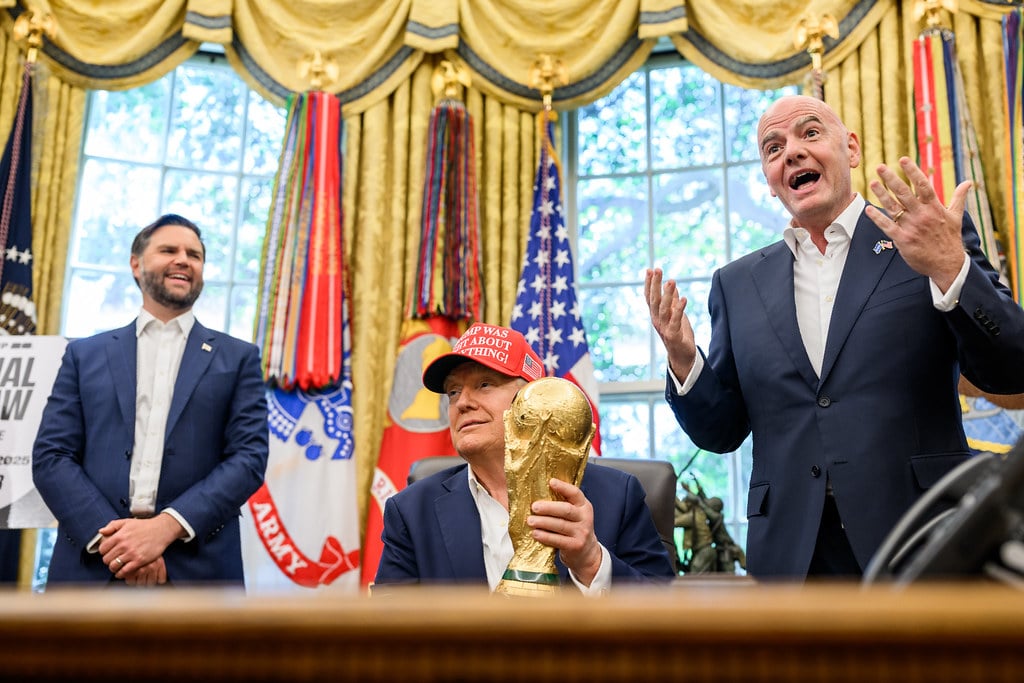
Infantino has spent much of 2026 positioning the 2026 World Cup, the largest in the tournament’s history with 48 teams across 16 host cities in three countries, as the foundation for a permanent financial transformation of global soccer. The equity proposal is the most ambitious element of that vision, and its collapse or delay would represent a significant setback for a president who has tied his legacy to expanding both the tournament’s size and FIFA’s revenue base.
The resistance from confederations reflects a deeper institutional tension. The traditional model of FIFA governance, in which member associations retain collective ownership of the organization’s assets and operations, has been eroded gradually over Infantino’s tenure through commercial agreements that outsource broadcasting, marketing and hospitality rights to private partners. The equity proposal would formalize that shift in a way that critics argue is irreversible.
Norway has been among the most vocal national associations pressing FIFA on governance integrity. Norway’s football federation filed an ethics complaint with FIFA in July over a pattern of opaque decision-making under Infantino, a move that drew backing from several European associations. The equity plan was not mentioned in that complaint, which predated its emergence, but the overlap has allowed critics to frame both matters as parts of a single governance crisis.
FIFA officials loyal to Infantino have pushed back on that characterization, arguing that confederation objections reflect institutional conservatism rather than principled opposition to modernizing football’s finances. Three people briefed on internal FIFA discussions said the proposal was still considered active as of Wednesday and had not been formally withdrawn. A fourth said Infantino had indicated in private that he viewed confederation resistance as a negotiating position rather than a veto.
The 2026 World Cup begins in June in the United States, and FIFA’s commercial calendar for the tournament is already substantially committed. Broadcasters, sponsors and hospitality partners have signed agreements whose economics were calculated without any assumption of private equity involvement in FIFA’s governance. How the equity plan, if it proceeds in any form, fits alongside those existing obligations has not been publicly addressed.
For those watching from inside the organization, what mattered most about Cordeiro’s exit was not the specific objection but the signal it sent: that advisers recruited for their expertise in financial governance are no longer willing to remain associated with a process they regard as neither transparent nor sound. Whether that signal reaches Infantino is not something any of the people in contact with the situation could confirm.