
BUENOS AIRES — At the 10th minute of every football match in Argentina, something will now happen that has never happened before. The referee’s whistle sounds. Players stop moving. The ball sits motionless on the pitch. Then, from every terrace, every stand, every concrete corner of every stadium in the country, from the Superliga to the women’s league, from futsal courts in the provinces to beach soccer tournaments along the coast, an eruption of applause fills the air.
The name it is meant for is no longer there to hear it.
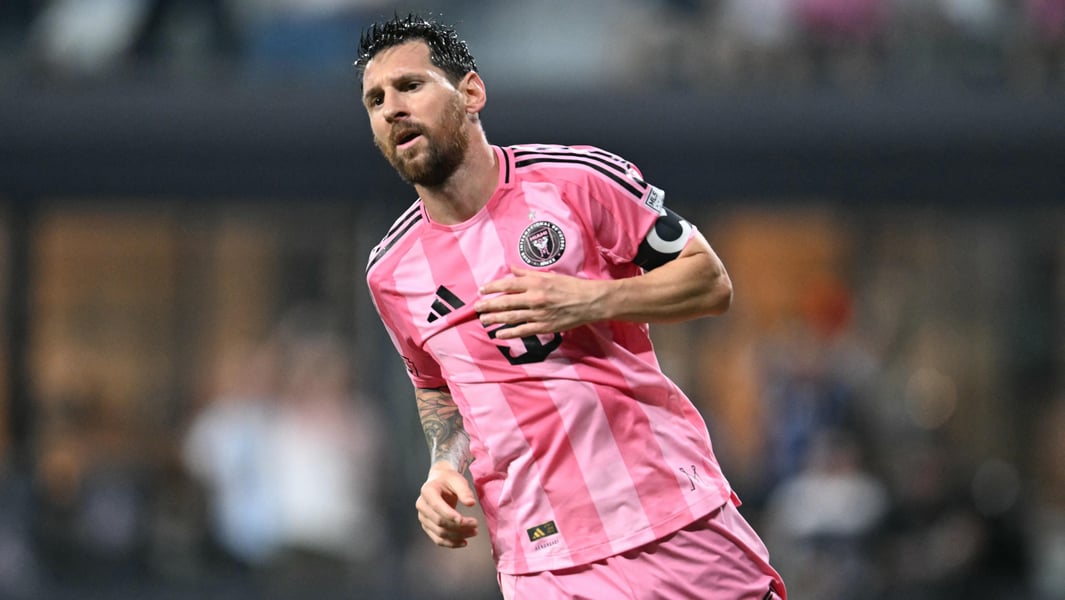
That is the tribute the Asociación del Fútbol Argentino announced Wednesday for Lionel Messi, one day after the country absorbed the full weight of what his retirement really means. Every match in every category, across every gender and format of Argentine football, will pause at the 10-minute mark for exactly 60 seconds of applause. The gesture is tied to the number on the back of his shirt, the No. 10 he made legendary across 21 years and 207 international appearances. It is also, quietly, a statement about grief.
The tribute began Wednesday evening during a Copa Argentina match between Vélez Sarsfield and Boca Juniors. At the 10th minute of that game, everything stopped. Players stood still. Supporters rose from their seats. The noise that followed was not the kind that comes from a goal or a tackle or a last-minute save. It was the kind that comes when an entire country is trying to say something it does not quite have words for.
Argentina’s football association made clear this is not a one-weekend gesture. The statement, released Wednesday, confirmed the 10th-minute applause will apply to all competitions under AFA jurisdiction, covering men’s and women’s 11-a-side leagues, futsal, and beach soccer. Stadiums equipped with video screens have been instructed to show AFA’s official farewell video before kick-off at each match. The nearly two-minute video, already circulating on the association’s social channels, traces the arc of Messi’s career in light blue and white, from his debut as a teenager through the World Cup he finally won in Qatar in 2022, through the Copa América titles, through the tearful end in New Jersey this summer. It closes with a message directed at him: “Thank you for uniting an entire country behind this shield.”
It is a tribute without a fixed end date. Argentina is not marking an anniversary. It is marking an absence.
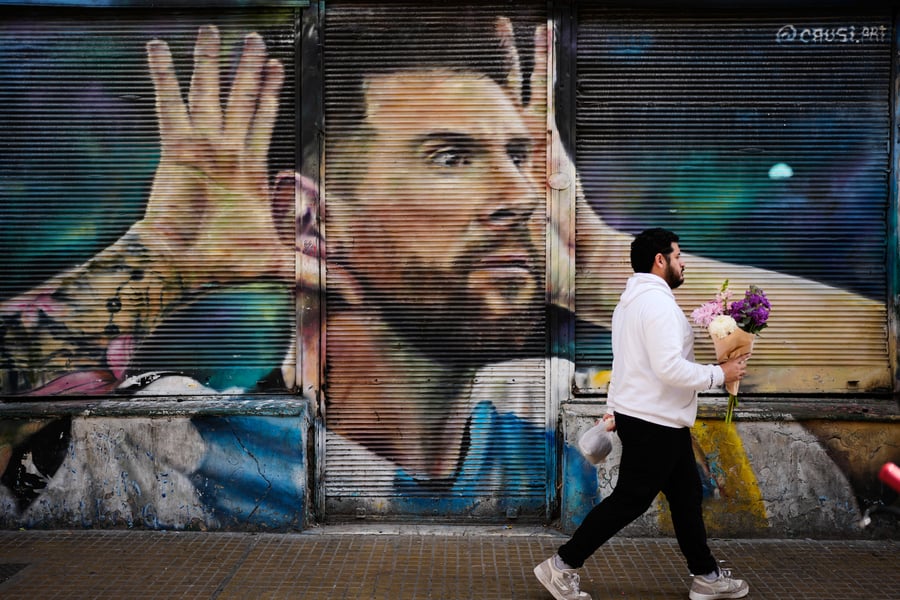
By the time he stepped away, the numbers had become almost impossible to process. Two hundred and seven caps. One hundred and twenty-five goals. Eight Ballon d’Or awards. A World Cup. Two Copa Américas. A Finalissima. For the better part of two decades, Messi was the reason millions of children in Argentina put on a light blue and white shirt. He was also, for a long time, the reason Argentina’s relationship with its own footballing identity was so complicated: the expectations, the heartbreak, the near-misses at four World Cups before Lusail, and then, finally, the release.
Bleacher Report reported the full details of the AFA’s announcement, including the scope of the tribute across all football disciplines. According to the association, the first instance of the 10th-minute pause took place Wednesday at the Copa Argentina fixture between two of the country’s most historic clubs.
What the AFA is trying to honor is not just the trophies. It is everything the trophies represented for a country that needed them to mean something. His retirement letter acknowledged that dimension directly: that it hurt not because of personal ambition, but because he understood what it meant to those who had followed him through the years that did not work out.
The congressional response has been swift. A bill introduced in Buenos Aires this week proposes that Messi be designated an “illustrious and roving ambassador of the Argentine Republic”, a title without formal precedent in Argentine football. The legislature is expected to vote on the measure before the month ends.
He spent 21 years with the national team. He played his first match at 18 and was sent off after 42 seconds on debut in a friendly, then rebuilt from that chaotic start into the most decorated player the sport has produced. The question of whether he would win a World Cup with Argentina consumed an entire generation of supporters. When he walked off the pitch in Qatar with the trophy in 2022, much of the country wept. When he walked off the pitch in New Jersey this summer, they wept again, for different reasons, but with the same recognition that something irreplaceable had just gone somewhere it would not come back from.
He rejoined Inter Miami for training after the World Cup, where his club career continues. But the shirt he wore for Argentina is now part of history, and the AFA’s tribute understands exactly what that means. A minute of applause at the 10th minute of every match will not fill the absence. What it will do, at every kickoff, in every stadium, across every corner of Argentine football for the foreseeable future, is make the absence audible.
At the 10th minute, the game will pause, and for 60 seconds, Argentina will say again what it could never quite say enough while he was still playing.
What it cannot answer, what no applause can settle, is what Argentine football becomes now that the number 10 is no longer anyone’s to claim.