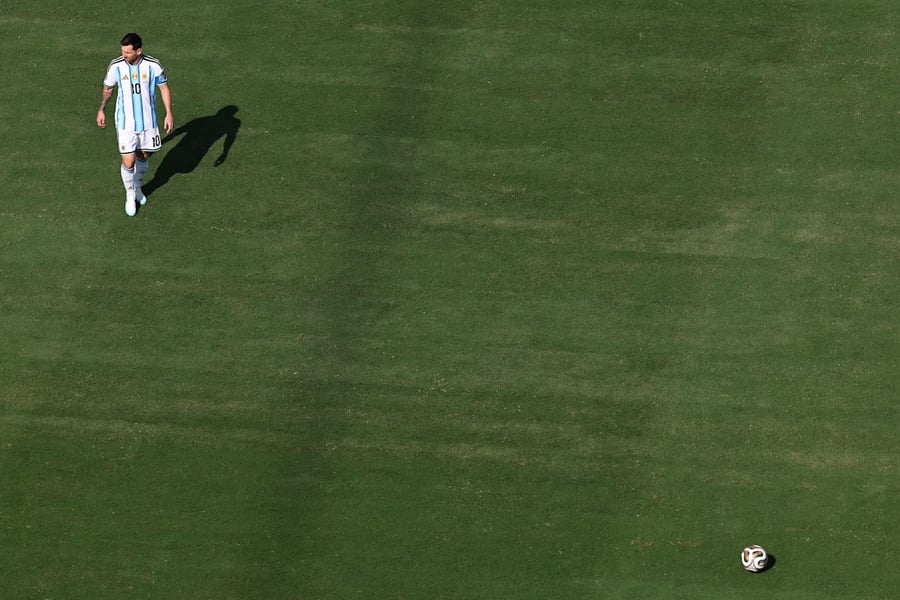

BUENOS AIRES — He wrote the letter on July 21, two days after walking off the World Cup final pitch for the last time. He kept it to himself for six weeks, long enough to watch his father die, long enough to be sure.
On Monday, Lionel Messi posted it.
“It was a decision that hurt, and still hurts deep down, but I understand that the time has come,” the 39-year-old wrote on Instagram, announcing his retirement from Argentina’s national team after 21 years, 207 appearances and 125 goals. The man who delivered the 2022 World Cup to a country that had waited 36 years for it has stepped away from the team that made him who he is.
The announcement arrived almost exactly six weeks after Argentina’s 1-0 extra-time loss to Spain in the 2026 World Cup final, a defeat that left the country stunned but Messi himself at something approaching peace. He had been there before: the 2014 final loss, the Copa América collapses, the years when every tournament felt like proof that he would never close the gap with Diego Maradona. He had outlasted all of it. He retires having reached the last final of his sixth World Cup, still running at defenders at 39, the only player in tournament history alongside Brazil’s Cafu to appear in three men’s World Cup finals.
What changed was not the football. What changed was July 24, when Jorge Messi, his father and first agent, the man who drove him to training on cold Rosario mornings before the world had heard of him, died at 68. Jorge had survived to see his son lift the World Cup. He did not survive to see him play one more game.
“I’ve given everything I had; I have nothing left to give,” Messi wrote, “and besides, there are some great young players coming up.” That second half of the sentence reads like professional courtesy. The first half reads like the truth.
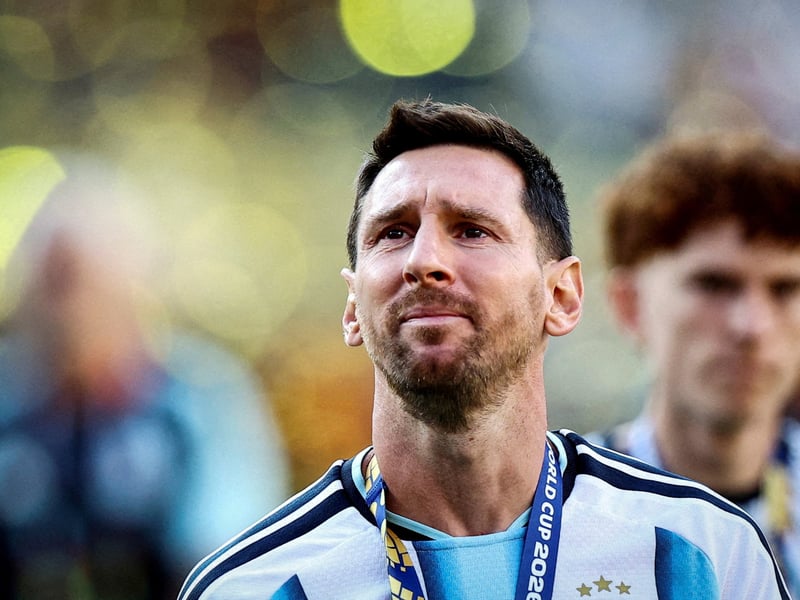
The numbers frame it without capturing it. Messi debuted for Argentina at 17 in 2005, was sent off within a minute, and came back the following month to begin an accumulation that no one will match for a generation: most caps (207), most goals (125, including 21 in World Cups alone), most appearances at a World Cup in Argentine history. He won two Copa Américas, the 2022 World Cup and the Finalissima. He led Argentina to six consecutive World Cups, a feat only a handful of players in any nation’s history have managed.
He won it all, except this last one. The 2026 World Cup final loss to Spain, to Lamine Yamal, who was four years old when Messi lifted his first Ballon d’Or, was the last meaningful game of an era. Messi returned immediately afterward to Inter Miami, where he leads the club with 18 MLS goals this season, his contract running through 2028. The club career continues. The international one is finished.
What Argentina does next with the No. 10 shirt is unresolved. The Argentine Football Association’s chief suggested in July that the number should be retired in Messi’s honor, a gesture without precedent in international football. Whether that happens remains unclear. What is clear is that whoever wears it next will carry something the shirt has never carried before: the weight of being the shirt Messi wore.
Yahoo Sports reported that Messi had long indicated this World Cup would be his last, and that his decision had been effectively made before the final whistle in New York. Al Jazeera noted that the 39-year-old leaves having scored in more World Cup tournaments than any other player in history, a record that stands regardless of the outcome in July.
The question of who succeeds him at the top of Argentine football is one Argentina is not yet ready to answer. Coach Lionel Scaloni’s squad showed depth in 2026, and the emerging generation is, by Messi’s own admission, genuinely great. But Messi did not leave a successor so much as he left a measurement: a number of games, goals and trophies that will define what “great” means for Argentine footballers for the next thirty years.
He knew that. He wrote the letter anyway, on July 21, in whatever private moment followed one of the hardest nights of his career. He sent it six weeks later, when the grief for his father had settled into something he could name.
The career is done. The letter is sent.