
FORT LAUDERDALE – Rodrigo De Paul scored in the 64th minute, turned toward the corner flag, and pulled up his Inter Miami shirt to reveal the white No. 10 below. The stadium understood without an announcement. No gesture at a sold-out Chase Stadium on Friday night required more explanation than that: Jorge Messi, father and lifelong agent of the club’s captain, had died hours earlier in Rosario, Argentina. He was 68.
The tribute landed against a backdrop of silence that had already settled over the venue. Before kickoff of Inter Miami’s Leagues Cup group stage match against CF Monterrey, both clubs observed a minute of silence on the pitch. Lionel Messi was not there. He had flown back to Argentina the previous day, his whereabouts when the news spread known to everyone watching.
Jorge Messi died at a medical clinic in Rosario after a prolonged illness. The specific cause was not disclosed. His son had offered a rare glimpse into the family’s uncertainty in June, during the 2026 World Cup. “At this time, he is under medical care, recovering and evolving favorably,” Lionel said in a statement after Argentina reached the knockout rounds. Two months later, that recovery had ended.
To describe Jorge Messi as a manager or an agent sells the relationship short by half. He was the person who made the central decision of Lionel’s life when the boy was thirteen: to leave Rosario, to leave Argentina, to leave behind everything familiar and move to Barcelona for a trial with a club that had been told this child was exceptional. Jorge had worked as a manager at a steel factory in Rosario. He had no background in professional football. The trial became the contract that changed the sport.
In December 2000, with an agreement to sign Lionel on the table and club officials uncertain whether to formalize it, FC Barcelona sporting director Carles Rexach reached for what was nearby, a paper napkin from a nearby restaurant, and signed his name on it. The “napkin contract” is sports lore now, the founding document of a dynasty. Jorge Messi carried it. He negotiated everything that followed: renewals, transfer speculation, Lionel’s eventual departure from FC Barcelona in 2021, the Paris interlude, the return to the Americas, and ultimately the Inter Miami chapter that brought his son to Florida and into a second sporting home in the country that had hosted the 2026 World Cup.
Argentina’s World Cup final defeat to Spain at MetLife Stadium in July closed Lionel’s last World Cup campaign without a second title. Four days before that final, it had emerged that Jorge was receiving medical care. Lionel described the situation in careful, optimistic terms. The family’s distress registered in the gap between what he said and what he did not say. He played the final and then made the long flight back to Fort Lauderdale.
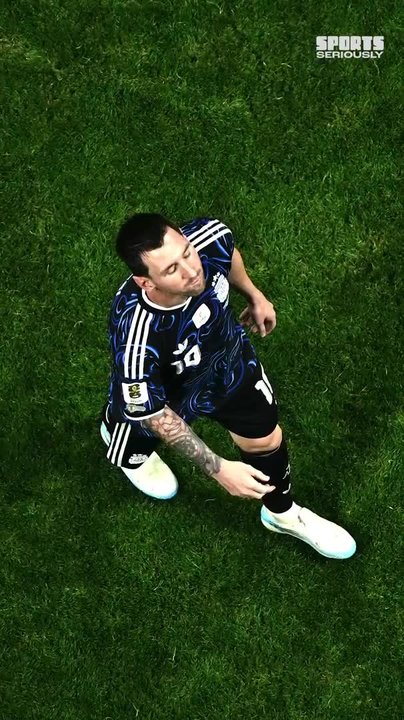
In the weeks that followed, Jorge’s condition was not publicly updated. The Inter Miami season continued without elaboration from the club. Rodrigo De Paul arrived at Chase Stadium as one of several Argentina internationals who understood what the Messi family was managing. When he scored on Friday and reached for the jersey beneath his own, the gesture was not spontaneous improvisation; it was the tribute of a player who had worn Argentina’s colors alongside his captain through the entire tournament played in these same months on this same continent.
Inter Miami CF released a brief statement after the death was confirmed. “Our hearts are with our captain, Leo, and the entire Messi family,” the club said. Yahoo Sports reported that Major League Soccer also extended condolences: “MLS mourns the passing of Jorge Messi and extends its heartfelt condolences to Lionel Messi, the entire Messi family, and all who loved Jorge.”
The club where Jorge’s son had spent the most visible chapter of his career, and the league that had built much of its recent commercial identity around the decision to bring Messi to America, was now in the vocabulary of bereavement. Jorge had approved that move too. His hand had been in every contract since a Rosario teenager had been told that FC Barcelona believed in him enough to commit the offer to a napkin.
Messi’s return to Inter Miami training after the World Cup final on July 31 had come ten days after the loss to Spain. He was absent from Friday’s match against Monterrey, the reason unstated until it became self-evident. When he will return to the pitch is, at this writing, unconfirmed. The club did not announce his availability for upcoming fixtures.
What remains unknown is what Jorge’s final months looked like beyond the clinical update his son offered during the tournament. Whether there will be a public memorial in Rosario, how the family will choose to mark the loss, and whether Lionel will carry some element of his father’s name into the remaining years of his career alongside Casemiro and Inter Miami’s expanded roster are questions the family has not yet answered.
Jorge Messi was not a figure who courted public attention. Over thirty years of managing his son’s career, he gave relatively few interviews, attended matches from the stands rather than technical areas, and left the performance of celebrity to Lionel. What he was, reliably, was the first person to believe in an improbable outcome: that a boy from a Rosario steel worker’s family would become the most decorated player in the history of the sport. On the evidence available, the belief was correct. He died at 68, in the city where it all began.