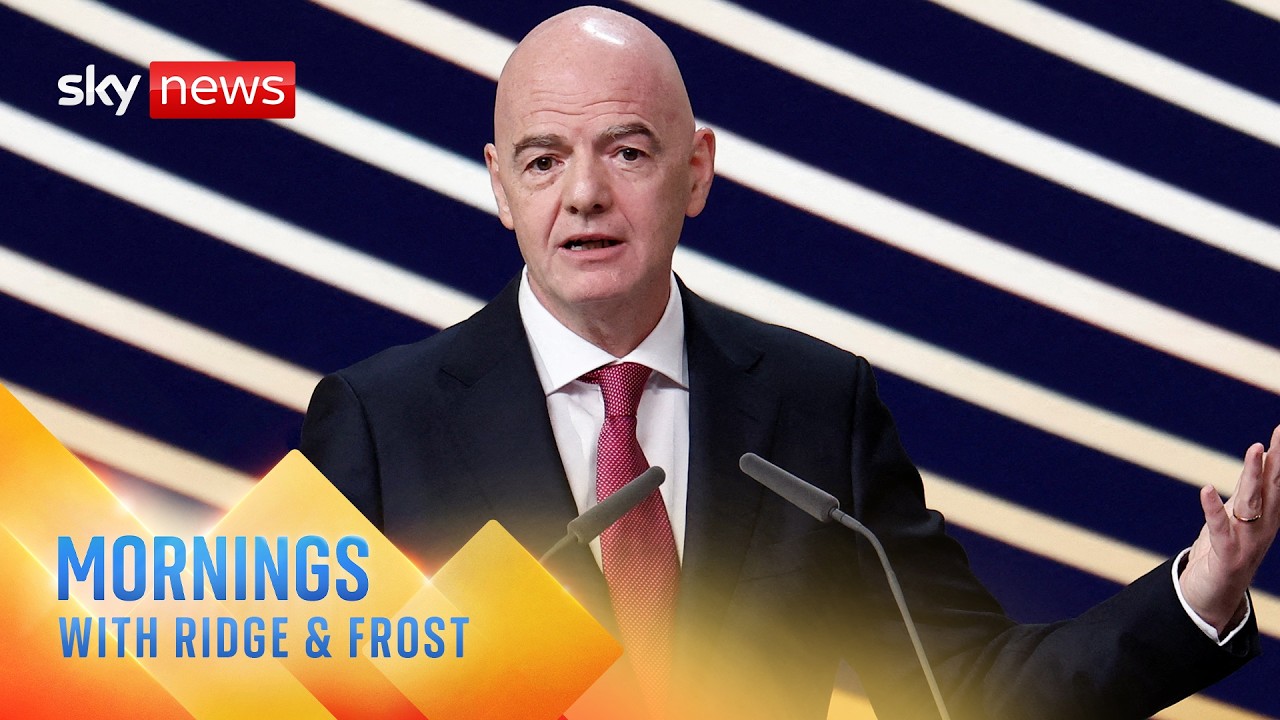

ZURICH – When FIFA president Gianni Infantino unveiled plans for a new commercial subsidiary he called FIFA Forward Enterprise, Europe’s football establishment responded within hours. UEFA declared the proposal “crosses a line that football’s governing institutions should never cross,” announced an emergency meeting of its 55 member associations, and raised the possibility of a boycott of FIFA competitions. What had been a strategy presentation became, by the end of the day, a diplomatic crisis.
The substance of the proposal is significant. FIFA Forward Enterprise would become a standalone $20 billion commercial entity controlling the rights to the men’s and women’s World Cups and the Club World Cup. FIFA would retain majority ownership and sole control over sporting decisions. Up to 20 percent of the entity would be sold to private investors, with a fundraising target of $4.2 billion, according to NPR and reporting from Al Jazeera. J.P. Morgan has been engaged as financial adviser to the transaction.
The firm selected to lead investor recruitment is Thrive Eternal, a permanent capital holding company launched in April 2026 by Joshua Kushner. Kushner is the younger brother of Jared Kushner, son-in-law of President Donald Trump, whose administration hosted the World Cup final at MetLife Stadium earlier this month. Democratic Ranking Member Jamie Raskin raised the connection in a public statement, citing corruption concerns. The involvement of a firm with direct family ties to the sitting president drew scrutiny not only from European federations but from members of the U.S. Congress.
FIFA generated at least $13 billion during the previous four-year commercial cycle. The 2026 World Cup, staged across the United States, Canada and Mexico, was described by commercial analysts as the most lucrative in the tournament’s history. Infantino has positioned FIFA Forward Enterprise not as a retreat from that success but as an acceleration of it. “Football is the world’s most popular sport and an extraordinary engine of human and social development,” he said. The proposal promises to raise FIFA Forward development payments from $8 million per member association per cycle to $20 million in 2027-30, with subsequent cycles at $22 million and $24 million. Optional project payments of up to $20 million per association would add a further layer, with total development spending projected to exceed $10 billion over four years.
UEFA was not persuaded that the structure preserves football’s independence. “The soul and governance of football are not assets to trade,” the confederation said. The emergency session scheduled for later in the week is expected to consider whether UEFA’s 55 member associations should threaten withdrawal from FIFA competitions. Such a boycott would represent the most serious rupture in international football governance in decades. UEFA controls some of the wealthiest football markets on earth and holds 55 of FIFA’s 211 member votes.
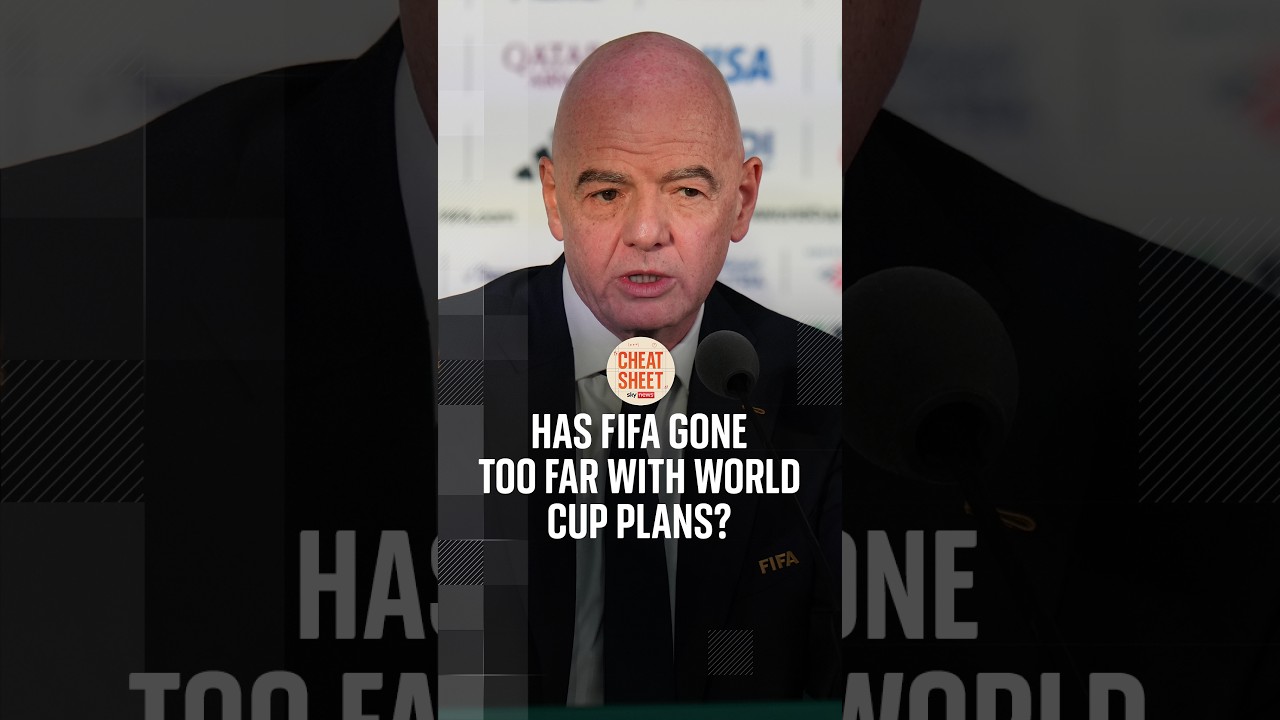
British Prime Minister Andy Burnham offered one of the most direct rejections. “Football does not belong to investors,” Burnham said. “The World Cup is not a product. Once you have sold a piece of it, you have sold out.” His remarks reflect a frustration that has accumulated among European football associations under Infantino’s presidency. Norway‘s Football Federation filed a formal FIFA ethics complaint this month over the reversal of a red-card ban on American player Folarin Balogun following a call from President Trump to Infantino. That episode raised structural questions about FIFA’s accountability to its own rules that the stake sale plan has now amplified.
The opposition extends beyond Europe. CONCACAF, the confederation governing North and Central America and the Caribbean, said it was “deeply concerned” and that member associations had not been informed before the announcement. The 41-member confederation’s reservations signal that resistance is not a purely European phenomenon. Together, UEFA and CONCACAF hold nearly half of FIFA’s 211 votes.
The arithmetic of approval is demanding. FIFA must win majority support from all 211 member associations and secure a sign-off from the 37-member FIFA Council. Several member associations in smaller football markets are reported to be receiving direct financial pitches from FIFA. Critics have characterized the optional $20 million project payments as a pressure campaign designed to neutralize moderate opposition. Whether those incentives secure a working majority is not yet clear.
Spain‘s victory over Argentina at MetLife Stadium on July 19 closed a tournament that set commercial and audience records across every continent. Nobody in the debate is arguing that the World Cup’s appeal is a problem. The argument is about who gets to own the structure through which that appeal is monetized, and what it means when private investors acquire a stake in the answer.
What UEFA’s boycott threat would mean in practice remains unspecified. No FIFA competition has been named. No condition has been stated under which UEFA would reverse its position. FIFA has not publicly acknowledged the boycott discussion. The gap between those two postures is where the next several weeks of football politics will be decided.