
OTTAWA — At midnight on Monday, Canada did something it had not done in nearly nine decades: it hit back.
Seven hundred categories of American goods, including steel, aluminum, furniture, clothing, and iron, became subject to Canadian counter-duties ranging from 15 to 50 percent, as $27.6 billion in retaliatory tariffs took effect against US imports. The move, codified by Canada’s Department of Finance and signed into law by Prime Minister Mark Carney’s government, marks the most significant rupture in the two countries’ economic relationship since the Depression era. It raises the prospect of a prolonged trade war between the world’s largest bilateral trading partners, a dispute that neither side appears close to ending.
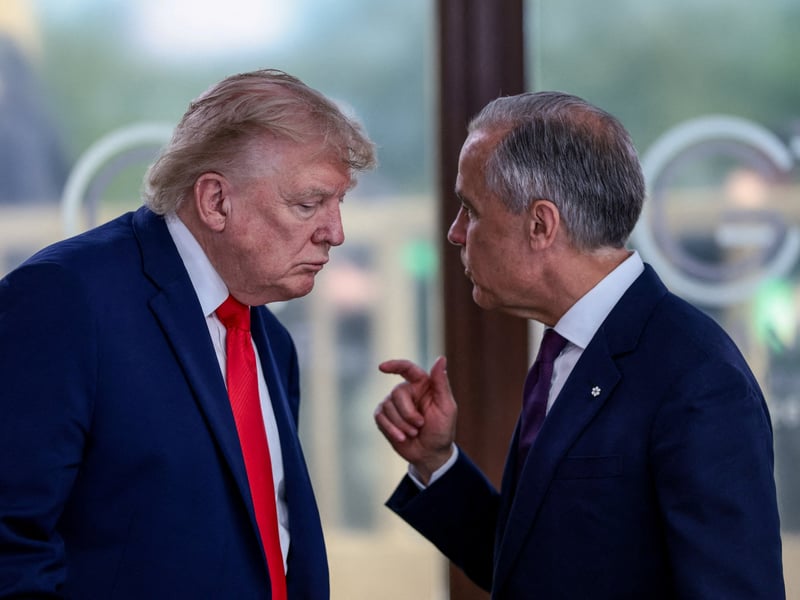
The immediate trigger was clear. Washington had already imposed sweeping tariffs on Canadian goods as part of the Trump administration’s broader effort to rewrite the terms of North American trade. Ottawa’s response, announced by Prime Minister Mark Carney in August and now in effect, is dollar-for-dollar retaliation.
“We will match US tariffs dollar for dollar in order to protect Canadian workers, farmers, families, and businesses,” Carney said, leaving little ambiguity about the government’s position.
What sets this episode apart from earlier tariff disputes is the breakdown in formal negotiations between Ottawa and Washington. Carney’s government has concluded that the terms currently on the table are, in his words, “unfair, uneconomic, and call into question the reliability of any deal.”
That language goes beyond a dispute over tariff levels or the economic terms of a potential agreement. It raises a more fundamental question about the reliability of the United States as a negotiating partner. By publicly questioning whether a deal with Washington can be relied upon, Canada’s government has crossed a diplomatic threshold that both sides had previously sought to avoid.
The dispute is therefore no longer simply about the size of the tariffs. It is increasingly about whether Ottawa and Washington can establish terms that each government believes will remain dependable once an agreement is reached.
The prime minister has not tried to soften what this means. “You’re at war when you get attacked,” Carney told reporters, stripping away the diplomatic hedging that typically surrounds trade disputes. “We got attacked.” The framing is deliberate. Carney, a former Bank of England governor who built his political identity on economic credibility, is calculating that Canadians will accept short-term pain if they understand what is actually at stake.
What is at stake, by most independent estimates, is considerable. Analysts project that up to 100,000 Canadian jobs are at risk if the current tariff regime persists through year-end. A full collapse of the USMCA, the North American trade agreement that replaced NAFTA in 2020, would almost certainly push Canada into recession. Even short of that scenario, the erosion of trust between Ottawa and Washington has already begun reshaping Canada’s trade calculus in ways that will outlast any specific tariff dispute.
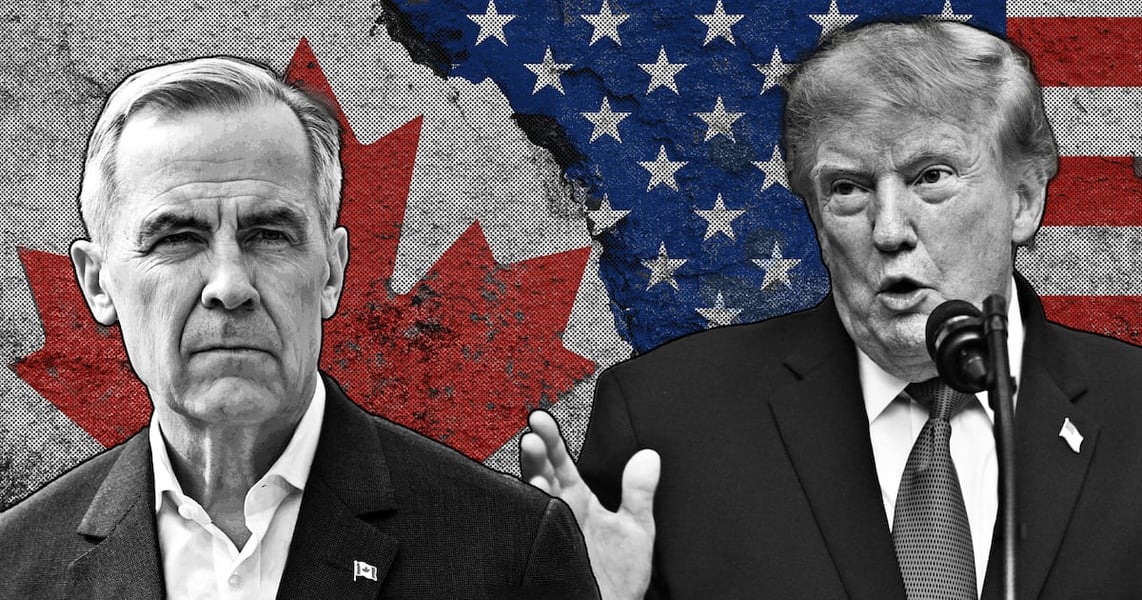
The Trump administration has signaled no intention of backing down. Washington has threatened 50 percent tariffs on Canadian automobiles beginning January 1, a move that would devastate Ontario’s auto-manufacturing corridor and disrupt American supply chains that rely on cross-border parts assembly. The auto threat is simultaneously a pressure tactic and a preview of how much further this dispute can escalate before either side finds a workable exit.
Trump’s trade posture has already rattled markets far beyond North America. Energy stocks sensitive to cross-border commodity flow disruptions have registered the uncertainty, while Indian equities are pricing in the broader trade-war risk premium that has settled over global growth forecasts. A prolonged Canada-US rupture would tighten credit conditions and weigh on corporate earnings across sectors that depend on integrated North American supply chains.
The product list Canada published runs to hundreds of items and is not random. Steel and aluminum, the industrial backbone of the original American tariff case, face the steepest counter-duties at 50 percent. Furniture, textiles, and clothing have also been targeted, putting pressure on politically sensitive American manufacturers. Ottawa has been precise about where it wants to apply pressure, and the selection reflects months of analysis about which American industries carry enough political weight to push back on Washington.
For American exporters, the calculus changed abruptly at midnight Monday. Agricultural producers in the Midwest, manufacturers in the Great Lakes states, and hardware companies that route components north of the border are all recalculating their exposure. The disruption cuts both ways, which is the point. Al Jazeera reported that Canadian officials expect the tariffs to remain in place indefinitely, with no diplomatic off-ramp currently visible.
The harder question, one that nobody in Ottawa or Washington is willing to answer publicly, is what happens next. Formal negotiations are stalled. Informal channels, if they exist, have produced nothing visible. The Trump administration’s track record on trade agreements, its willingness to reopen deals it previously negotiated and treat economic partnerships as leverage instruments rather than stable frameworks, has left Carney’s team deeply skeptical that any deal reached under current conditions would hold. That skepticism reflects a broader Canadian assessment of what the Trump administration’s institutional posture means for any commitment made in Washington.
What Canada has, for the moment, is resolve. Whether resolve is sufficient against a trading partner that absorbs the majority of its export revenue is the question that will define Carney’s government over the coming months. The tariffs are live. The talks are not. And the costs, on both sides of the border, are accumulating.