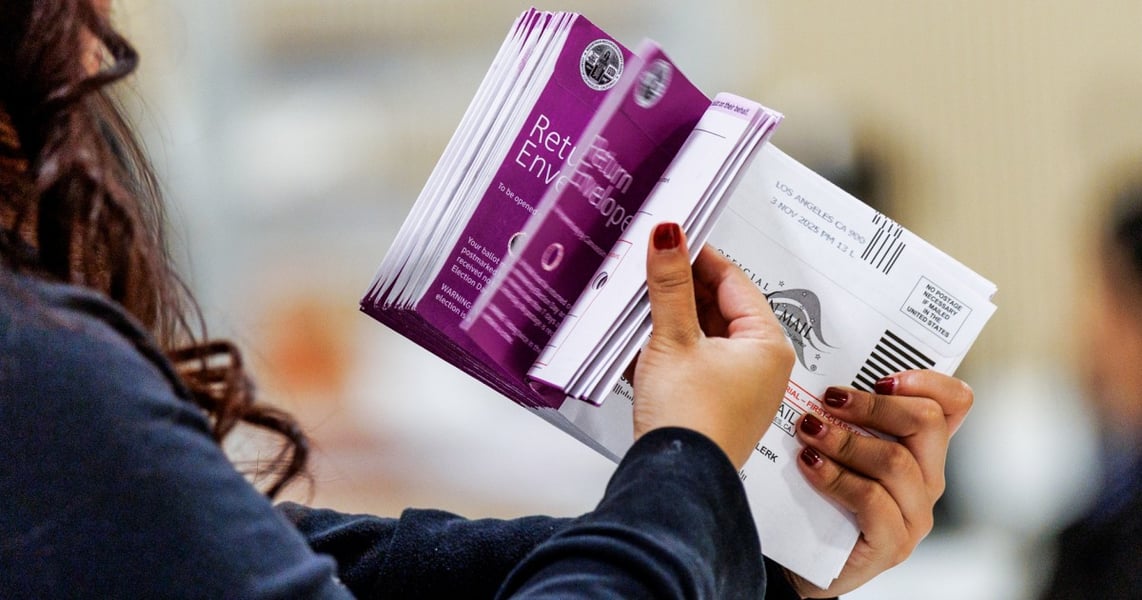

WASHINGTON — North Carolina started mailing absentee ballots to voters last Thursday. Five days later, the Trump administration filed its third emergency application at the Supreme Court seeking to revive a set of restrictions that could determine whether those ballots are ever delivered.
The Justice Department’s application, filed Saturday, asks the justices to reinstate a key provision of a March 31 executive order requiring the United States Postal Service to cross-reference voter enrollment databases and refuse delivery of ballots to anyone whose barcode does not match an active registration record at a verified address. A federal judge in Massachusetts blocked that provision in July, finding it would expose millions of eligible voters to non-delivery without any evidence that mail ballot fraud had actually occurred. The First Circuit declined to intervene. The administration came back to the Supreme Court.
Justice Ketanji Brown Jackson, who oversees emergency filings from the First Circuit, set a 4 p.m. Tuesday deadline for the 23 states and the District of Columbia challenging the order to file their responses, NBC News reported. Beyond that deadline, nothing is certain. The court does not publish a schedule for acting on emergency applications, and the last time this matter came before the justices, eleven days passed before an unexplained partial order that left the core dispute unresolved.
This is not the administration’s first attempt to get the Supreme Court to reinstate the USPS verification requirement. It is the third. The court’s 6-3 conservative majority previously allowed other parts of the executive order to take effect while leaving Talwani’s injunction on the delivery-refusal provision in place. That partial grant contained no reasoning. Whether a third application, now backed by the argument that ballots are physically in the mail, changes the court’s calculation is a question the justices have offered no answer to and show no obligation to resolve on any particular schedule.
Talwani’s July ruling runs 47 pages. She found that the executive order violates the Help America Vote Act and the National Voter Registration Act by creating a parallel USPS enrollment system that Congress never authorized. The populations most exposed to address-mismatch rejections, she wrote, are renters, recent movers, and voters in majority-minority precincts: communities with higher residential transience and lower rates of proactive registration updates. The government’s answer across three rounds of litigation has been to argue that fraud is possible. It has not provided documentation of a single case in which a mail ballot was delivered to an ineligible voter under the existing system.
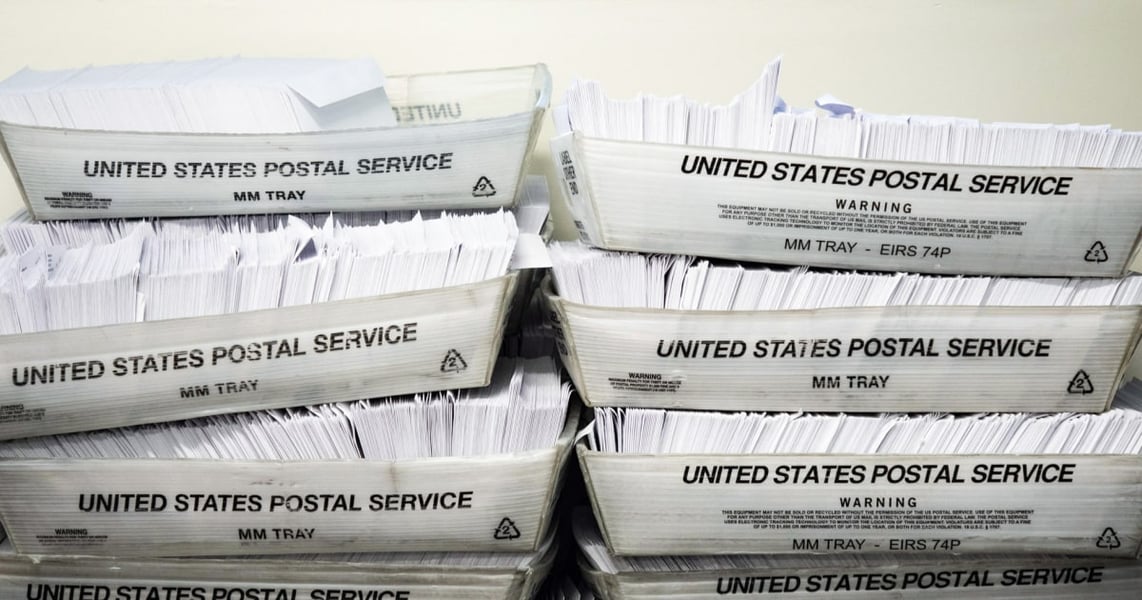
That date is 55 days away. The administration’s legal strategy has consistently treated proximity to the election as an argument in its favor: the nearer the vote, the greater the harm the injunction causes by leaving an allegedly fraudulent channel open. The states treat the same proximity as an argument against intervention, because the further into the mailing cycle, the less reversible any disruption becomes. Both are accurate readings. They are prioritizing different risks.
The Republicans opening the first-ever midterm convention in Dallas this week have made November 3 the centerpiece of the administration’s political argument. The mail ballot litigation runs on a different calendar. Republican internal polling has consistently underrepresented mail vote participation in Democratic-leaning districts; restricting that channel has strategic value independent of any stated fraud concern.
The 2024 election cycle saw approximately 31 million mail ballots cast nationwide. No audit of that cycle found evidence of systemic fraud. The March 31 executive order, which also directed states to supply USPS with voter enrollment lists for barcode verification, grew from years of contested claims about mail voting integrity that multiple courts and election administrators found unsupported by evidence. Talwani said precisely that in her July ruling. The Supreme Court, when it partially granted the administration’s second application, said nothing at all.
MAGA Inc., the Trump-aligned outside group that has committed some $400 million to the midterm cycle, has not publicly weighed in on the SCOTUS litigation. The legal work belongs to the Justice Department. What happens next depends on nine justices, a 4 p.m. deadline, and a scheduling system that publishes nothing in advance.