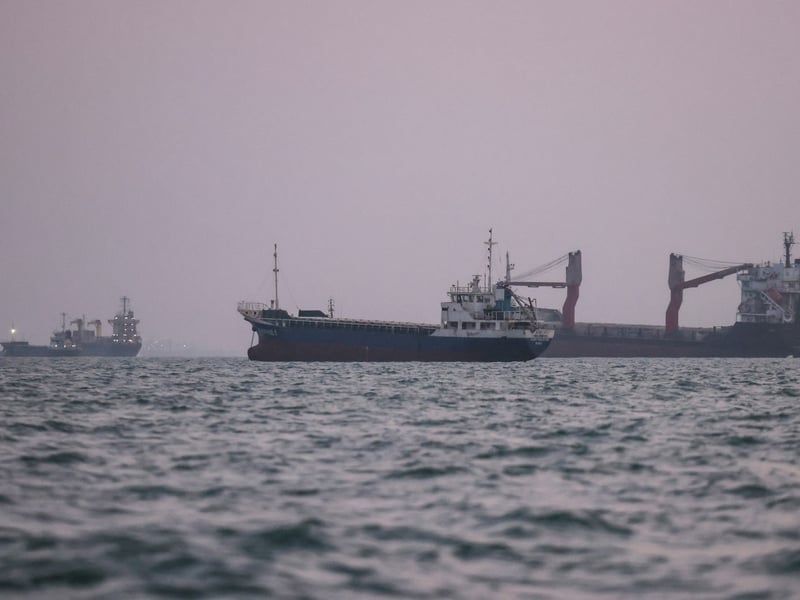

DUBAI – The price that matters most this week is not $97. It is seven.
Seven vessels crossed the Strait of Hormuz on the worst days of the past month, down from more than a hundred that once passed through daily before the United States and Israel launched their air campaign against Iran in February. That bottleneck, held in place by six months of tit-for-tat tanker strikes and blockade maneuvers, has accomplished what no oil shock since 1973 managed: the International Energy Agency has characterised it as the largest supply disruption in the history of the global oil market.
On Monday, US forces struck Iranian oil tankers in what US Central Command called a retaliatory operation after the IRGC targeted a US Navy warship with ballistic missiles twice in two days. CENTCOM said it had destroyed five Iranian crude oil carriers: the M/T Kaviz, M/T Charminar, M/T Horizon 1, M/T Riesco, and M/T Derya, in the Gulf of Oman and near Kharg Island. The crews were directed to abandon ship before the strikes. CENTCOM commander Adm. Brad Cooper stated: “Let the message to the IRGC be clear: If you shoot at two of our ships, we will impose an even higher economic cost.”
The economic cost, however, is not being counted in Washington.
Qatar’s energy minister issued a warning on Tuesday that amounted to the most explicit statement yet from a Gulf capital: an industrial catastrophe is what follows if the Hormuz crisis continues on its current trajectory. Qatar’s alarm reflects a specific vulnerability easy to miss in coverage focused on crude oil prices. Liquefied natural gas exports from Qatar, which serves roughly a fifth of the world’s LNG market, must transit Hormuz, and nearly all of those cargoes travel to Asia. A sustained closure does not merely raise fuel bills in Kuala Lumpur or Dhaka; it idles factories, constrains power generation, and raises the cost of manufactured goods across supply chains that stretch from the Gulf to the Pacific.
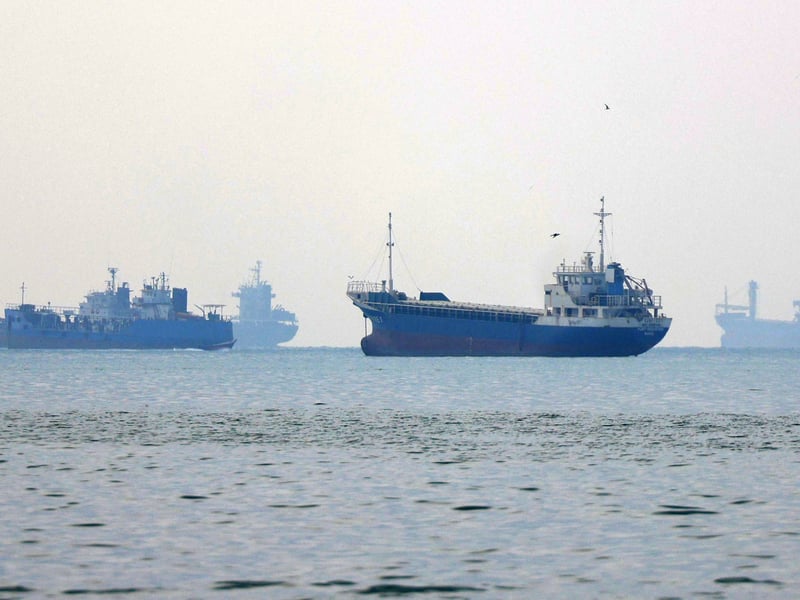
Brent crude settled at $97.20 a barrel on Tuesday after touching $99 intraday, the benchmark’s highest point in six weeks, sustained by the wave of new strikes and uncertainty about what follows. It has risen nine percent in five trading sessions and nineteen percent over the past month. Analysts at major banks have warned that $120 per barrel is achievable if tanker passage through Hormuz remains at or near current levels. Before the war, roughly a fifth of the world’s seaborne oil trade and nineteen percent of global LNG transited the Strait of Hormuz each day.
The Pentagon’s framing and Tehran’s framing of events have not converged at any point in six months. CENTCOM describes each strike on Iranian tankers as a retaliatory response to Iranian attacks on commercial shipping or US naval assets. Iran’s IRGC describes its operations as responses to what it characterises as an American naval blockade imposed in support of an Israeli air campaign. The IRGC has claimed its surveillance systems can track US drones and warships throughout the Strait, a claim that positions the Corps as in control of the waterway regardless of the tanker count. Both narratives contain elements that cannot be independently verified, and neither produces a path out of the crisis.
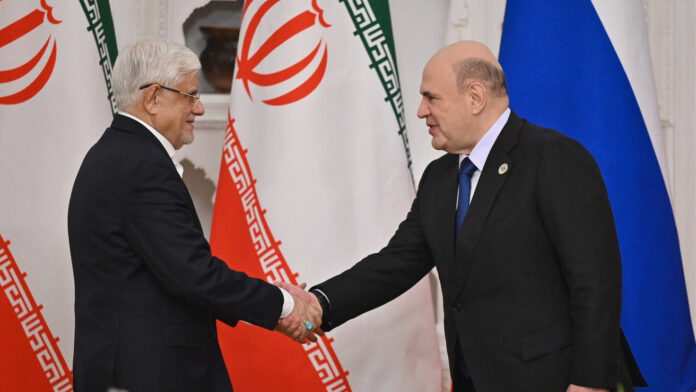
Russia, which condemned the original US-Israeli strikes in February as destabilising to the regional order, has shown little appetite for intervention. Tehran’s nominal ally has preferred to absorb the reputational benefit of opposition while leaving Iran to bear the military and economic cost of the confrontation. Iran’s rial has been in effective free fall since September brought a new round of international sanctions targeting energy and financial institutions, sanctions that compound the six months of supply disruption already imposed by the war itself.
What remains genuinely unresolved is whether the diplomatic track survives. Iran and Oman opened quiet talks in August over a restricted shipping corridor through the Strait, one that would allow some commercial traffic under Iranian-specified conditions. The Iranian parliament advanced a proposal for Hormuz service fees as recently as last month, a signal that Tehran was prepared to contemplate partial reopening on its own terms. The five tanker destructions on Monday, and Iran’s response to them, have not yet formally closed those talks. Whether they continue, stall, or collapse will be shaped not by press releases from either capital, but by what the seven daily vessels figure looks like three weeks from now.
The buyers who have no vote in any of this are watching that number closely. Japan imports roughly ninety percent of its oil through Hormuz-dependent routes. South Korea, Bangladesh, and the Philippines have all reported energy constraints directly attributable to the supply disruption. The 838 US military personnel killed or wounded in the conflict represent a cost Washington acknowledges and counts. The energy toll being paid in Asian cities and industrial zones does not appear in any CENTCOM briefing.