
MADRID — For months at the start of 2026, the phones at Mundoexplora were quiet in a way the Spanish travel agency had not seen in years. Inquiries trickled in. Bookings that would normally have been confirmed in January sat unplaced through February and into March, as a travel season that was always coming kept approaching without the commitments that were supposed to follow it.
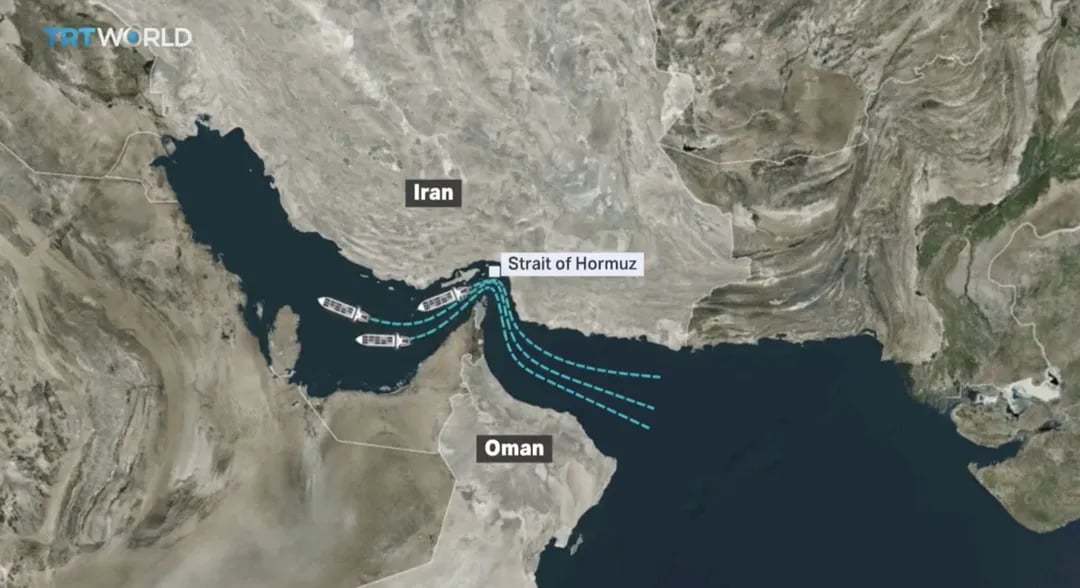
The source of that quiet was the Iran conflict. When tensions escalated in early 2026, travelers who had been preparing major trips adopted a posture of watchful delay. Not cancellations, but postponements: a decision to suspend commitment until the geopolitical picture clarified, even as airfares climbed and availability on the most-sought itineraries narrowed.
“The season for major trips was defined by last-minute reservations and less advance planning,” Mundoexplora reported in its summer 2026 balance. “While demand recovered with force after the initial hesitation, traveler decisions were made significantly later than usual.”
That recovery, when it came, reframed the question. The problem was never a collapse in the desire to travel. It was a compression of the decision window, and the industry spent the second half of the summer absorbing what that compression means for how it prices, staffs, and plans. Tourism markets globally absorbed similar disruptions this year, from different causes but with comparable effects on booking behavior. Euronews reported that higher airfares and Gulf airspace closures were compressing itineraries and reshaping demand across multiple regions simultaneously.
Mundoexplora, a Spanish agency with more than two decades of experience in customized travel arrangements, reported that average spending per traveler held stable despite broad price increases, with airfare costs to popular destinations rising sharply. That stability in per-person budgets, set against the backdrop of delayed decisions, suggests the geopolitical effect was behavioral rather than economic. Travelers changed when they committed, not what they were willing to spend.
Peru led the agency’s destination rankings for summer 2026, combining cultural, archaeological, natural, and landscape appeal in a package that has proven difficult for other destinations to replicate. Japan consolidated its position as the premier Asian destination for European travelers despite a strong yen and crowding at legacy sites that has drawn its own press coverage.
The more significant development across Asia was a broadening of demand beyond the traditional corridors. China, South Korea, Sri Lanka, Uzbekistan, and Tibet all saw growing interest in Mundoexplora’s portfolio, suggesting that a new tier of Asian destinations is transitioning from occasional curiosity to repeat itinerary consideration. How much of that growth reflects travelers seeking variety after exhausting their initial Japan itineraries, and how much reflects genuine new interest in these destinations, is not something a single agency’s summer report can resolve.
In Europe, the Balkans continued to attract travelers seeking what the Western Mediterranean has largely stopped providing: affordability, authenticity, and the sensation of arriving somewhere that has not yet been rebuilt for the tourist economy. Montenegro and Croatia registered notable growth within the agency’s portfolio. Georgia, straddling Europe and the Caucasus, established itself more firmly as a recognized destination rather than an adventurous outlier, benefiting from a distinctive food culture and mountain landscape that have generated consistent word-of-mouth referrals.
Africa presented a more complex picture. Angola and Madagascar gained ground alongside the established safari circuit anchored by Botswana and Namibia. These are not interchangeable destinations: an Angola itinerary and a Botswana safari serve meaningfully different traveler appetites. That they appear in the same conversation about growth within the same agency’s book suggests the Africa category is expanding beyond its traditional wildlife-safari core, which would represent a meaningful structural shift if it holds in subsequent seasons.
Australia, New Zealand, Canada, and Scotland rounded out the destinations with notably strong performance in Mundoexplora’s data, all representing long-haul or high-value propositions that held firm even as booking windows compressed.
For the agencies and tour operators that depend on early bookings to manage capacity, the 2026 season created a planning problem that no promotional offer could have solved. When travelers are waiting on geopolitics before committing, discounts do not accelerate decisions. The risk shifts to the supply side of the industry rather than the demand side.
The question that Mundoexplora’s report raises without fully answering is whether the 2026 pattern is temporary or structural. The agency presents its summer findings as a response to geopolitical uncertainty, which implies the late-booking behavior resolves once uncertainty resolves. But that framing leaves open a second possibility: that 2026 accelerated a pre-existing shift toward shorter commitment horizons, and that travelers who discovered they could book in June for July travel and still find reasonable inventory may not return to January booking habits simply because conditions stabilize.
For airlines, hotel chains, and tour operators, that distinction carries real operational consequences. Late-booking demand benefits flexible capacity models and dynamic pricing, but it undermines the revenue visibility that allows companies to hire, invest, and negotiate supplier contracts. If the booking window has permanently compressed, the assumptions built into the industry’s cost structure require revisiting.
What Mundoexplora’s data cannot answer is how broadly its experience generalizes across European source markets. A Spanish agency with a particular client profile and product mix may not reflect demand patterns from German, British, or Nordic travelers, who have historically driven the largest volumes of outbound long-haul tourism from Europe. The patterns are consistent with anecdotal reports from elsewhere in the industry, but a single agency’s summer report remains a data point rather than a sector-wide conclusion.