
LAS VEGAS — The head of Las Vegas’s tourism authority did not send a press release. He got on a plane.
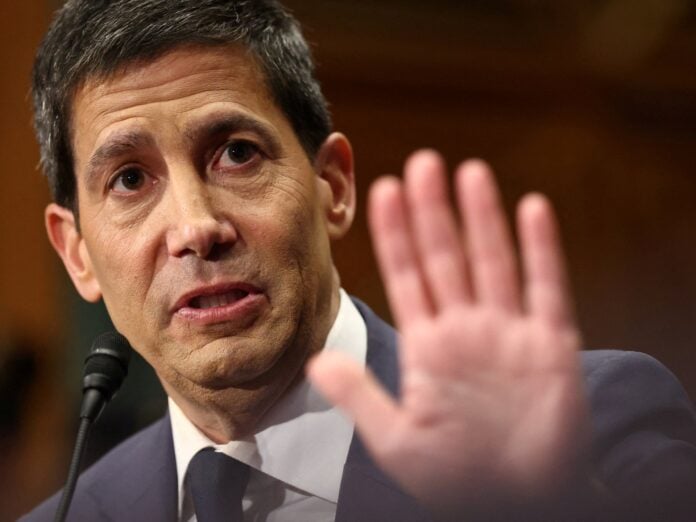
Steve Hill, president and chief executive of the Las Vegas Convention and Visitors Authority, spent part of August traveling personally to Vancouver, Calgary and Edmonton, meeting with Canadian travel advisors and making the case face-to-face that the city still wanted them. “We’re here to make sure you know that we care about Canada,” he told the rooms. In the trade-war era, a $2.5 million marketing contract felt like an insufficient signal. Vegas needed to show up in person.
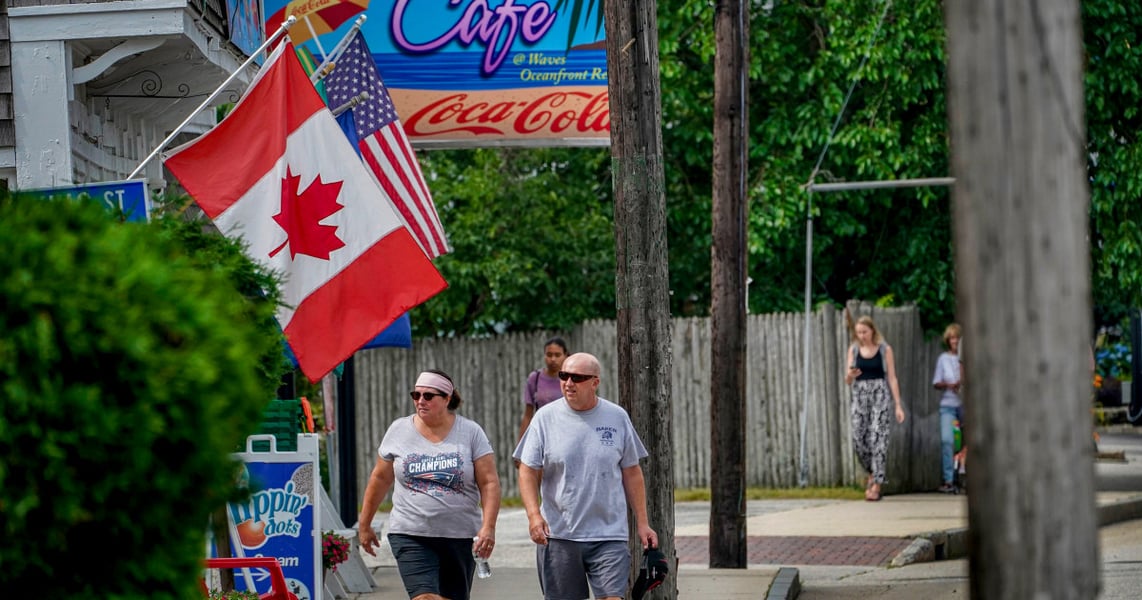
The city is in an unfamiliar position. Canadian visitors, who numbered 1.2 million in the years before Donald Trump returned to the White House and accounted for roughly $1.9 billion in direct economic spending in the Las Vegas Valley, have been staying home in striking numbers. Fiscal year 2025 ended with roughly 250,000 fewer Canadian trips to the Nevada resort than the prior year, an 18 percent contraction. Across the United States, the damage runs deeper: a 35 percent decline in Canadian visitation since Trump’s return, representing $4.5 billion in lost tourism revenue in 2025 alone, CBS News reported. Other destinations read the same data and raced to fill the gap: Spain’s eclipse tourism surge injected €347 million into rural provinces, while Las Vegas contended with fifteen consecutive months of year-over-year declines before modest gains appeared. June brought a 5 percent rise, July a 10.2 percent recovery, but both figures remain 26 to 29 percent below their July 2024 equivalents.
The proximate cause is not obscure. Trump’s repeated suggestions that Canada should become the 51st state, framed variously as geopolitical provocation and governing ambition, combined with sweeping tariffs on roughly $20 billion in Canadian goods and produced a backlash that many Canadians chose to express through their travel budgets. For a meaningful segment of the public north of the border, crossing into the United States became something closer to a political statement than a holiday decision.
Into that gap stepped Derek Stevens, owner of three downtown Las Vegas properties: Circa Resort & Casino, The D, and Golden Gate Hotel & Casino. His solution was arithmetically direct. For a promotional period that ran through August 31, Canadian guests would pay in Canadian dollars at par with the US dollar. A Canadian dollar that normally buys roughly 73 American cents suddenly bought a full one, an effective subsidy of approximately 37 percent off the actual cost for anyone paying in Canadian currency. No standard bundle or sale period could match that arithmetic.
The result was 120,000 Canadian visitors at Circa alone during the At Par Canada promotion, according to Fortune. The number confirmed what Hill’s Western Canada road show was simultaneously testing: Canadians had not stopped wanting to come to Las Vegas. They had stopped feeling that Las Vegas wanted them.
The LVCVA has formalized its Canadian outreach with a $2.5 million contract renewal with Reach Global, a marketing firm specializing in the Canadian outbound travel market. The authority is also weighing a broader $6 million program, though that figure has not been formally approved. Rival destinations competing for the same international traveler have reached for different tools: Thailand’s visa overhaul redirected demand across sixty countries, while Las Vegas found itself in the unusual position of fighting to reclaim travelers it had taken for granted for a generation.
What the industry cannot fully resolve is whether the political weather will cooperate with the promotional one. The modest June and July gains represent a floor, not a ceiling, and the floor was set low. The tariff regime that triggered the boycott remains in place. Trump has not retracted the 51st-state framing. Stevens’s at-par promotion ended August 31, and no extension has been announced.
The city that built itself on the proposition that a good enough deal can make people set aside their reservations is now testing that logic against something harder to discount than an airfare differential: national sentiment. Vegas is offering Canadians a bargain. The question Hill came home from Calgary unable to answer is whether, at this precise juncture in the US-Canada relationship, a bargain is enough.