
BURGOS, Spain — In Soria, a provincial capital of 90,000 that has been losing residents to Madrid and Barcelona since the 1950s, the hotels sold out eight months in advance. The town’s hoteliers had never seen anything like it, and some admitted they had not entirely believed it would happen.
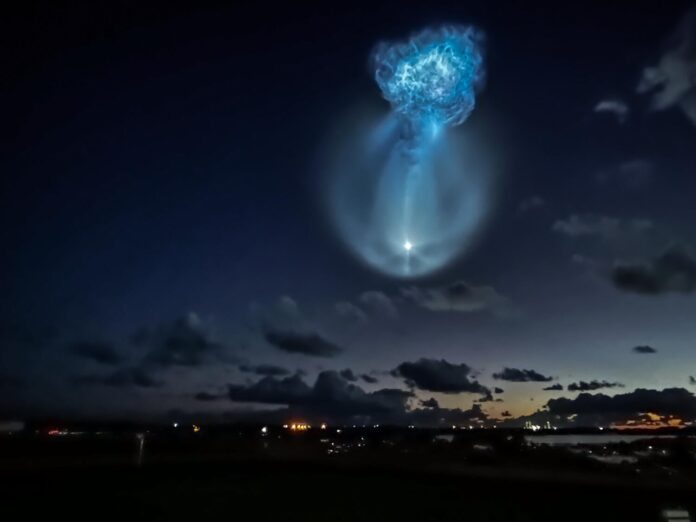
It happened. On August 12, as the moon slid in front of the setting sun over northern Spain and plunged a diagonal belt of the peninsula into 105 seconds of twilight at 20:29 local time, Soria was full. So were Burgos, León, La Rioja, and every small municipality in the Castilla y León meseta that happened to sit inside the path of totality running from Bilbao to Valencia ahead of August 12. The eclipse arrived low on the western horizon — theatrical geometry that stretched the shadow across a landscape of wheat fields and medieval stone — and drew the largest single-week concentration of international visitors in the history of Spain’s inland provinces.
The data that followed were stark. Between August 10 and August 16, Spain welcomed 446,000 additional international visitors compared with the same week in 2025, according to BBVA Research, which tracked card spending and flight arrival records across eclipse-affected provinces. Foreign visitor spending in provinces with 100% eclipse coverage rose 25.7% year on year. Soria’s foreign spending jumped 220.1%. La Rioja logged 106.2%. Asturias, on the northern coast, registered 88.7%.
The aggregate return was €347.5 million, approximately $395 million, in six days.
That number matters for reasons beyond its size. Spain’s tourism model has been under political pressure for two years. Barcelona, Palma, and Valencia have each moved to restrict short-term rentals, cap cruise arrivals, and limit the growth of accommodation in neighborhoods where residents have complained that tourism has made ordinary life unaffordable. The backlash reflects a concentration problem: Spain receives tens of millions of visitors each year, most of whom go to the same coastal municipalities.
The eclipse offered a test of whether demand could be redirected at scale. Spain established a dedicated eclipse tourism commission in late 2024, coordinated with regional governments in Castilla y León and Aragon, and negotiated with airlines to add capacity to Valladolid, Burgos, and Logroño airports in the months before the event. Scheduled airline seats into eclipse-path airports grew 7.9% compared with August 2025. Hotel reservations in affected provinces rose 17.8% ahead of the eclipse.
The rental market responded without prompting. Short-term rental rates along the path of totality surged 98% above their 2025 August averages. In Soria, where the average nightly rental rate is among the lowest in Spain, a week’s stay in the eclipse window cost what a month would have cost in any other August.
As totality swept through northern Spain on August 12, crowds fell silent in heat that had pushed past 40 degrees in some provinces. The moment lasted less than two minutes. The economic measurement of what followed took two weeks to compile.
The redistribution signal was what the government wanted to demonstrate. What BBVA Research’s data also showed was the speed with which the effect unwound. By August 18, hotel occupancy across Castilla y León had returned to near-2025 levels. Soria’s restaurants emptied. The eclipse week’s revenue had landed — in local accommodation, in petrol stations on the national highways, in restaurants that had run out of space for a full week and then had plenty — and then it was gone.
Wildfires burned across Spain and Greece in the same week, threatening to complicate the eclipse’s atmospheric clarity in northern provinces. Smoke from Aragon’s fires stayed south of the path of totality. The risk was real enough that some tour operators had offered conditional refunds; none were needed.
Whether the 446,000 visitors return without an eclipse to bring them is the question Spanish regional governments cannot yet answer. Tourism officials in La Rioja said inquiry volume about the region had increased after August 12 and that searches for autumn wine tourism packages had risen measurably. Castilla y León reported anecdotally that visitors who had never been to Burgos or Soria told survey respondents they intended to return. Neither figure is a confirmed booking.
Spain has two more major eclipses coming. A second total solar eclipse will cross the south on August 2, 2027, with a path over the Balearics, Gibraltar, and Andalusia. An annular eclipse follows on January 26, 2028, visible from the Canary Islands. The government is treating the three events as a sequence. According to Skift, Spain’s tourism ministry has designated all three eclipses as national tourism strategy events and is using the August 12 data to justify infrastructure investment in eclipse-path regions ahead of 2027.
For Soria, the calculation is more immediate. Its population has fallen more than 30% since the 1960s, a trajectory no rural subsidy program has reversed. One eclipse week added the equivalent of years of normal tourism revenue. Whether anyone remembers Soria by October is an open question. Whether the town needed this week is not.