


WASHINGTON – When the clock runs out on Monday, universities that have run academic exchanges with Iranian institutions, families that use remittance services to send money to relatives in Tehran, and conference organisers who have worked with Iranian counterparts for decades will find their authorisations gone, replaced by nothing. The window that the Trump administration’s Treasury Department opened to wind down those relationships closes September 8, and no general licence will replace it.
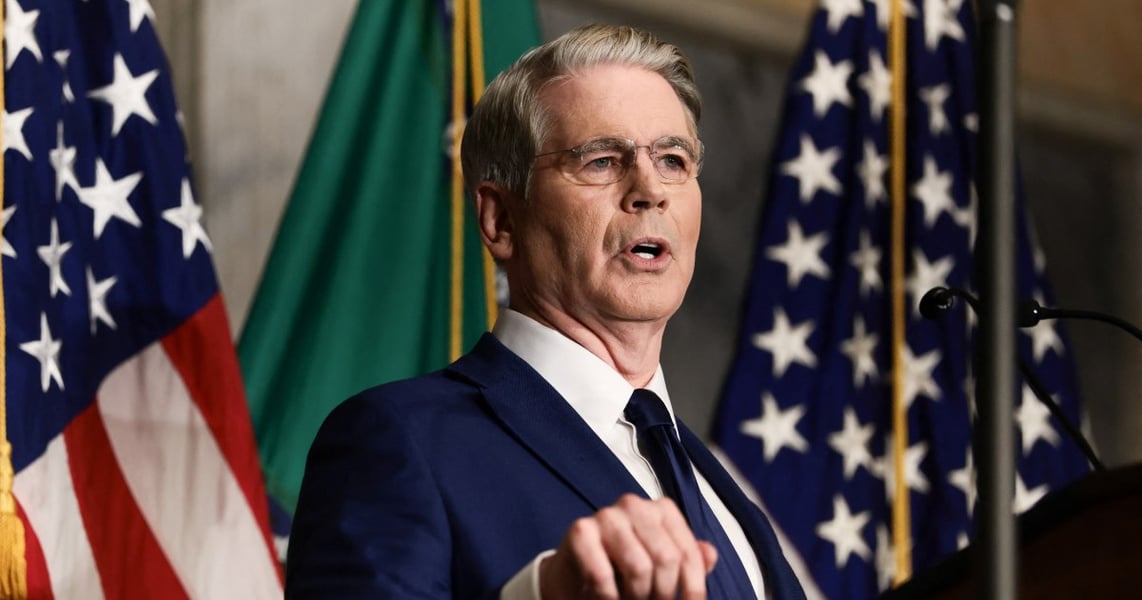
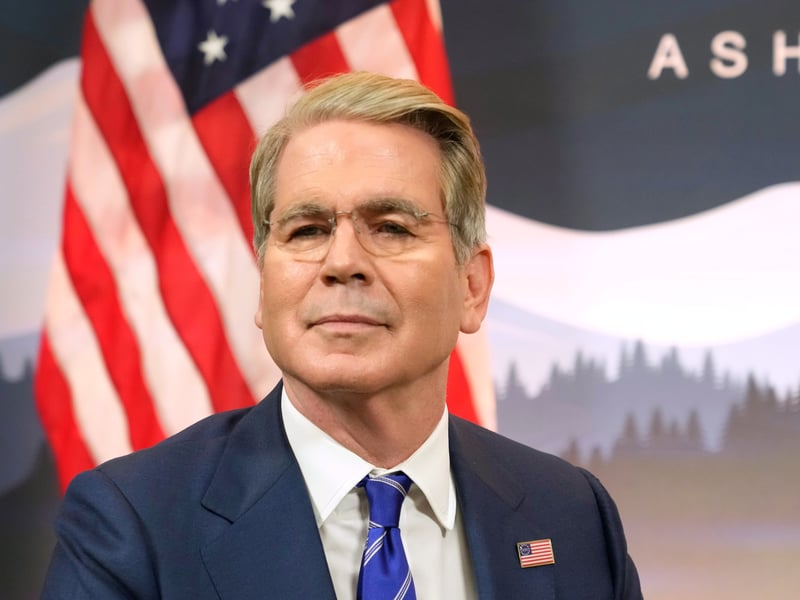
The deadline is the sharpest edge yet of “Operation Economic Outcast,” the sweeping sanctions campaign Treasury Secretary Scott Bessent unveiled on August 24, describing it as “the single greatest financial offensive ever marshalled against an adversary.” The operation targets five sectors of Iran’s economy: aviation, digital assets, gold, shipping, and technology. It has designated nearly 60 entities, individuals, and vessels since its launch. By the time Monday arrives, the authorisations that have allowed ordinary civil society contact between Iran and the outside world will have been revoked entirely.
On Thursday, the Treasury’s Office of Foreign Assets Control added a new name to the list: Golden Global Yatirim Bankasi Anonim Sirketi, a small Istanbul-based investment bank, along with two subsidiaries, Golden Global Portfoy Yonetimi and Golden Global Varlik Kiralama. The bank, OFAC said, had “facilitated tens of millions of dollars’ worth of transactions” for the Islamic Revolutionary Guard Corps Quds Force and provided “key correspondent banking access” that allowed the Iranian government to move money internationally.
More specifically, Golden Global was established, Washington alleged, to enable Iran’s “rahbar network,” a sanctions-evasion architecture that routes Iranian oil revenues from buyers in China to Turkey, where they can be converted into cash and gold. It was the second financial institution to be targeted under the operation, following the designation of Egypt’s Banque Misr, the country’s second-largest bank, on August 30.
Bessent, speaking the same day, said he “hoped” no further bank penalties would be necessary. The comment landed as an admission that the administration is not seeking an unlimited escalation. Somewhere, a line exists beyond which the economic consequences become too unpredictable even for Washington.
That line matters, because the countries whose cooperation would make Operation Economic Outcast work are not cooperating.
Pakistan was more direct. Islamabad stated it would not comply with any unilateral sanctions order from Washington and is bound only by restrictions passed through the United Nations Security Council. Pakistan’s overland trade with Iran in agricultural goods, including rice, mangoes, and livestock, had not slowed as of last week, according to reporting by RFE/RL.
Iran’s Foreign Ministry described the entire operation as “illegal and unjustified” and called on all countries to refuse implementation. Iran’s security apparatus threatened a “seismic” response to continued economic pressure; separately, the Islamic Revolutionary Guard Corps raised the possibility of striking oil tankers moving through the Persian Gulf as a countermeasure. The threats were not entirely without precedent. The Strait of Hormuz remains among the most strategically sensitive waterways on earth, and Iran has previously demonstrated its willingness to disrupt it.
What remains contested, even among analysts who broadly accept Washington’s characterisation of the operation, is whether any of this is working in the way Bessent described. US officials have claimed that Iranian crude exports have fallen to zero since the naval blockade imposed earlier this summer. That figure, if accurate, would represent an extraordinary achievement; it is also an extraordinary claim, and the methodology behind it has not been published. The sanctions-evasion networks that China and Russia underwrite operate precisely because they are hard to measure. What shows as zero on one accounting may be transiting through intermediaries who have simply grown more cautious about their paper trail.
For Iran, the human cost of the campaign is real regardless of those ambiguities. The rial has lost value, inflation remains severe, and the suspension of the general licences covering educational exchanges and personal remittances will fall most heavily on ordinary people: the Iranian diaspora trying to send money home, the Iranian student whose university partnership suddenly has no legal basis, the family whose international financial ties have been cut by a Treasury decision made in Washington.
The operation is not, by any serious account, without impact. It is, by the account of several independent analysts cited in coverage from Al Jazeera and other outlets, also not without structural limits that its architects have yet to fully address. China, Pakistan, and Russia, the countries that matter most to Iran’s economic survival, have looked at Washington’s “greatest financial offensive” and, so far, shrugged.














