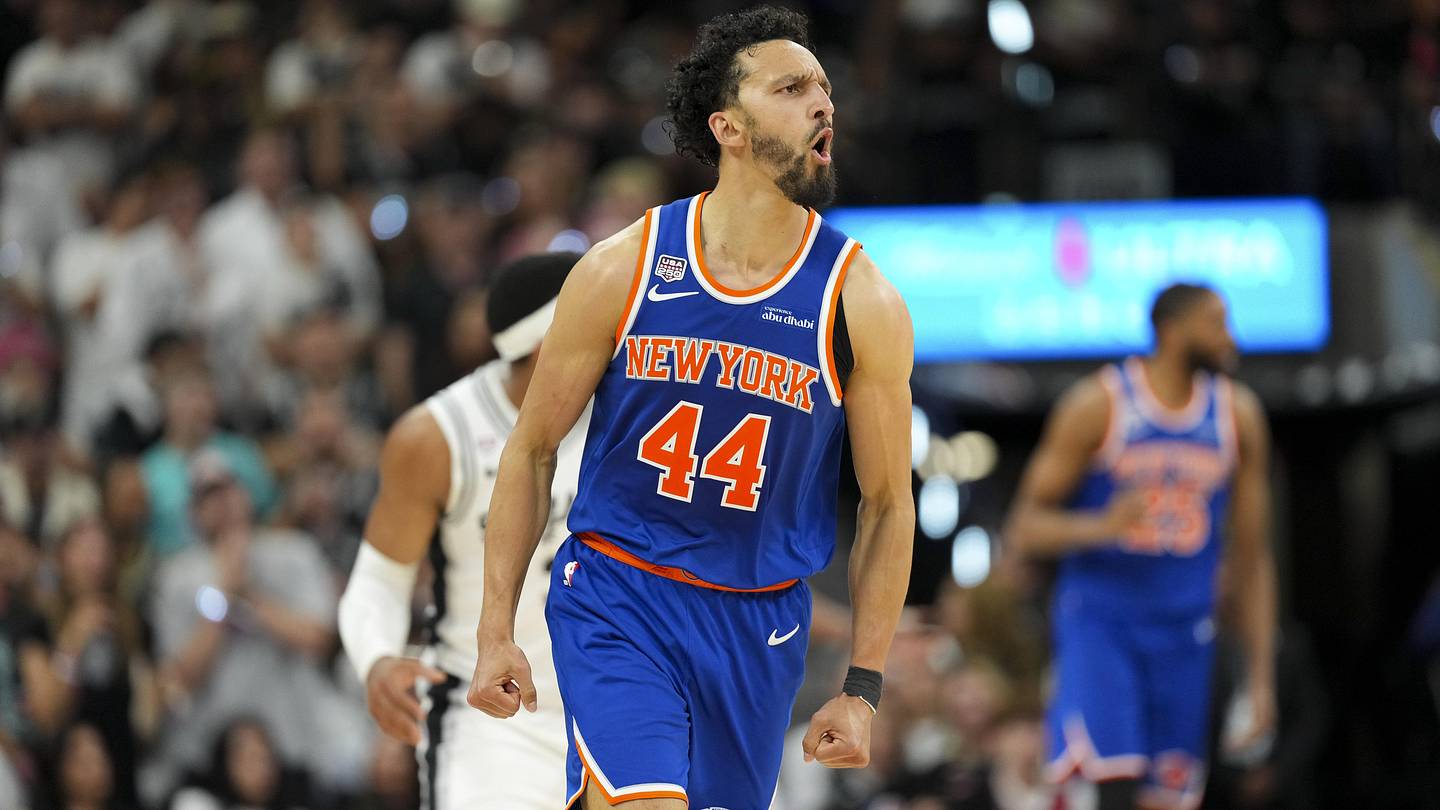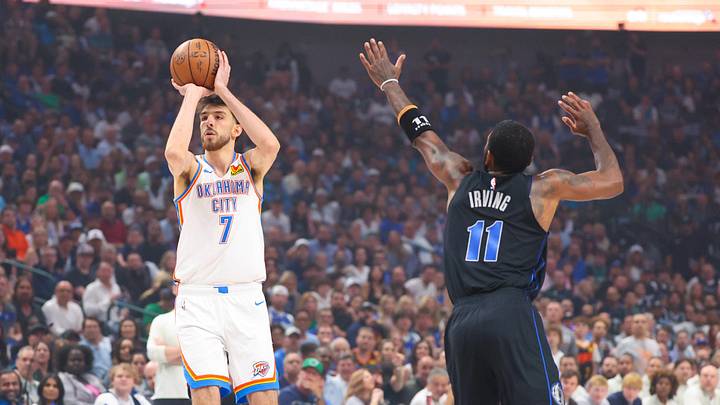
OKLAHOMA CITY — Four points. One field-goal attempt in the second half. No shots attempted at all after halftime in the game that ended the Oklahoma City Thunder’s season.
That is the sentence that will follow Chet Holmgren into the offseason, regardless of what else the 24-year-old center accomplished during the most productive year of his NBA career. And it is a sentence that deserves to sit uncomfortably, because nothing in Holmgren’s regular-season resume — and the resume was genuinely impressive — answers it.
Holmgren played 69 games in 2025-26, averaging 17.1 points, 8.9 rebounds, 1.9 blocks and 1.7 assists per game while shooting 55.7 percent from the field. He earned a spot on the All-NBA Third Team and, more tellingly, the All-Defensive First Team — finishing second only to Victor Wembanyama in Defensive Player of the Year voting, appearing on 93 of 100 ballots cast for the first team. The Oklahoma City defense ranked first in the NBA for the second consecutive season, posting a defensive rating of 106.5, and the Thunder won 64 games. Holmgren was central to all of it.
None of that is small. A 7-foot-1 center who can guard in space, alter shots without fouling, shoot from the perimeter and finish at the rim with both hands is a genuinely rare commodity. The Thunder built the league’s best defense around Holmgren’s ability to anchor the paint while his perimeter teammates — Shai Gilgeous-Alexander, Jalen Williams, Cason Wallace — applied relentless pressure everywhere else. OKC’s defensive rating fell from 106.5 with Holmgren on the floor to 107.9 without him, according to NBA tracking data, a gap that understates his structural importance to Mark Daigneault’s scheme.
On offense, the leap was real too. His 55.7 field-goal percentage ranked 11th in the league, his true shooting climbed to 65.3 percent, and he reached a scoring average he had never previously sustained for a full season. He had 24 double-doubles through the regular year and averaged 20.0 points per game against the Los Angeles Lakers in the second round — the version of Holmgren that made Oklahoma City’s front office believe, before the Spurs and Wembanyama arrived, that they might be heading back to the Finals.
Then the Western Conference Finals began, and so did the reckoning.
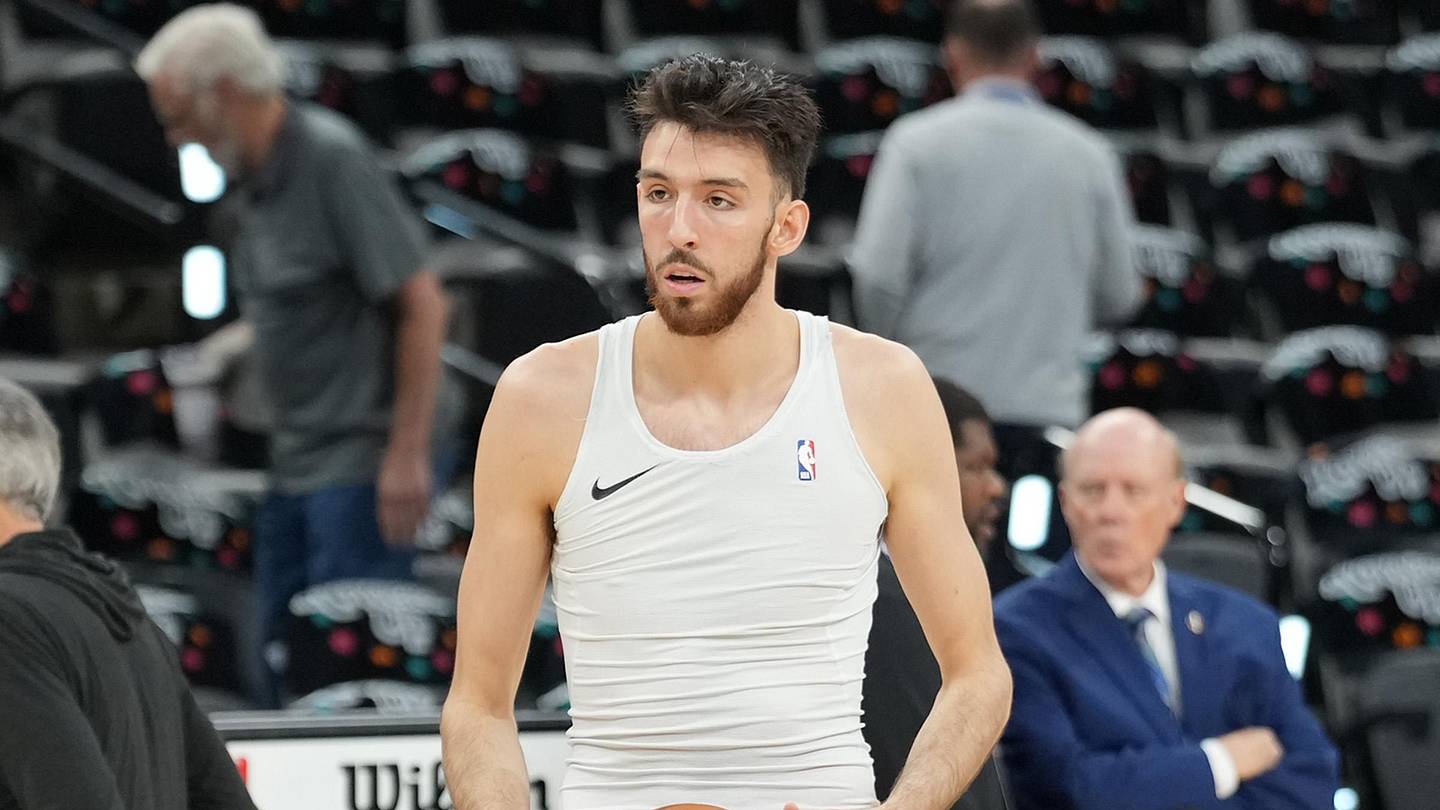
The San Antonio Spurs presented a specific and uncomfortable test: Wembanyama, who had just become the first unanimous Defensive Player of the Year in NBA history and led the league with 3.1 blocks per game. Matching up against Wembanyama on the offensive end was always going to be difficult. What the Thunder did not anticipate — could not budget for — was Williams going down with a hamstring injury, leaving Holmgren as the only viable secondary scorer capable of easing the burden on Gilgeous-Alexander. That was the moment the season’s defining question arrived, and Holmgren did not answer it.
He averaged 10.7 points, 7.1 rebounds and 1.1 blocks across the seven-game series, shooting 10.7 fewer points per game than his regular-season average. The final game was the starkest data point: four points, four rebounds, two blocks, and no field-goal attempt from the 24:00 mark onward. The Thunder lost 111-103 at Paycom Center and watched the Spurs advance to the NBA Finals. According to Basketball Reference, Holmgren became just the second All-NBA player in at least 50 years to score four points or fewer in a playoff Game 7 — a statistical company no one wants to keep.
Coach Mark Daigneault defended his center afterward. “He was a huge contributor in ways that may not be in the box score or visible,” Daigneault told reporters, per ESPN. “We didn’t get outscored by much when he was on the court. I can take some responsibility for his lack of shot attempts, but I still think he played a big-time game in some areas.” Holmgren himself acknowledged the matchup’s difficulty. “I don’t think there’s another team that has the same kind of play style,” he said after the loss.
The more precise concern is not whether Holmgren is good. He is very good, perhaps on the edge of great. The concern is whether he has the offensive assertiveness — the willingness to demand the ball, attack a close-out, draw a foul, command an offense when a series demands it — that makes a team’s second-best player genuinely threatening in a seven-game series against elite opposition. That quality was absent in San Antonio. Whether it is a developmental gap, a matchup-specific problem, or something structural about how Holmgren operates in high-leverage moments is a question Oklahoma City’s coaching staff will spend the summer trying to answer honestly.
The context matters here. Holmgren is 24 years old and has played three NBA seasons, one of which ended at 32 games due to injury. His growth curve has been steep and legitimate. The same player who averaged 15.0 points in 2024-25 on 49 percent shooting jumped to 17.1 points on 55.7 percent this year while adding defensive honors that trail only the most extraordinary young player in the sport. The Thunder won the championship in 2025 with Holmgren averaging 12.3 points and 8.9 rebounds per game in the Finals, blocking a record five shots in Game 7; the organization has not forgotten that.
Gilgeous-Alexander made clear he has not forgotten it either. “We need Chet. We just need Chet Holmgren,” the Thunder guard told reporters after the elimination. “Before Chet was here we weren’t who we are today.” That’s not a diplomatic non-answer — it’s a factual one. Oklahoma City has also since confirmed, through reporting by Basketball Reference and Jake Fischer at Hoops Rumors, that it has no interest in trading Holmgren. The Thunder believe the development arc remains intact.
That may be exactly right. What is also true is that the gap between Holmgren and Wembanyama — in volume, assertiveness, shot creation and comfort under maximum pressure — was more visible across seven games than anyone in Oklahoma City wanted to acknowledge publicly. Wembanyama was named Western Conference Finals MVP after dominating on both ends throughout the series. Whether the gap closes, or whether Holmgren’s ceiling as a second option runs into structural limits that no amount of good coaching can fully remedy, is the central uncertainty the franchise now carries into next season.
The honors were earned. The All-Defensive First Team selection, the All-NBA berth, the defensive-rating numbers — none of it is revisionist in the aftermath of one difficult series. But the Thunder are not built around trophies. They are built to win the last game of the season. After a championship in 2025 and a Western Conference Finals exit this year, the question of whether Chet Holmgren can be the player they need in those moments — not the regular season, not April, but late June when everything is at stake — is the one question his 2025-26 season did not answer. Next year will have to.