
Oklahoma City entered Tuesday night carrying the weight of a missed opportunity. A frustrating Game 4 collapse in San Antonio had wiped away their series lead and revived questions about whether the defending champions could generate eno ugh offense while dealing with injuries and lineup adjustments.
Three quarters later, those questions had changed completely.
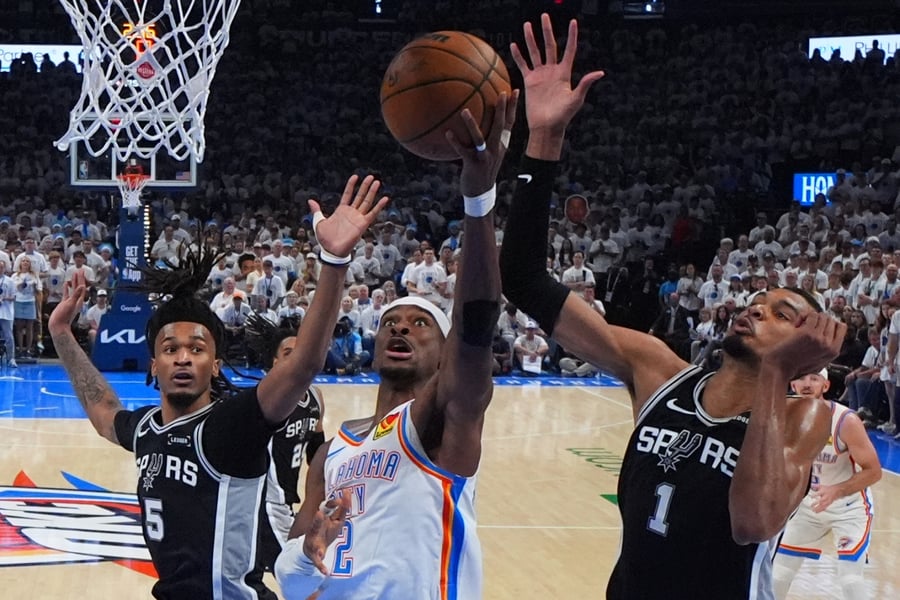
The Oklahoma City Thunder responded with authority, defeating the Spurs 127-114 in Game 5 of the Western Conference Finals and move within one victory of another NBA Finals appearance. Instead of relying on a single superstar rescue act, Oklahoma City delivered what has increasingly become its identity throughout the postseason: relentless pressure coming from every direction.
Gilgeous-Alexander again operated as the centerpiece, but Game 5 became another reminder that Oklahoma City’s rise has been built around far more than individual brilliance.
Gilgeous-Alexander finished with 32 points and nine assists, controlling pace and creating scoring opportunities whenever San Antonio threatened momentum. He repeatedly attacked mismatches, got to the free-throw line, and dictated the flow of the game in moments where the Spurs looked ready to swing the contest back in their favor.
Yet the cast around him became one of the most important stories of the night.
That collective production changed the entire rhythm of the night.
The Thunder exploded for 40 points in the second quarter, turning a tense opening period into a game where Oklahoma City suddenly dictated every major sequence. Ball movement improved, transition opportunities emerged, and the aggressive offensive style that disappeared in Game 4 returned at exactly the right moment.
For San Antonio, the loss felt especially frustrating because of how dramatically the performance contrasted with its previous outing.
Only days earlier, the Spurs held Oklahoma City to just 82 points and appeared to have discovered defensive answers. Instead, defensive mistakes and undisciplined possessions changed everything in Game 5. Rotations broke down, fouls piled up, and Oklahoma City’s depth repeatedly exposed gaps in coverage.
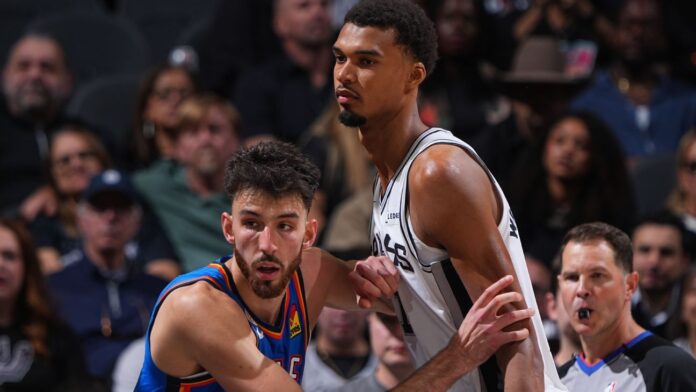
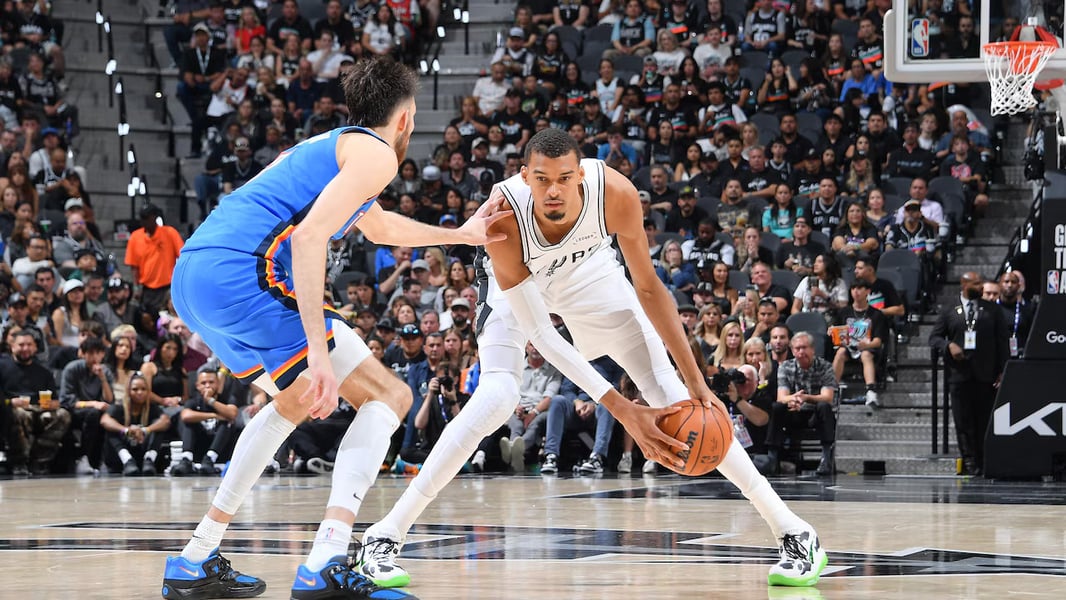
Pregame discussion centered around whether Oklahoma City could once again slow Wembanyama after his dominant Game 4 performance.
The Thunder largely found their answer.
Wembanyama scored 20 points but was held to difficult looks and inconsistent efficiency. Oklahoma City’s defensive attention around the rim and willingness to throw multiple defenders into his space prevented him from taking over the game the way he had during previous moments during the series.
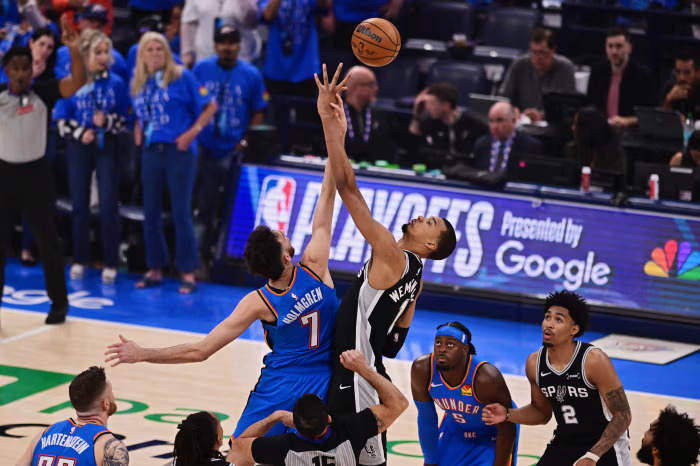
The series itself has followed a pattern of constant momentum swings.
One game belongs to Oklahoma City’s depth. Another becomes Wembanyama’s showcase. One night injuries become the biggest story. The next, role players emerge unexpectedly. Even before Game 5, league observers described the matchup as a series built on constant shifts and unpredictable adjustments.
Now, however, Oklahoma City has created the first true pressure point.
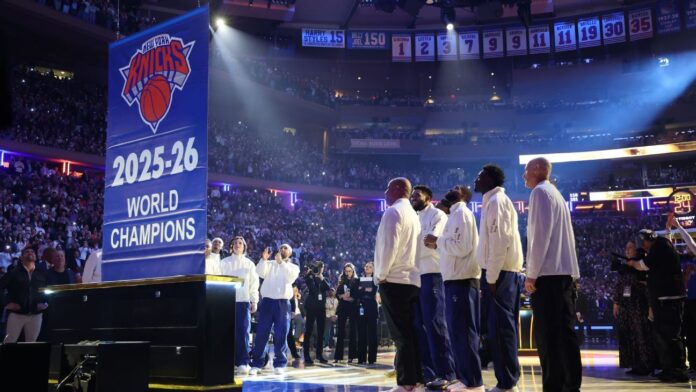
The Thunder head into Game 6 holding a 3-2 lead with an opportunity to eliminate San Antonio and secure a place on basketball’s biggest stage. The New York Knicks already wait on the other side after advancing through the Eastern Conference, meaning Oklahoma City sits one win away from turning a dominant season into another Finals appearance.
For San Antonio, the challenge is obvious.
Extend the series or watch Oklahoma City celebrate.
For the Thunder, the formula appears equally clear.
Shai Gilgeous-Alexander may remain the face of the franchise, but their championship path increasingly looks powered by something larger: a roster that keeps finding new answers before opponents can solve the previous one.