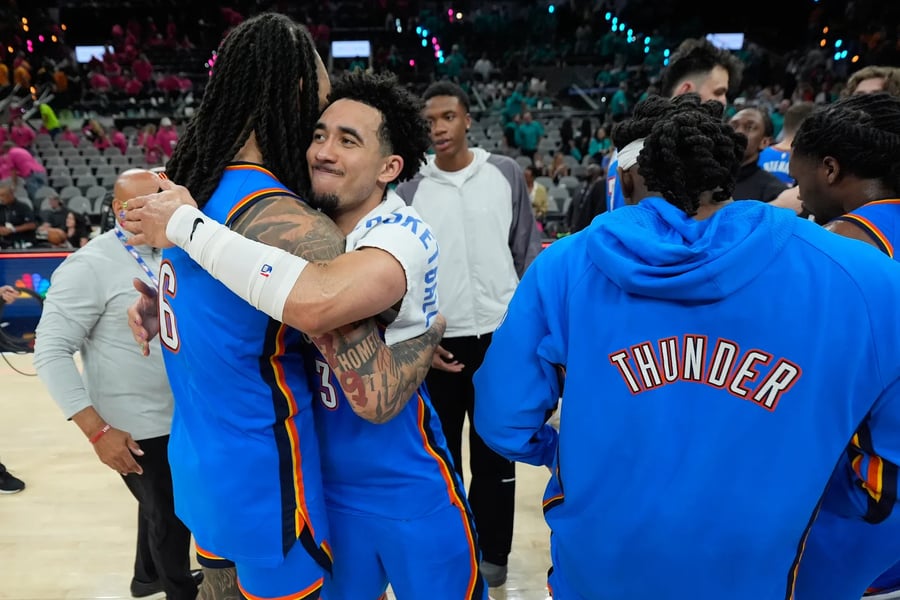

The Western Conference Finals shifted dramatically Friday night, and it happened in a way few expected. The Oklahoma City Thunder walked into San Antonio and survived a nightmare opening sequence before turning the game into a showcase of depth, resilience, and championship-level composure.
After falling behind 15-0 in the opening minutes, the Thunder stormed back for a 123-108 victory over the San Antonio Spurs in Game 3, taking a crucial 2-1 lead in the series and reclaiming home-court advantage. While league MVP Shai Gilgeous-Alexander delivered another dependable performance, the story of the night belonged to Oklahoma City’s second unit. Thunder reserves erupted for an astonishing 76 points, a number that completely reshaped the contest and sent a message across the NBA playoffs landscape.
San Antonio looked unstoppable early.
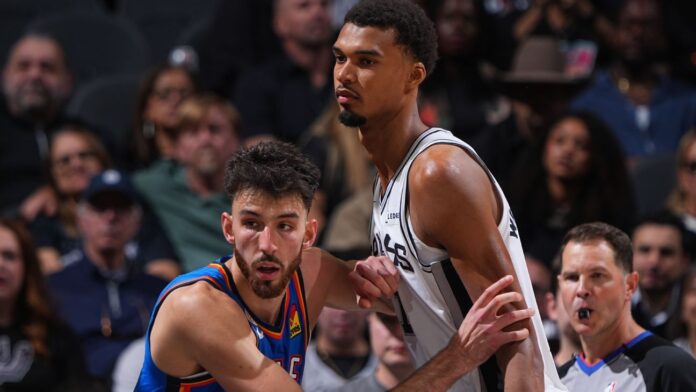
Playing in front of a roaring home crowd, the Spurs opened with urgency and energy. Victor Wembanyama immediately established his presence while the team attacked aggressively in transition. The 15-0 start gave the impression that Oklahoma City might be on the verge of being overwhelmed by the moment.
Instead, Thunder coach Mark Daigneault made a move that changed the night.
He turned to his bench earlier than expected, and Oklahoma City’s bench suddenly found life. Alex Caruso brought stability, Jared McCain injected scoring energy, and Jaylin Williams stretched the floor with timely shooting. By the end of the first quarter, the Thunder had erased much of the damage and shifted the momentum permanently.

The bench scoring numbers became almost unbelievable as the game progressed.
Oklahoma City’s reserves outscored San Antonio’s bench 76-23. Even more remarkable, Thunder bench players have now outscored Spurs reserves 183-64 through three games in the series. That kind of production creates matchup problems few teams can survive in a conference finals environment.
The performance also entered NBA history territory. The 76 bench points represented the highest total by a team in a conference finals game since the league adopted the modern 16-team playoff format in 1984.
Shai Gilgeous-Alexander still looked every bit like the NBA’s MVP despite the headlines surrounding the bench explosion. The Thunder superstar finished with 26 points and 12 assists, maintaining control of the game’s tempo even during difficult stretches. While his shooting rhythm was not at its sharpest, his ability to stabilize the offense once San Antonio’s initial surge faded proved critical.
For the Spurs, there were encouraging signs mixed with frustration.
Wembanyama finished with 26 points and showed flashes of the dominance that has already made him one of basketball’s most fascinating players. However, Oklahoma City’s defensive adjustments limited his impact in other areas. After averaging massive rebounding numbers earlier in the series, the Thunder prevented him from controlling possessions at the same level.
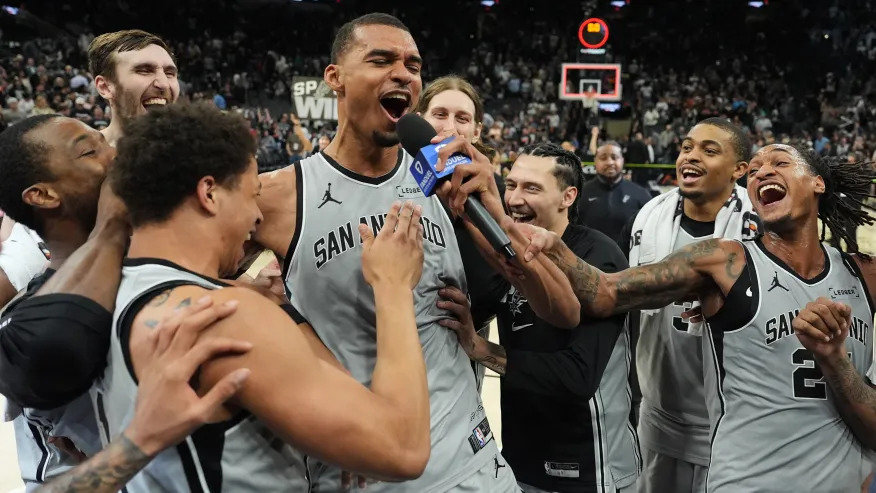
That inability to counter Oklahoma City’s depth may become the defining issue of the series.
Much of the pre-series conversation focused on star power. Gilgeous-Alexander against Wembanyama became the headline attraction, and deservedly so. Yet three games into the matchup, the difference has increasingly come from everything around the stars.
Championship runs often require more than elite names at the top of the roster. They demand contributions from unexpected places, players accepting changing roles, and entire rotations staying prepared for moments that suddenly become enormous.
Oklahoma City appears to have built exactly that kind of identity.
The Thunder entered the playoffs with questions surrounding experience and postseason maturity. Those concerns are beginning to disappear rapidly. Their response to adversity in Game 3 looked like a team that understands the demands of deep playoff basketball.
San Antonio now enters Game 4 facing a critical challenge.
The Spurs have shown they can create explosive starts and force Oklahoma City into uncomfortable situations. But quick bursts alone are not enough against a team receiving historic production from its second unit.
The pressure has shifted.
Instead of the young Thunder trying to prove they belong on this stage, it is now the Spurs searching for answers before the series moves further away from them.
And if Oklahoma City’s bench keeps producing at this level, the Thunder may be moving closer to something far bigger than a Western Conference title.