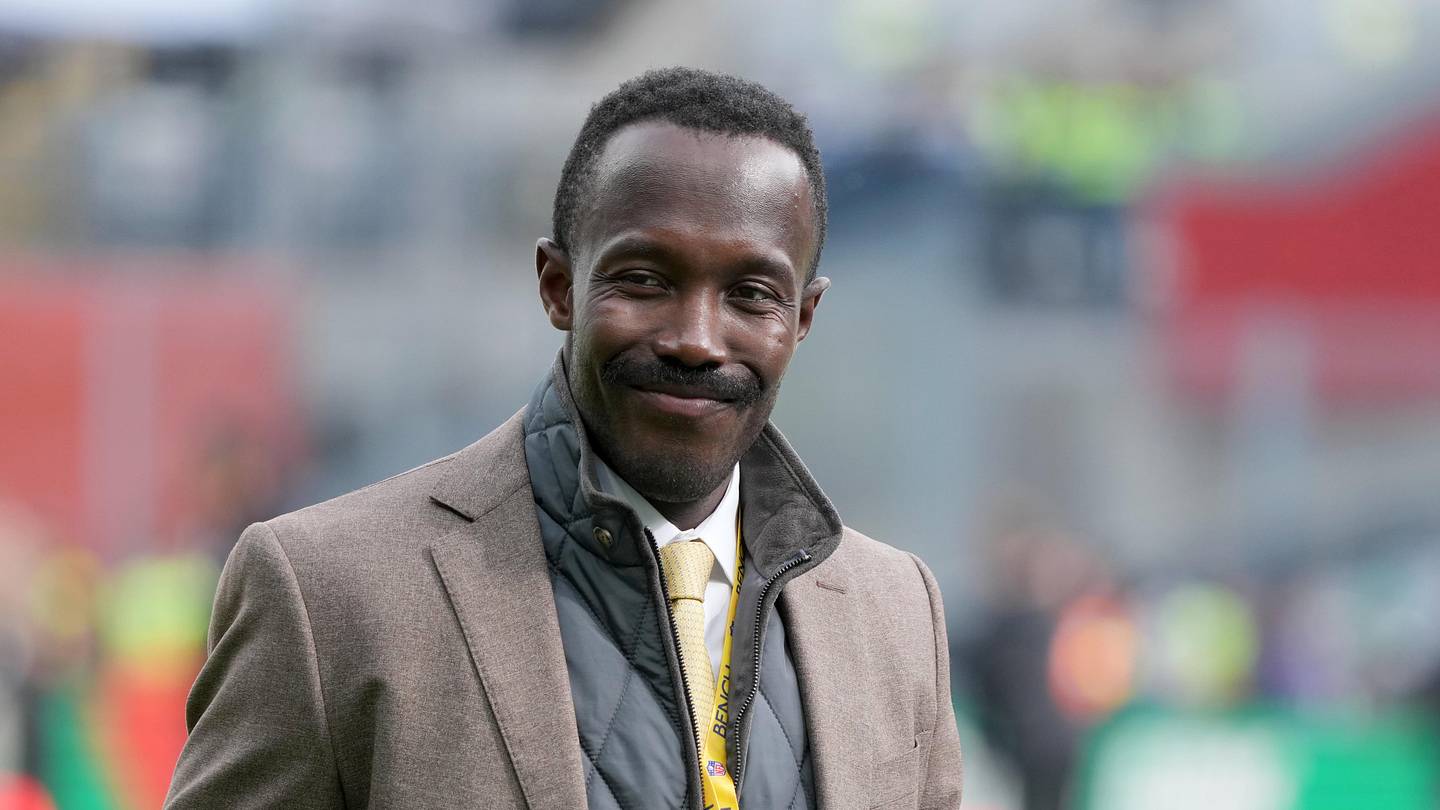
SANTA CLARA — The phone calls started almost before the moving trucks left Minneapolis. Kwesi Adofo-Mensah, fired as the Minnesota Vikings’ general manager in late January after four seasons that ended without a playoff win, had barely cleared security at the airport when the San Francisco 49ers came calling. By February 24, he was back where his NFL career began.
On Wednesday, the 49ers made it official in a way that answered the one remaining question: his title. Adofo-Mensah will serve as vice president of personnel and strategy, NBC Sports reported, a role that slots him into the organization’s analytics and roster-construction framework he helped build over seven years before leaving for Cleveland.
The announcement came alongside nine internal promotions across the 49ers’ front office, a signal that general manager John Lynch is tightening the organization’s architecture heading into a 2026 season already carrying enormous expectations after a turbulent offseason in the NFC West. Austin Moss II was elevated to vice president of player development and team dynamics, while Michael Gonzalez moved into the role of head of general manager operations after more than a decade quietly holding the club’s executive structure together.
For Adofo-Mensah, the return to Santa Clara is less a step down than a recalibration. The 44-year-old Princeton and Stanford economics graduate entered the NFL in 2013 as San Francisco’s manager of football research and development, a title that placed him at the leading edge of the league’s analytical turn before the phrase had fully entered the sport’s vocabulary. He was promoted to director of football research and development in 2017, staying through 2019 before Cleveland hired him as vice president of football operations under Andrew Berry.
Minnesota came next. The Vikings elevated him to general manager before the 2022 season, and what followed was an analytically ambitious four years that did not survive the franchise’s patience for results. The team extended his contract in May 2025, then reversed course and let him go in January 2026 — a sequence that left questions about whether his departure was driven by the quarterback situation, the win total, or both. The 49ers’ official announcement made no mention of any of that.
What the announcement did make clear is that Adofo-Mensah’s reputation inside the league survived Minnesota largely intact. Executives who lose general manager jobs sometimes disappear into consulting or private equity. He was unemployed for roughly three and a half weeks. That San Francisco moved that quickly — and that Lynch named him publicly before the draft, before the title was even settled — tells its own story about how the 49ers view his value.
The role itself remains something of an open question. Vice president of personnel and strategy is a title that can mean many things depending on how Lynch uses it. In the most straightforward interpretation, Adofo-Mensah will sit somewhere between the scouting department and the executive suite, running analytical models, challenging conventional personnel evaluations, and providing a second voice on roster decisions that do not officially belong to him. Whether he is eventually positioned as a general manager candidate elsewhere, or whether San Francisco builds around him in a longer-term capacity, is not something the 49ers addressed Wednesday.
The timing is notable. The 49ers are navigating their own transition after the NFC West lost a significant gravitational force this spring when the Los Angeles Rams completed their trade for Myles Garrett, a move detailed last week that reshaped the division’s defensive calculus. San Francisco is also managing the extended contract of left tackle Trent Williams, signed through 2027 at a price that keeps pressure on the club to compete immediately.
What Adofo-Mensah brings to that environment is a mind built for exactly these kinds of pressure calculations. His background in commodity trading and portfolio management before he entered football was not cosmetic. He ran those muscles inside an organization that was already analytically serious, and he leaves with a full view of what it takes to run one — and what happens when the quarterback situation does not cooperate.
What he does with that knowledge inside the 49ers’ building, and how long before he is interviewing for a general manager job somewhere else, are the questions that matter. Wednesday answered the title. The rest is still being written.