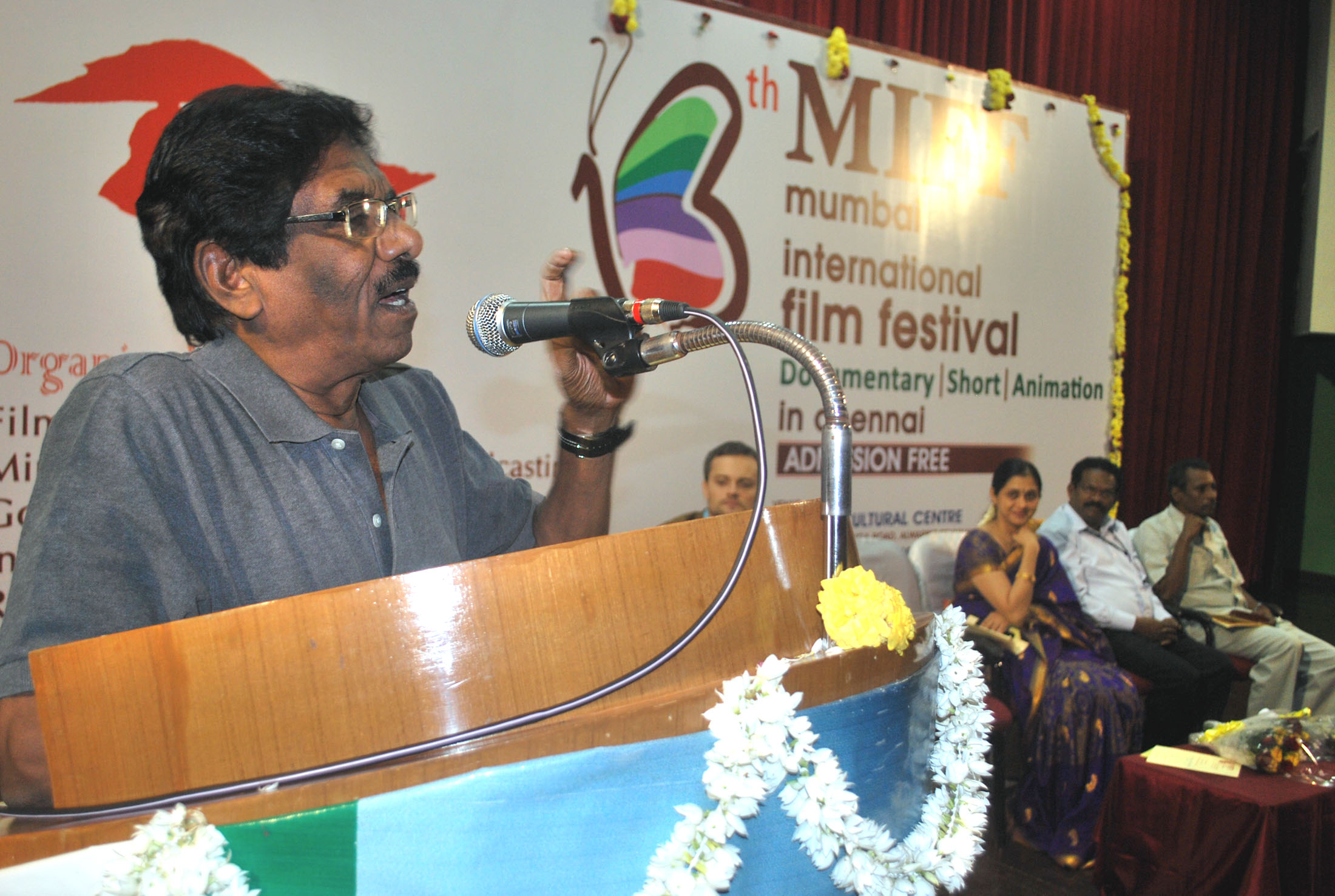

THENI: The director who carried Tamil cinema out of the studio and into the village was returned to his own soil on Thursday. Bharathiraja was buried with full state honours at his farmhouse near Vathalagundu in Theni district in the afternoon, a day after his death in Chennai at 84, with a police gun salute sounding over the fields he had chosen as his resting place.
The Tamil Nadu government accorded the honours, and a state minister laid a wreath on its behalf, Tamil language outlets including News18 Tamil and Oneindia Tamil reported from the site. The body had been flown from Chennai in the morning and taken in procession through Theni, where crowds lined the route.
The mourners at the farm measured the breadth of the man. Actors Vadivelu and Raadhika Sarathkumar were among the film personalities who travelled to Theni, the Hindu Tamil Thisai reported, alongside technicians, local residents and fans from across the southern districts who had grown up watching their own landscapes in his films. Condolences arrived through the day from the highest offices of the central and state governments.
The burial fulfilled the director’s own stated wish. Bharathiraja had asked to be laid to rest on his farmland near his native place, and his family honoured it, bringing to Theni a man whose career had begun by insisting that Tamil stories belonged to exactly this red soil. His 1977 debut 16 Vayathinile opened with him walking into frame to introduce the village as a character, and the symmetry of Thursday’s farewell was lost on no one who spoke at the site.
The industry stopped for the day. Film and television shoots across the Tamil industry were cancelled as a mark of respect, Dinamani reported, extending the pause that began on Wednesday when Rajinikanth, Kamal Haasan and Ilaiyaraaja arrived at his Chennai home within hours of the news.
What was buried in Theni was a body of work that remade the grammar of Tamil cinema: more than fifty films across five decades, six National Film Awards, and a rural idiom so durable that the industry’s biggest contemporary hits still build on it. The directors who learned in his shadow, from Bala to Vetrimaaran, now carry the school he founded without ever opening one.
What follows the funeral is the longer work of memory. No memorial plans had been announced by Thursday evening, his final scripts remain unproduced, and the farm where he now lies is private land rather than a public site. Whether Tamil Nadu gives its most influential rural filmmaker a permanent public memorial is the next question, and it belongs to the living.