
MUMBAI — “If I had a choice between leaving my home and dying, I would have gladly chosen death. Unfortunately, I did not have such a choice.” The words belong to an unnamed refugee, and starting Friday they will be the last thing audiences read as the credits roll on Imtiaz Ali’s Partition love story.
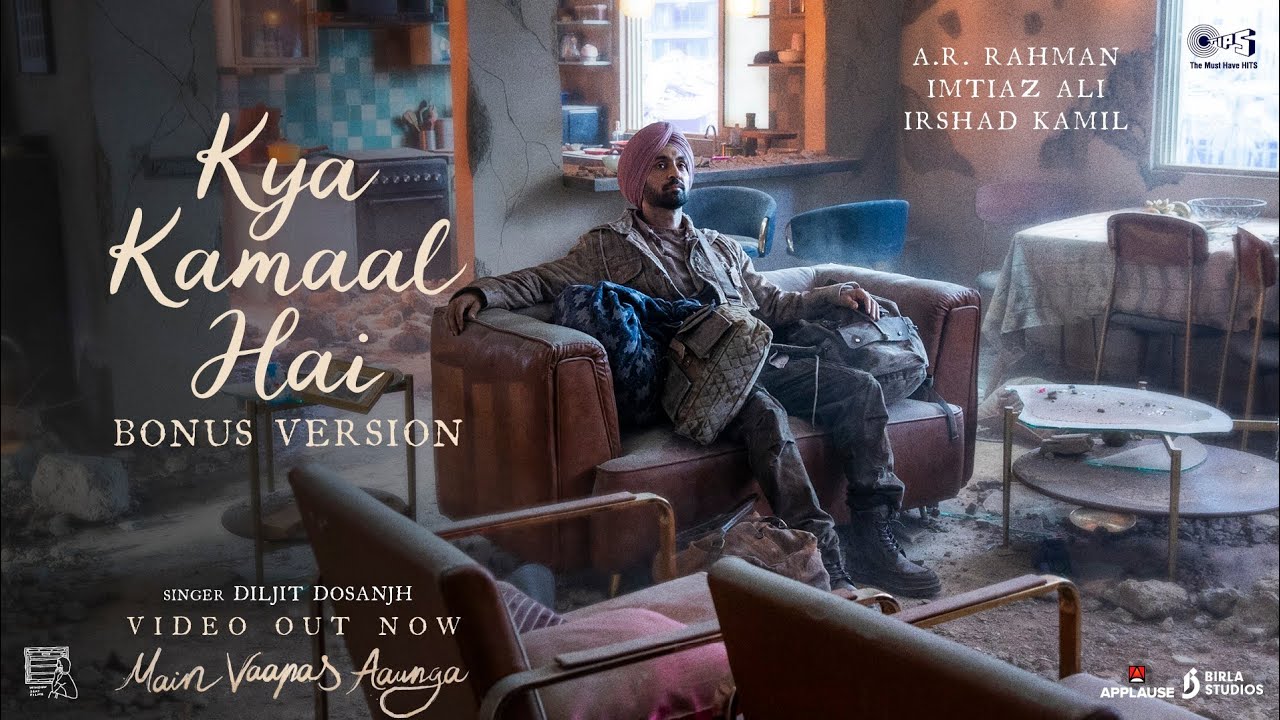
The makers of “Main Vaapas Aaunga” announced Wednesday that a special version of “Kya Kamaal Hai,” sung by Diljit Dosanjh over an A. R. Rahman composition with Irshad Kamil’s lyrics, will play through the film’s end credits as a dedication to refugees, with Hindustan Times among the outlets carrying the announcement. The track went up on the music label’s channels the same afternoon, framed by the production as a song of hope amid the noise, violence and displacement of the present.
The gesture fits the film it closes. “Main Vaapas Aaunga,” the title itself a promise to return, is a love story shaped by Partition, the largest forced displacement in recorded history, with Vedang Raina and Sharvari leading a cast that includes Naseeruddin Shah, Banita Sandhu and Dosanjh himself. By dedicating the closing minutes to refugees of the present tense, Ali draws the line his film implies: the 1947 exodus is not history so much as a recurring condition, currently lived by tens of millions.
It also reunites a trio with proof of concept. Ali, Rahman and Dosanjh last worked together on “Amar Singh Chamkila” in 2024, the streaming hit that rebuilt Dosanjh’s screen credibility around music rather than despite it, and Ali has called the new collaboration a tribute in remarks carried by news agency ANI. Dosanjh arrives at the film as arguably Indian music’s biggest global export, which is precisely what gives an end-credits dedication reach beyond the theater.
There is a quieter industry footnote in the release too. The song reaches listeners through Tips, the same label spending this week in the Bombay High Court defending a 400 crore rupee claim over its catalogue. One arm of the music business litigates its past; the other releases a Rahman original about people who lost everything. Both are Wednesday’s business as usual.

For Sharvari, the week is turning into a coronation by accumulation: the same day the dedication was announced, YRF’s Alpha teaser placed her at the center of the spy universe, and Friday puts her in an Imtiaz Ali frame. Two of Hindi cinema’s most closely watched June releases now run through one twenty-something actor. The industry has not produced a fast-track this steep in years.
Bollywood end credits are usually contractual space, a dance number or a sponsor reel. Using them as an editorial, with a refugee’s words standing alone on screen, is the kind of choice that costs nothing at the box office and says a great deal about what a filmmaker thinks his film is for. Hindi cinema has flirted with the device; Ali is committing to it on a wide release.
What the production has not said is whether the dedication comes with anything material, a partnership with a refugee organization, a revenue component, or simply the sentiment. The source of the anonymous quote has not been identified, Rahman and Dosanjh have not spoken about the track beyond the release, and the film itself still faces Friday’s crowded box office before any of its choices reach the audience they were made for.
The song’s title asks what could be more wondrous. The quote above the credits answers with what could be more ordinary: a person who wanted to stay home, and could not. Between those two lines is the film, and Friday will tell whether audiences walk out humming or sitting still.