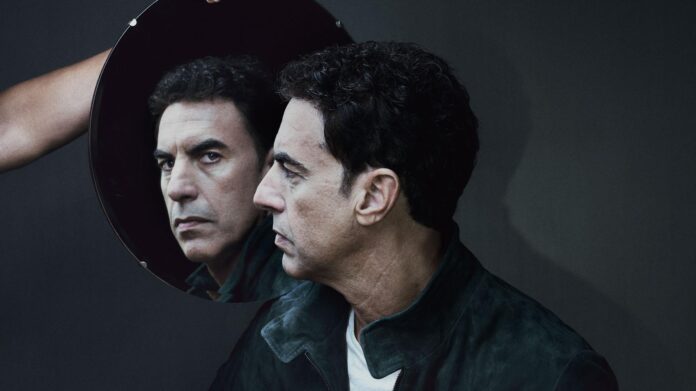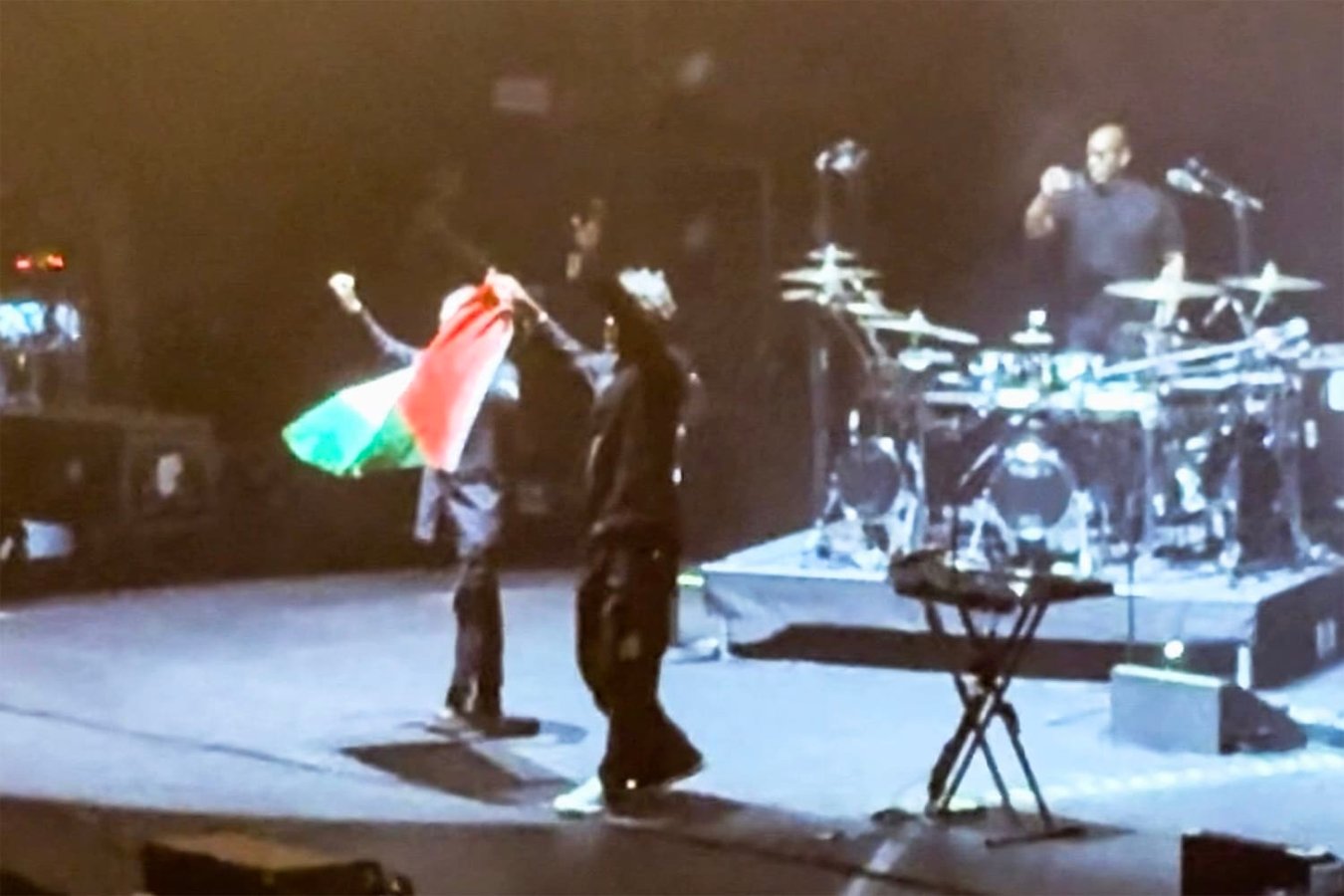

SINGAPORE – Robert Del Naja and Grant Marshall were heading offstage when Singapore police closed in. The two founding members of Massive Attack, who had just played the final night of their residency at the Marina Bay Sands Expo and Convention Centre, were separately detained, their hotel rooms searched and their passports temporarily confiscated. Their act was raising the flag of Palestine.
The incident, which unfolded after hundreds of audience members had joined in chanting “Free Palestine,” placed one of Britain’s most politically uncompromising bands in a direct confrontation with one of Asia’s most tightly controlled governments. It also forced a question neither side seemed prepared to debate so publicly: at what point does holding a flag become a threat to public order?
Singapore Police confirmed Monday that officers had responded to a complaint about an act that “could potentially harm the racial and religious harmony” of the country. Under Singapore law, the public display of a foreign national emblem without a permit is prohibited. Massive Attack did not have that permit. Both Del Naja and Marshall received what police described as “stern warnings,” a formal sanction that stops short of criminal charges but is recorded and can be cited in future legal proceedings. Both men were also barred from returning to Singapore.
The band rejected that framing outright. “We did not imagine that merely holding up the flag of a sovereign state recognized by 157 countries would violate any law,” they said in a statement released Monday. “We did not incite violence. We did not make any hostile statements. We raised a flag.” The statement, reported by NBC News, offered no apology and no softening of position.
That posture is consistent with more than three decades of political engagement from the Bristol group. Formed in 1988 out of the city’s Wild Bunch collective, Massive Attack built a career that was always as much about argument as atmosphere. Del Naja, a visual artist as much as a musician, has been publicly outspoken about the Gaza genocide since Israeli forces began their military campaign in October 2023. The band has spoken at rallies, lent their name to open letters and, as of Sunday, raised a flag before a packed arena in a country with very different rules about what is permitted in public.
Singapore’s approach to racial and religious sensitivity is extensive, codified and consistently enforced. The city-state of about six million people includes a Muslim population of roughly 15 percent, predominantly of Malay heritage, for whom the Palestinian cause carries deep significance. Authorities have long argued that maintaining communal harmony requires anticipating and preventing speech and public acts that could inflame tensions. What this framework can do, critics note, is treat solidarity itself as a form of provocation while the violence that prompted it remains out of reach.
The entertainment world has spent more than a year struggling with how to handle this moment. In Britain, Boy George triggered sustained public backlash after performing material widely read as sympathetic to Israel, with venues and fans demanding he clarify his position on the genocide. Across continental Europe, the Gaza solidarity movement has reshaped electoral dynamics and diplomatic relationships. In Spain, the government’s position on Israel has become entangled with some of the most volatile debates in domestic politics. In Singapore, the resolution took a different form: a room search and an entry ban.
Human rights organisations have documented Singapore’s consistent use of its public order statutes against political expression, particularly in cases touching on geopolitically sensitive questions. The laws are written broadly enough to allow authorities to act on complaints that an act “could potentially” cause harm, without requiring evidence of actual harm. That threshold, critics argue, places an entire category of speech beyond legal protection, leaving performers, activists and citizens dependent on government tolerance rather than on enforceable rights.
Massive Attack has not indicated whether they intend to challenge the entry ban or contest the warning through any legal avenue. Del Naja and Marshall departed Singapore following their release. No criminal charges appear to have been filed. Whether any further legal proceedings will follow and whether the concert venue had advance knowledge that the band intended to raise the flag were both unanswered as of Monday.
What Massive Attack did on Sunday was, by their own account, straightforward: they raised the flag of a people at war, in front of an audience that erupted in recognition of what that flag meant. What Singapore’s police did in response was equally straightforward: they treated that flag as a potential disruption to a country that prefers its geopolitics handled quietly. On the distance between those two positions lies an argument that Sunday night started and no one, as of Monday, seemed ready to finish.