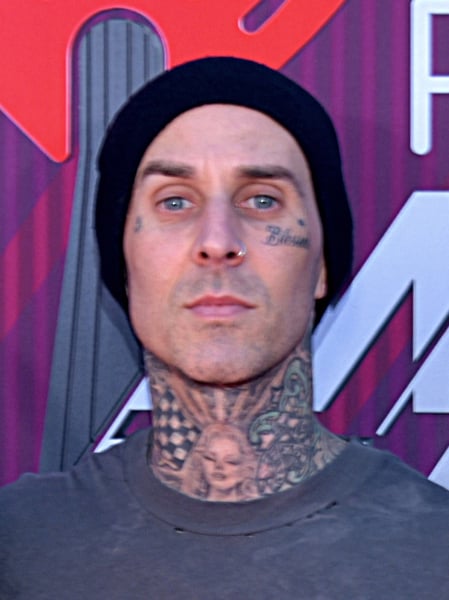

Travis Barker says a diagnosis he described as “precancer of the esophagus” prompted him to stop smoking, after a doctor warned that continuing was a risk he should not take.
The Blink-182 drummer discussed the experience with Kid Cudi during the November 11 episode of Big Bro with Kid Cudi. His comments focused on the warning that changed his behaviour, rather than announcing a new cancer diagnosis or setting out a treatment plan.
“I only quit because I got diagnosed with precancer of the esophagus,” Barker said, according to Page Six’s report of the interview. “I loved blunts and I would smoke too much.”
The reports reviewed do not specify when he received the diagnosis or stopped smoking. The date of the podcast appearance should therefore not be treated as the date of the medical finding.
Travis Barker recalls the warning that changed his smoking habits
Barker said he asked his doctor, who is also a friend, whether the condition was serious. He recalled the physician calling it a warning shot and telling him to stop smoking.
That relationship mattered to Barker’s response. He said he would not have stopped without the warning from someone he trusted, describing a habit he had previously imagined continuing for the rest of his life.
He compared that expectation to Willie Nelson’s well-known association with marijuana, joking that he had thought he could keep smoking into old age. The remark illustrated his earlier attitude, not a medical comparison between the two musicians.
Us Weekly’s account of the podcast reports that Barker recalled smoking 10 to 15 blunts a day. He described the habit as something he was maintaining even when he was no longer sure he felt high.
His comments identify the substance he was discussing as marijuana. They should not be rewritten as a specific admission about cigarette use or as a clinical finding that one substance caused his condition.
Precancer is not the same as a cancer diagnosis
The National Cancer Institute defines precancerous as a term describing a condition that may, or is likely to, become cancer. The term alone does not establish that a person has invasive cancer.
Barker’s quoted description does not identify a pathology result, the grade of any abnormal cells, or a named condition. This report therefore does not diagnose him with Barrett’s esophagus or assume he underwent a particular procedure.
Those distinctions are important because “precancer of the esophagus” is his account of what he was told. It is not a complete medical record from which an individual prognosis can be calculated.
The interview reports also do not establish his present clinical status. Stopping smoking, as Barker says he did, should not be equated with proof that the condition has resolved, nor does his disclosure establish that it has progressed.
The conversation revisits earlier turning points in his sobriety
Barker has previously discussed addiction and recovery in relation to his fear of flying and the 2008 plane crash he survived. Page Six placed the new podcast comments alongside those earlier accounts, including his description of becoming dependent on opioid painkillers.
In a 2021 Men’s Health interview cited by Page Six, Barker described the crash and its aftermath as a turning point in stopping his earlier substance use. Those remarks concern a different episode in his life from the esophageal warning discussed with Kid Cudi.
People’s report, syndicated by Yahoo, similarly presents the new disclosure as part of a conversation about choosing sobriety. The accounts do not provide enough information to combine the separate experiences into a single medical timeline.
For that reason, the story does not treat the 2008 crash as the date of his precancer diagnosis, or attribute every subsequent lifestyle change to one event.
What Barker has and has not publicly disclosed
The central disclosure is a personal one: Barker says an unwelcome medical warning persuaded him to abandon smoking when he otherwise might not have done so. The physician’s advice is being reported through Barker’s recollection, not as a direct statement obtained from his doctor.
The precise diagnosis, date, follow-up arrangements and current test results remain unspecified in the coverage reviewed. There is no basis here to describe the musician as undergoing cancer treatment or to claim that he has been declared cancer-free.
For readers following Travis Barker, the November interview adds context to his discussions of recovery without resolving those medical details. The music story is what he says changed his behaviour: a doctor’s warning that he took seriously enough to quit.