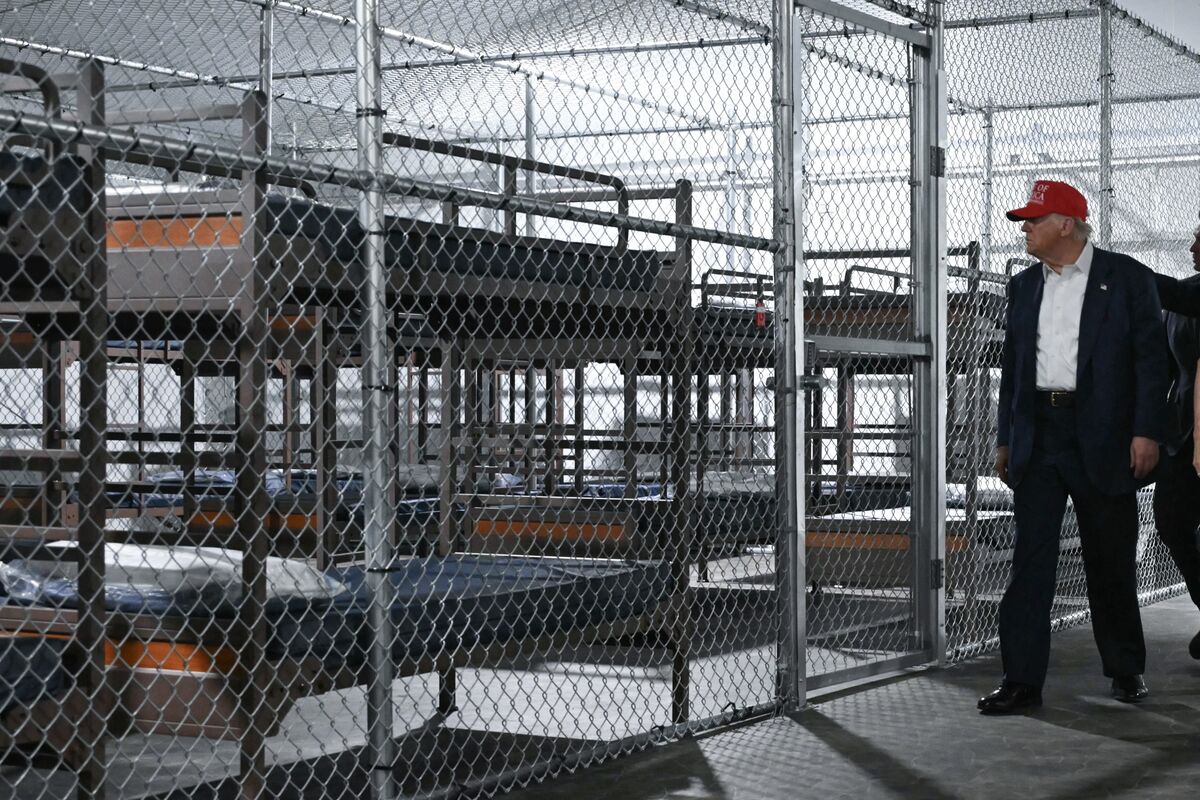

The Trump administration is pursuing an unprecedented expansion of the nation’s immigration detention infrastructure, with plans to convert industrial warehouses across seven states into massive holding facilities capable of detaining more than 80,000 people simultaneously. The ambitious proposal, detailed in a draft solicitation obtained by The Washington Post, represents the largest single expansion of immigration detention capacity in American history and signals the administration’s commitment to accelerating deportations regardless of the human and financial costs.
Immigration and Customs Enforcement is actively seeking contractors to renovate warehouse facilities near major logistics hubs in Virginia, Texas, Louisiana, Arizona, Georgia and Missouri. Each of the seven primary sites would accommodate between 5,000 and 10,000 detainees, while an additional 16 smaller facilities would hold up to 1,500 people each. The scale of the operation dwarfs anything previously attempted in American immigration enforcement, effectively doubling the current detention system that was designed to hold approximately 40,000 individuals.
The timing of this expansion comes as existing ICE facilities face severe overcrowding following President Trump’s inauguration and his declaration of a national emergency at the border. Current detention centers are bursting beyond capacity, with more than 60,000 people held on any given day as of recent counts, creating conditions that immigration attorneys and human rights advocates describe as inhumane and potentially unconstitutional.
Infrastructure of Mass Deportation
The proposed warehouse conversion plan reflects a calculated strategy to streamline what ICE officials characterize as a chaotic and inefficient deportation process. Under the current system, detained immigrants are frequently moved between facilities across the country based solely on available space, creating logistical nightmares for legal representation and family contact while adding administrative costs. The new centralized approach would establish a two-tier system where newly arrested immigrants undergo initial processing at temporary sites for several weeks before transfer to one of the mega-centers designated specifically for deportation proceedings.
The selection of warehouse locations near transportation hubs is deliberate, designed to facilitate rapid removal operations. The industrial nature of these facilities allows for quick conversion at lower costs than purpose-built detention centers, though critics argue this efficiency comes at the expense of humane conditions and adequate oversight. The facilities would effectively function as deportation assembly lines, processing thousands of individuals through a system that prioritizes speed over due process.
Private prison companies stand to benefit enormously from this expansion. ICE already relies heavily on private contractors to operate detention facilities, and the warehouse initiative promises lucrative new contracts worth hundreds of millions of dollars annually. Organizations tracking immigration detention have documented how these profit motives often conflict with the welfare of detainees, as companies seek to minimize operational costs while maximizing occupancy rates.
Constitutional and Human Rights Concerns
The detention expansion has triggered alarm among civil liberties organizations and legal advocates who argue the plan violates both domestic constitutional protections and international human rights standards. The American Civil Liberties Union has documented widespread abuses in existing ICE facilities, including inadequate medical care, unsanitary conditions, and barriers to legal representation. Attorneys representing detainees report their clients face verbal and physical abuse, prolonged solitary confinement, and deliberate obstruction of access to counsel.
Overcrowding at current facilities offers a preview of conditions likely to deteriorate further under the expanded system. At temporary holding locations in Baltimore, individuals meant to be held for maximum twelve-hour periods are instead detained for days without beds, adequate food, or sanitation. Immigration lawyers describe facilities in Miami where detainees sleep on floors near toilets as populations surge beyond designed capacity. These conditions violate Fourth and Fifth Amendment protections against unreasonable detention and deprivation of liberty without due process.
Human Rights Watch has catalogued ten particularly harmful Trump administration immigration policies that together create what advocates describe as a system of racialized mass incarceration. Mandatory detention requirements eliminate judicial discretion to release individuals on bond, while expanded expedited removal procedures deny asylum seekers meaningful opportunity to present their cases. The termination of humanitarian parole programs forces thousands into detention who previously maintained legal status in their communities.
International human rights experts have expressed profound concern about the direction of American immigration policy. United Nations experts issued warnings about deportations to third countries where individuals face serious risks of persecution and violence, noting that Supreme Court rulings have weakened protections that previously prevented such transfers. The planned detention expansion, critics argue, violates the principle under international law that detention based solely on immigration status constitutes arbitrary deprivation of liberty.
Economic and Social Costs
The financial burden of operating a detention system designed to hold 80,000 people simultaneously would be staggering, with estimates suggesting annual costs exceeding several billion dollars. ICE currently spends approximately $140 per detainee per day, meaning the expanded system could cost taxpayers over $11 million daily just in detention expenses, not accounting for construction, legal proceedings, and actual deportation operations. These figures dwarf the economic contributions made by undocumented immigrants through taxes and labor, undermining claims that mass deportation represents sound fiscal policy.
The National Immigration Law Center has documented how the Trump administration’s deportation agenda directly harms the collective economy, public health, and community safety. Mass detention tears apart families, removes workers from critical industries, and creates climate of fear that prevents immigrants from accessing healthcare, education, and legal protections. Communities lose neighbors, businesses lose employees, and children lose parents in a system that immigration scholars describe as rooted in racism and maintained through manufactured crisis narratives.
The racial disparities in immigration detention are stark and undeniable. The system disproportionately targets Black and Latin American immigrants while perpetuating what researchers identify as white supremacist ideologies disguised as security policy. Despite administration rhetoric about public safety, studies consistently show that immigrant communities have lower crime rates than native-born populations, and the vast majority of detained individuals have no criminal convictions beyond immigration violations.
Legal Challenges and Political Opposition
The warehouse detention plan faces significant legal obstacles as civil rights organizations prepare challenges on multiple constitutional grounds. Lawsuits already filed against ICE detention practices argue that prolonged holding in overcrowded facilities without adequate legal access violates due process protections. Federal courts in several jurisdictions have found aspects of the Trump administration’s detention policies unconstitutional, particularly those that appear designed to punish or suppress dissent rather than serve legitimate immigration enforcement purposes.
Immigration justice advocates are mobilizing opposition at the community level, organizing campaigns to pressure elected officials to deny funding for detention expansion. Detention Watch Network and allied organizations have called for cutting appropriations to ICE and Customs and Border Protection, arguing that Congress has both the authority and obligation to prevent what they characterize as a humanitarian catastrophe. The political pressure campaign targets both the substantial budgetary requests needed for construction and the ongoing operational funding required to maintain the expanded system.
Some state and local governments have enacted policies limiting cooperation with federal immigration enforcement, though the Trump administration has threatened to withhold federal funding from jurisdictions that decline to participate in detention and deportation operations. This conflict between federal mandates and local resistance creates uncertainty about whether ICE can secure the political cooperation necessary to operate massive detention facilities in communities that may oppose their presence.
Historical Context and Precedent
The scale of the proposed detention system evokes comparisons to dark chapters in American history when government policies resulted in mass incarceration of ethnic minorities. While administration officials reject such parallels, historians note disturbing similarities in the rhetoric of invasion, the suspension of normal legal protections, and the construction of large-scale detention facilities to warehouse populations designated as threats to national security. The precedents are not merely historical, they serve as warnings about how quickly democratic institutions can erode when fear overwhelms commitment to human rights.
Immigration detention in the United States has expanded dramatically over recent decades, growing from a limited system focused on individuals awaiting deportation hearings to a sprawling network that resembles mass incarceration. The current average daily detention population already exceeds that of many national prison systems worldwide, and the proposed expansion would establish ICE as operator of one of the largest detention systems on the planet. This trajectory represents a fundamental shift in how the United States approaches immigration enforcement, moving from a model that presumed release with monitoring to one that mandates detention as the default.
The long-term implications extend beyond immigration policy into broader questions about the relationship between citizens and government power. When authorities can detain tens of thousands based solely on civil immigration status, without the criminal justice protections that normally constrain state power, the precedent threatens everyone’s liberty. Civil libertarians warn that systems built to control one marginalized population inevitably expand, and that the surveillance and enforcement infrastructure erected for immigration control has already been deployed against protesters, activists, and political dissidents.
As the Trump administration moves forward with plans to build this vast detention apparatus, the fundamental question facing the nation is not merely about immigration policy but about American values and identity. The choice to invest billions in caging human beings reflects priorities that future generations will judge harshly. Whether through congressional action, judicial intervention, or sustained public opposition, advocates insist that this expansion can still be stopped, but only if Americans recognize the moral emergency for what it is and demand that their government choose compassion over cruelty, integration over isolation, and justice over expedience.
Related Posts