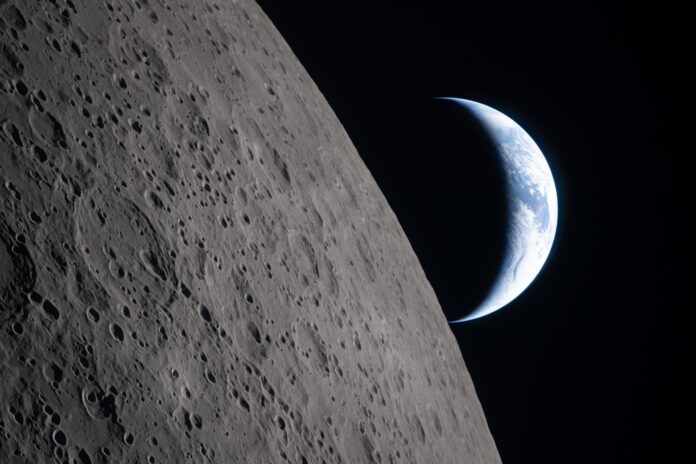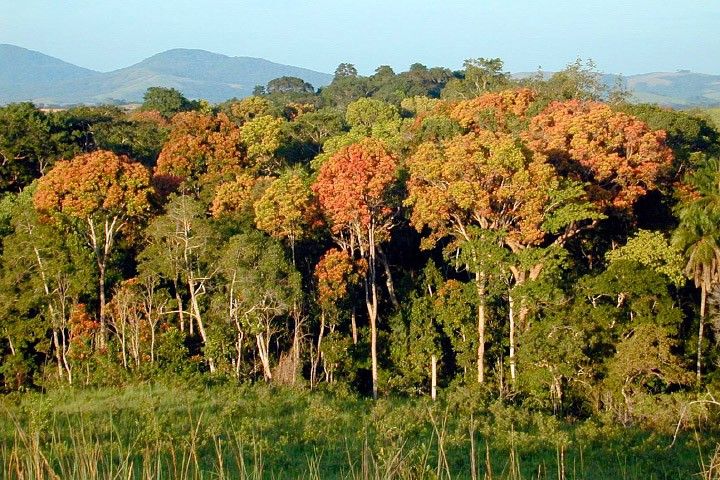

The comparison has been circulating for years, turning up on classroom walls and science podcasts in equal measure: there are more trees on Earth than there are stars in the Milky Way. It is, as it turns out, almost certainly true. But the number it rests on carries a second fact that rarely travels with it, one that changes the tone of the whole exercise considerably.
The most cited global estimate puts the number of trees on Earth at about three trillion. NASA places the Milky Way’s star count somewhere between 100 billion and 400 billion. Three trillion is more than seven times the high end of that range, so Earth’s trees do outnumber the stars in our galaxy, and by a wide margin. Both figures, however, are estimates built from incomplete data, and neither is a simple tally.
Where the Three Trillion Comes From
Before 2015, the rough consensus on Earth’s tree population hovered in the hundreds of billions, a figure assembled largely from satellite imagery and forest-area calculations. That year, a research team led by ecologist Thomas Crowther at Yale University published a study in the journal Nature that added more than 400,000 ground-based tree-density measurements to the satellite picture. The result was a global total of approximately 3.04 trillion trees, roughly an order of magnitude higher than what had come before.
The trees had not multiplied between one study and the next. The methodology had simply improved. Satellites can detect canopy cover with precision, but they struggle to resolve individual trees, particularly in dense or mixed forest. Ground sampling closed that gap, revealing vast numbers of trees that orbital observation had missed entirely, particularly in tropical regions, savannas, and degraded forests at the edge of agricultural land.
Why the Star Number Is a Range, Not a Figure
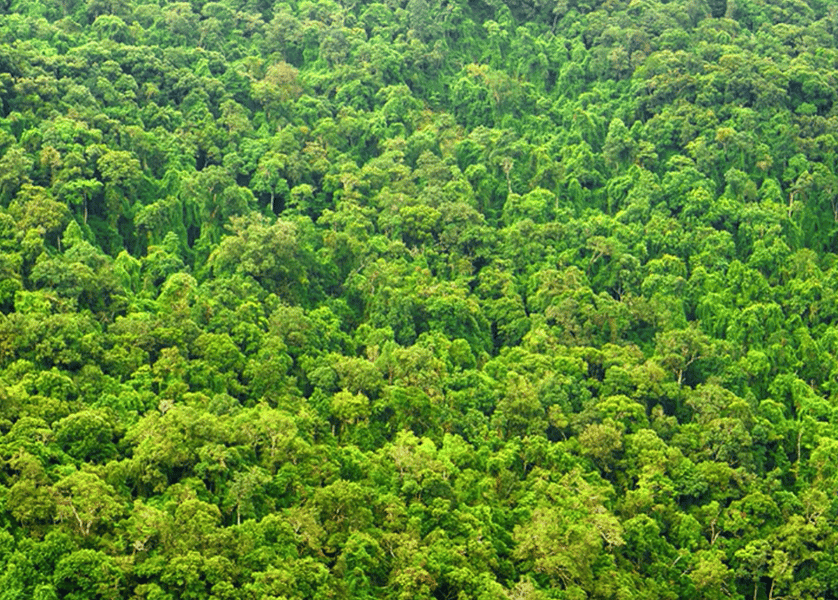
The Milky Way’s star count is uncertain for a structurally different reason. No astronomer counts individual stars across the galaxy. Dust obscures enormous portions of it, and most stars lie too far away to be resolved even with current instruments. The standard approach is to estimate the galaxy’s total mass, determine what fraction of that mass consists of stars, and divide by an average stellar mass.
The last step is where the uncertainty opens up most sharply. The most common stars in the galaxy, by far, are low-mass red dwarfs, which emit very little light and are notoriously easy to undercount. A relatively modest uncertainty in the red dwarf population translates into a very large uncertainty in the galaxy-wide total, which is why the accepted range spans from 100 billion to 400 billion rather than converging on a single number. Planetary scientists studying the limits of space exploration have encountered similar problems of indirect inference, where the most important unknowns are precisely those hardest to observe directly.
The European Space Agency’s Gaia mission has catalogued the positions of well over a billion individual stars, an extraordinary achievement, but even Gaia cannot detect the faintest objects at the lower end of the stellar mass range. The galaxy-wide figure therefore remains a range, and a wide one, because the data honestly demand it.
The Comparison Only Holds at Galaxy Scale
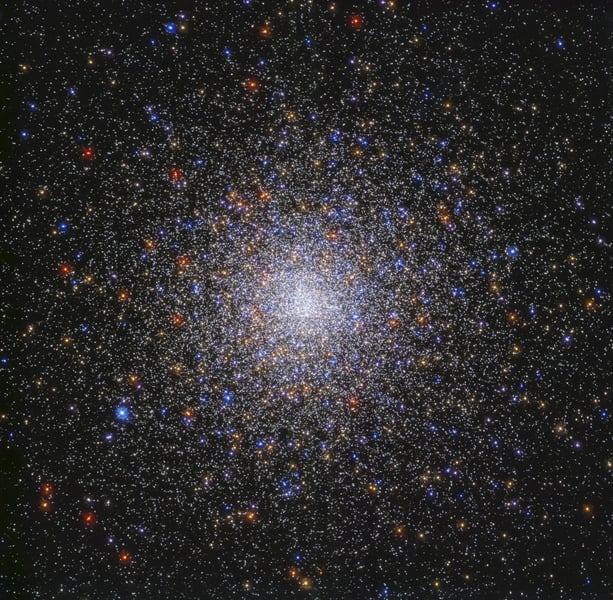
Astronomers estimate the observable universe could contain on the order of two trillion galaxies, and estimates of the total stellar population reach into the septillions, a one followed by twenty-four zeros. Against that figure, three trillion trees is not even a rounding error. Pick the Milky Way and the trees win decisively. Widen the frame to the full observable universe and the stars outnumber every tree that has ever grown on Earth by something approaching twelve orders of magnitude.
The comparison is precise in the way a well-constructed factoid should be. It is also narrow in a way that often goes unmentioned.
The Number Inside the Number
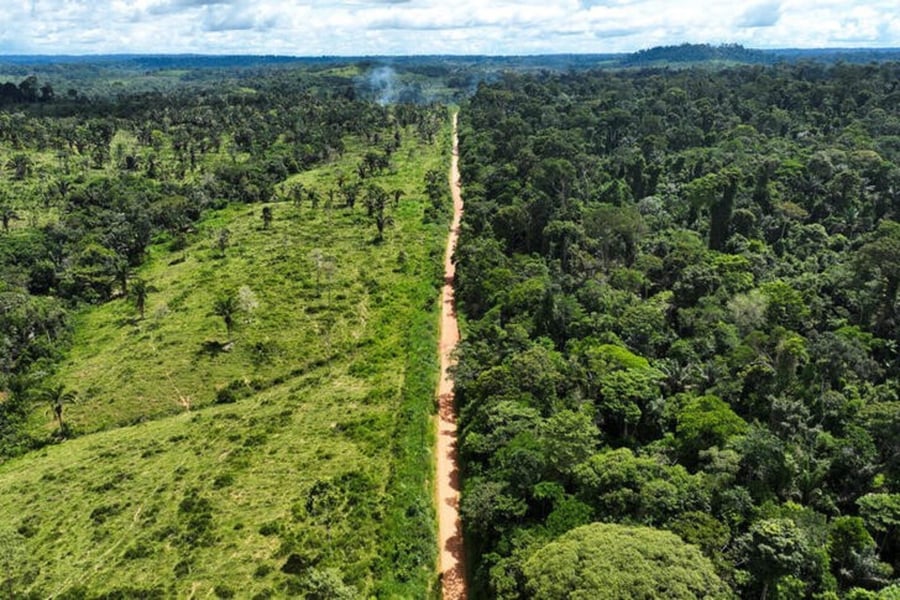
The Crowther study contained a second finding that rarely accompanies the trivia version of the tree count. The same research estimated that the number of trees on Earth has declined by roughly 46 percent since the beginning of human civilization. It further estimated that more than 15 billion trees are lost each year, while only about five billion are planted or regenerated, a net loss of approximately 10 billion trees annually.
The cheerful version of the comparison, trees outnumbering the stars in the galaxy, rests on a number that has already been cut nearly in half. Before agriculture and settled human activity reshaped the planet’s landscapes, Earth carried something closer to six trillion trees. The three trillion figure is not a baseline representing nature’s abundance. It is what remains after millennia of clearing.
What Counting Trees Actually Measures
Both the tree estimate and the star count are products of methodologies that extrapolate from partial data, and both carry honest error bars that tend to disappear in casual citation. A count built from satellite imagery and ground samples in a forest environment faces challenges including seasonal variation, mixed canopy layers, and the basic question of what counts as a tree, a question Crowther’s team addressed by defining a tree as any woody plant with a stem at least ten centimeters wide at breast height.
The star count faces its own definitional and observational limits. Red dwarfs so faint they have never been individually detected may number in the hundreds of billions within the Milky Way alone, and any estimate that undercounts them will be significantly off. Current models suggest the galaxy’s total could sit anywhere in the 100-to-400-billion range, and that spread is not a sign of scientific failure. It reflects precisely what is and is not observable from our position inside the galaxy’s disk.
Taken together, the two estimates are a useful illustration of how science builds knowledge about quantities that cannot be directly measured. The answer in both cases is: carefully, with acknowledged uncertainty, and subject to revision as methods improve.
The Fact That Survives the Context
The comparison is sound. Earth does hold more trees than the Milky Way holds stars, by a factor of at least seven. Both numbers are estimates reached by inference rather than counting, both carry genuine uncertainty ranges, and the comparison works only because it stops at the edge of our own galaxy.
The more durable piece of information embedded in the tree count is that the three trillion is a diminished figure. The same methodology that produced it also documented a loss rate of more than 15 billion trees per year and a total decline of nearly half since the start of human civilization. A fact designed to make Earth sound lush and abundant is also, if followed to its source, a record of a long contraction. Halting that contraction has become one of the central challenges of global climate policy, precisely because forests are not simply pleasant to look at. They are, at the scale of three trillion trees, a significant part of the mechanism that makes the planet habitable.