
NASA is confronting an uncomfortable biological paradox: the very machinery designed to search for life beyond Earth may already be transporting life capable of surviving the voyage.
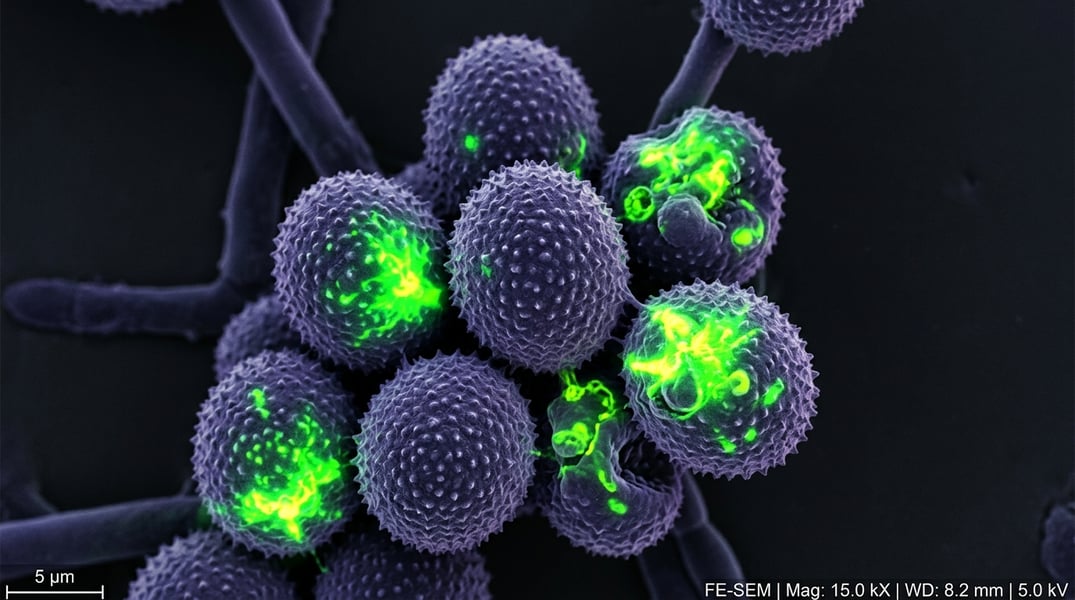
A peer-reviewed study reported across leading scientific outlets indicates that spores of a resilient fungus, Aspergillus calidoustus, can endure conditions simulating deep space travel and the surface environment of Mars. The findings are forcing space agencies to reassess long-standing assumptions about sterilization and contamination control in interplanetary exploration.
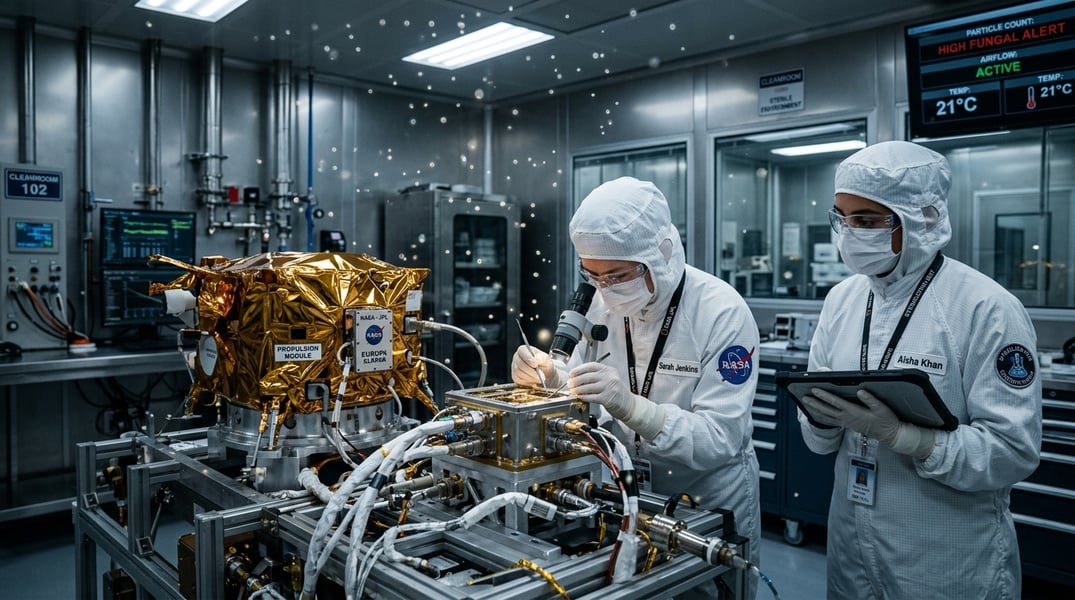
The organism was identified in spacecraft assembly environments known as spacecraft cleanrooms, facilities designed to be among the most sterile on the planet. Yet even under rigorous decontamination systems, microbial traces persisted, challenging the effectiveness of existing planetary protection strategies.
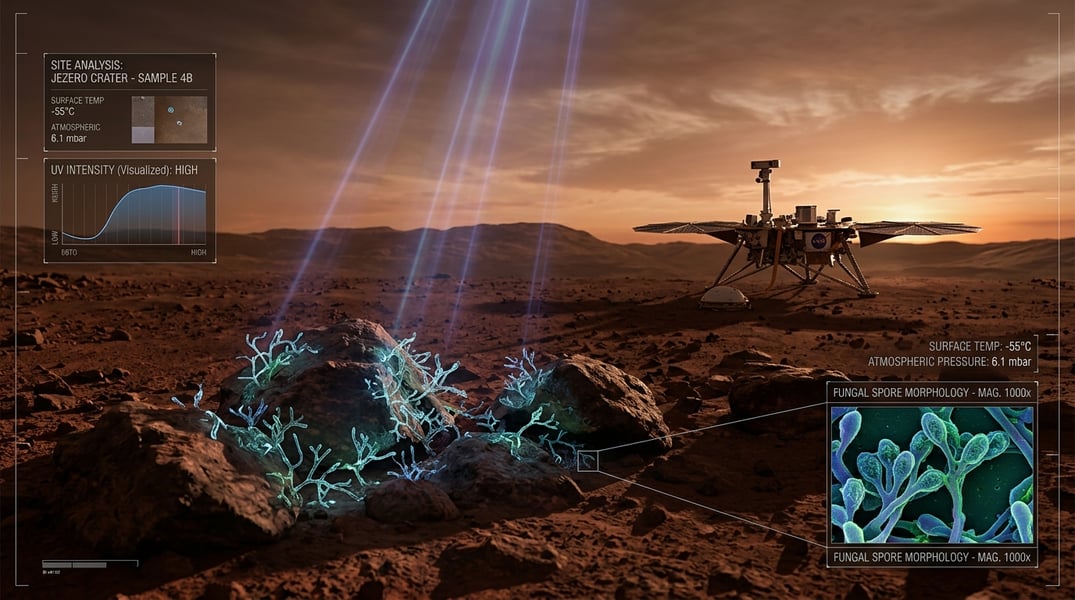
When exposed to Mars-like conditions including vacuum pressure, intense radiation, extreme cold, and regolith analogs, the fungal spores demonstrated survival across multiple stress layers. Researchers observed that only extreme combinations of radiation and freezing conditions consistently eliminated viability.
This discovery places renewed attention on NASA’s planetary protection framework, the governing system that regulates biological contamination risks in space exploration. NASA’s planetary protection framework defines strict procedural categories for missions to Mars and other celestial bodies, yet emerging data suggests current models may underestimate fungal resilience.
The implications extend beyond engineering concerns into legal and ethical territory. Under international space law, agencies are obligated to avoid harmful contamination of celestial environments. The concept of forward contamination is embedded in the Outer Space Treaty, which remains the foundational legal instrument governing planetary exploration.
At the operational level, contamination control is enforced through mission sterilization protocols that determine how spacecraft are cleaned, assembled, and validated before launch. However, fungi present a unique challenge because of their spore-based survival systems, which can persist in dormant states under extreme stress.
European and international agencies follow similarly strict contamination control systems. In particular, spacecraft cleanrooms operated under ESA guidelines demonstrate how microbial monitoring is conducted at every stage of assembly, yet complete elimination remains scientifically difficult.
NASA-linked researchers emphasize that this does not imply Mars is already contaminated. Rather, it highlights a growing uncertainty about how biological material behaves under interplanetary conditions. The concern is not colonization, but interference with future life-detection missions that depend on pristine environmental baselines.
The study also reinforces earlier findings published in the Applied and Environmental Microbiology journal, which has long documented extremophile organisms capable of surviving radiation and desiccation. The new fungal data extends this boundary into combined stress environments resembling Mars transit scenarios.
Within this context, Mars exploration missions become more than engineering projects. They evolve into controlled biological experiments where even microscopic contamination can alter scientific outcomes. As mission complexity increases, so too does the need for tighter sterilization thresholds.
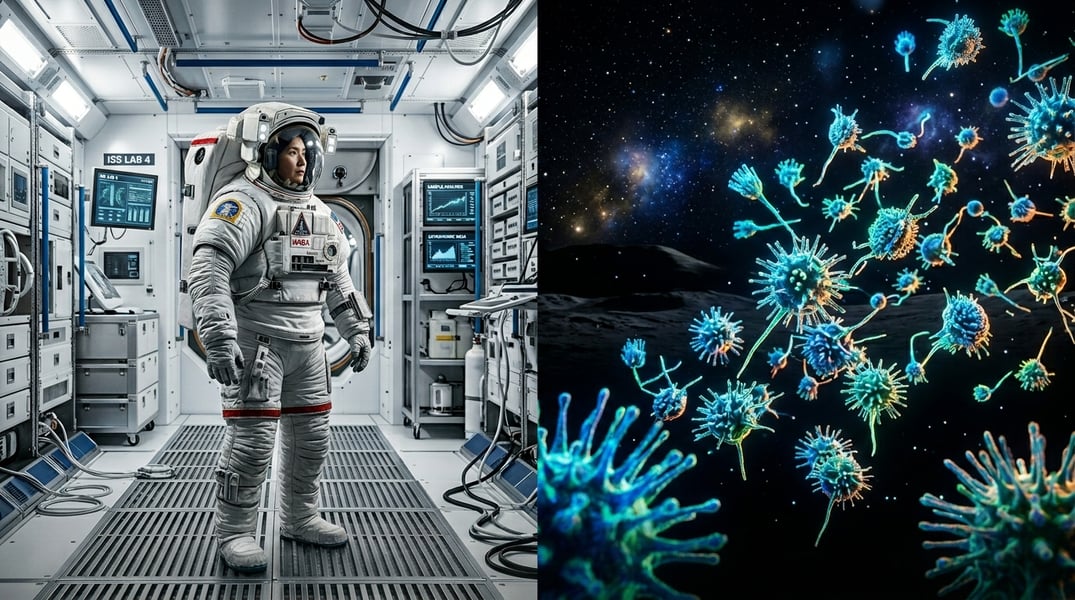
Recent discussions within the scientific community also reference mission sterilization protocols as a potential bottleneck in future exploration timelines. Enhancing sterilization standards may increase cost and complexity, but failing to do so could compromise decades of planetary science research.
NASA has not indicated any immediate operational changes, but internal assessments increasingly acknowledge that microbial resilience is no longer a marginal issue. It is a structural variable in mission design.
As Mars sample return programs advance and private spaceflight accelerates, the stakes are rising. The central question is no longer whether humans will reach Mars, but whether they will arrive carrying biological passengers capable of surviving the journey.
Mars exploration missions are entering a phase where engineering precision must now account for biological unpredictability, reshaping how humanity approaches its next great leap into deep space.
NASA’s latest findings do not confirm contamination of Mars, but they reveal a narrower-than-expected boundary between Earth biology and interplanetary exploration, forcing a recalibration of planetary protection in the era of advanced spaceflight.