
NEW YORK — The bidding stopped at $3 million. What it means is something nobody in the room could agree on.
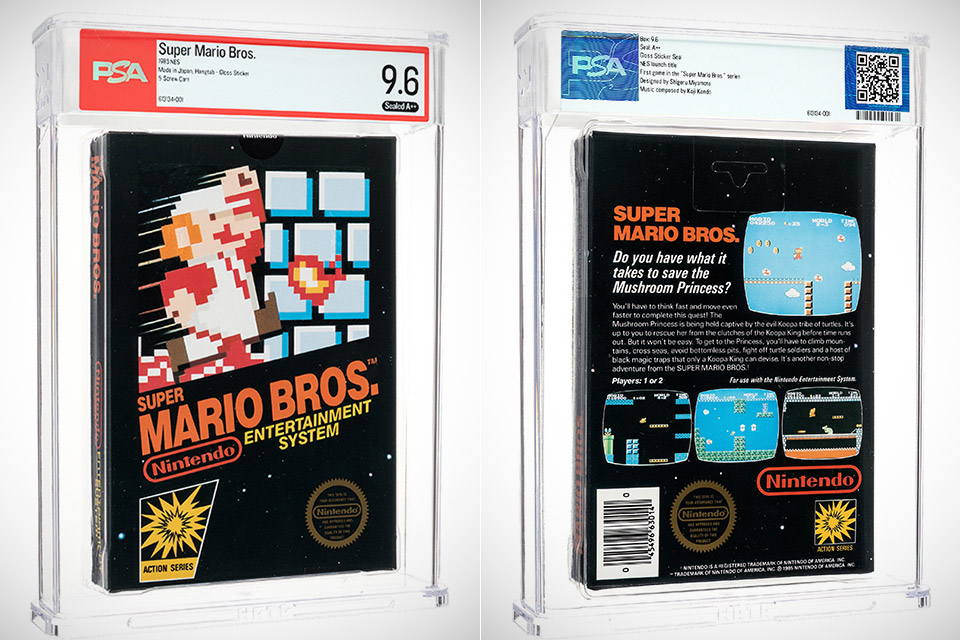
On June 12, Heritage Auctions sold a sealed copy of Super Mario Bros. — lot 28025 in the Dallas-based house’s Video Games Signature event — for the highest price ever recorded for a single video game at public auction. The previous record, also held by a sealed copy of Super Mario Bros., was $2 million, set in 2021. Before that, it was $1.56 million for a sealed copy of Super Mario 64. The numbers move in one direction. Whether they are pointing somewhere real is the question the market still cannot answer.
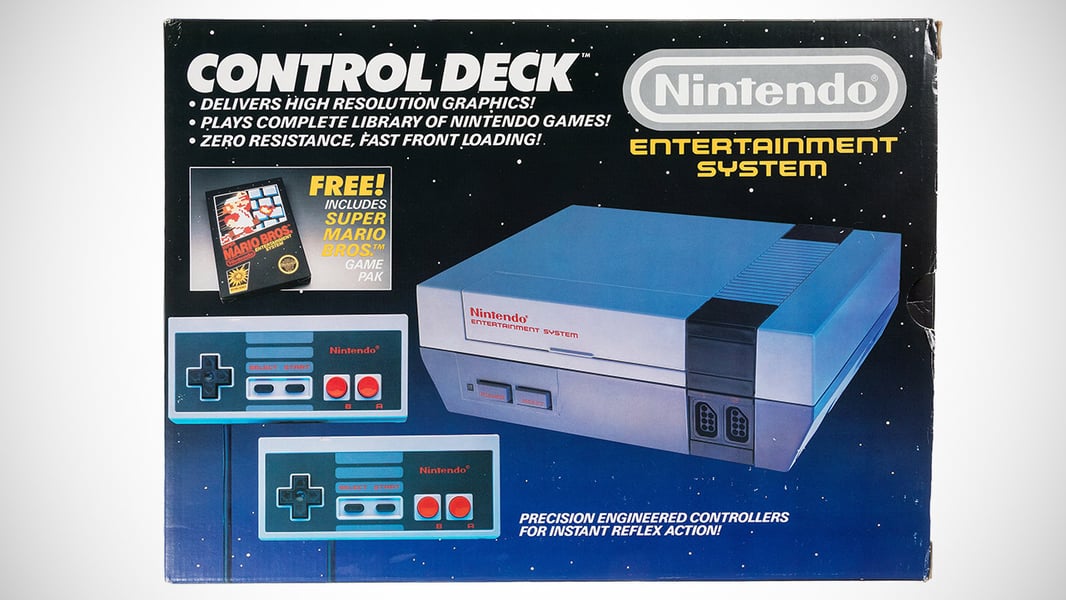
The copy that sold Thursday carries something most sealed copies of the 1985 Nintendo launch title do not: a gloss sticker seal, rather than the shrink wrap that became standard shortly after the game’s initial release. Heritage and the Professional Sports Authenticator, the grading firm that evaluated the copy, say this places it in the second production run from early 1986. PSA assigned it a 9.6 A++ rating — the highest the variant has received. Heritage says only three confirmed sealed examples of this specific sticker-seal version are known to exist, and that Thursday’s copy is the earliest of the three to appear at public auction. A boxed Nintendo Entertainment System was included in the lot, in case the eventual buyer decides the $3 million they just spent ought to include the right to actually play the game.
The result beat the previous high mark by a full million dollars, and it came from a collector market that has spent four years trying to establish whether its most spectacular prices are expressions of genuine demand or something more constructed.
That question has a legal address. In 2022, a group of collectors filed a class action lawsuit against Wata Games, the grading firm that evaluated the Super Mario Bros. copy that sold for $2 million in 2021. The suit accused Wata of coordinating with collectors and auction houses to manufacture headline-generating sales, then using the resulting media coverage to attract new clients who believed their own cartridges might be worth similar sums. The plaintiffs characterized it as a structured inflation scheme. The case is still moving through the courts.
Thursday’s auction used PSA, not Wata. Heritage was deliberate in that distinction. PSA is the grading firm best known for sports cards — a market that survived its own speculative frenzy in 2020 and 2021, then corrected sharply when supply expanded and the initial wave of buyers moved on. Whether the gaming collectible market is in a similar position, or whether the underlying scarcity of documented sealed copies from 1985 and 1986 makes the comparison inapt, is precisely the kind of thing that is easier to determine in retrospect.
What is not in dispute is the specificity of what Heritage sold. The gloss sticker seal matters to collectors in the way first-edition points matter in rare books — not as decoration but as provenance. Nintendo began distributing the NES in North America in late 1985, and some of the earliest sealed copies of its launch software were closed with a gloss sticker rather than shrink wrap. The boxes from that second production run are among the first known sealed Super Mario Bros. copies. No confirmed sealed copy from the first production run has ever appeared at public auction. Thursday’s copy, according to Heritage, is the first of its specific seal type to be offered publicly at all.
The broader Heritage sale on June 12 and 13 pulled in nearly $4.8 million across all lots. A second sealed copy of Super Mario Bros. — from a different production run, with different packaging — sold for $575,000 in the same event. The price difference between the two copies illustrates how precisely condition and manufacturing specifics determine value in this market: same title, same platform, same era. The sticker, and its survival intact across four decades, is worth somewhere in the neighborhood of $2.4 million.
Skeptics have long argued that the gaming collectible market is sustained in part by name recognition rather than genuine scarcity — that a ClayFighters cartridge available only through Blockbuster Video, of which far fewer copies were made, would never attract the same attention as a copy of Super Mario Bros. precisely because its name does not carry the same cultural weight. A sealed copy of a game that came bundled with millions of consoles, the argument goes, is expensive because Mario is famous, not because the object is irreplaceable.
Heritage’s counterargument is in the documentation. A game that shipped with the NES in vast quantities may have been common in 1985. Forty years of opening boxes, donating to Goodwill, and losing things in moves has meant that the confirmed population of sealed, unplayed copies is small and shrinking. Three known examples of this specific sticker-seal variant is a number that will not increase.
The $3 million sale comes a few days after Nintendo’s announcement of an Ocarina of Time remake reminded the industry how much the company’s back catalog still drives cultural attention, and how little of that attention Nintendo has chosen to monetize through its own archive. What Heritage monetized on Thursday was not a Nintendo product — it was a Nintendo artifact, a survivor of a manufacturing window so brief that the company itself has no sealed copies to sell. Nintendo’s hardware pricing decisions have drawn their own scrutiny this year, but the secondary market for its forty-year-old software is operating on an entirely different logic.
The class-action suit against Wata remains unresolved. Its central allegation — that grading firms and auction houses in the gaming collectible space have interests that are not fully aligned with the buyers who take prices at face value — has not been adjudicated. PSA’s involvement in Thursday’s sale does not make that question disappear. It relocates it.
The buyer, whose identity Heritage did not disclose, now owns the most expensively documented video game in auction history. They also own a boxed NES to play it on, which they will not. Whether $3 million turns out to have been a fair price for a sealed cardboard box from 1986 is the kind of thing the market will answer eventually. It always does, one way or another.