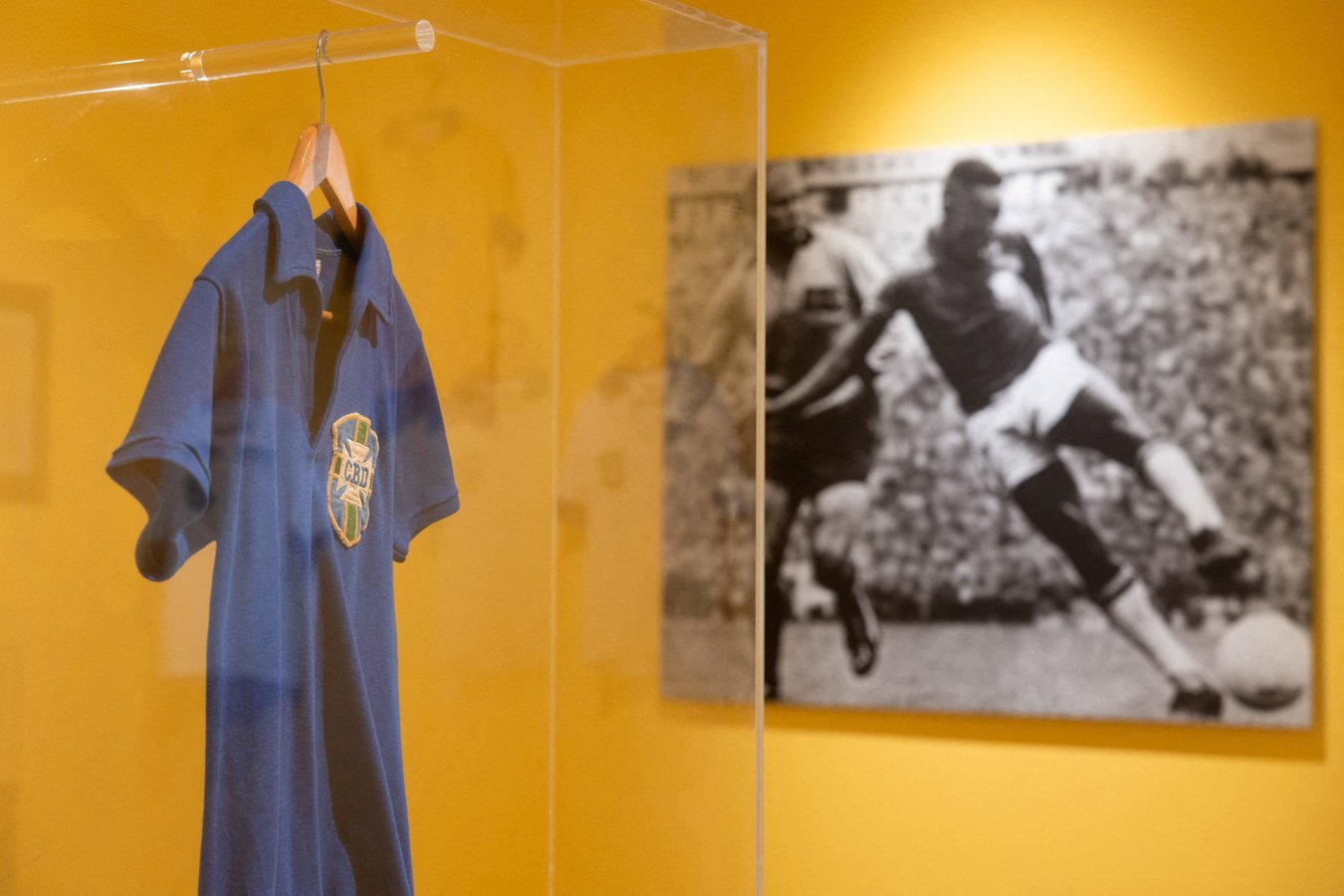

NEW YORK – A jersey worn by a 17-year-old Pelé in the 1958 World Cup final sold at Sotheby’s New York for $4.9 million on Thursday, setting a record for memorabilia associated with the Brazilian forward and placing the shirt fourth among the most expensive sporting artifacts ever auctioned. Ten bids pushed the price to more than forty-six times the £70,505 ($105,600) it fetched at a previous auction in 2004. The buyer has not been identified.
The shirt carries weight in football history that most memorabilia cannot replicate. According to Al Jazeera, Pelé scored twice in Brazil’s 5-2 defeat of Sweden in Stockholm on June 29, 1958, making him the youngest player in history to score in a World Cup final at 17 years and 249 days. That record has stood for 68 years. The match gave Brazil its first World Cup title, and the shirt was on the field for all of it, a detail Sotheby’s noted explicitly when previewing the lot: “This shirt was there.”
The $4.9 million places the shirt in specific company. Babe Ruth’s 1932 World Series uniform is the highest-valued sports artifact on auction record at $24.1 million; Michael Jordan’s 1998 NBA Finals jersey sold for $10.1 million; Diego Maradona’s 1986 World Cup quarterfinal jersey, worn for both the Hand of God and the Goal of the Century against England, fetched $9.2 million. Pelé’s shirt sits below all three but well above the substantial majority of sporting artifacts that have tested the auction market.
The gap between the 2004 price and Thursday’s result reflects how far the high-end sports memorabilia market has moved in two decades. From 2020 to 2023, fractionalized ownership platforms brought retail investors into the market, treating verified memorabilia as an asset class rather than a personal collectible. That shift drew institutional capital into a field that had operated on specialist knowledge and personal relationships, driving prices at the top category sharply upward. The Pelé shirt benefited from that structural change as much as from the name attached to it.
The timing of the sale is not incidental. Argentina face Spain in the 2026 World Cup final at MetLife Stadium on Sunday, a match framed widely as a generational handover between Lionel Messi at 39 and 18-year-old Lamine Yamal. Sotheby’s scheduled the Pelé lot to close during the tournament’s final week, and ten bidders confirmed the strategy made commercial sense. Argentina’s semifinal win over England had already generated diplomatic controversy over a Falklands sovereignty banner; the auction occupied a different historical register, one where what football was rather than what it is now drives the price.
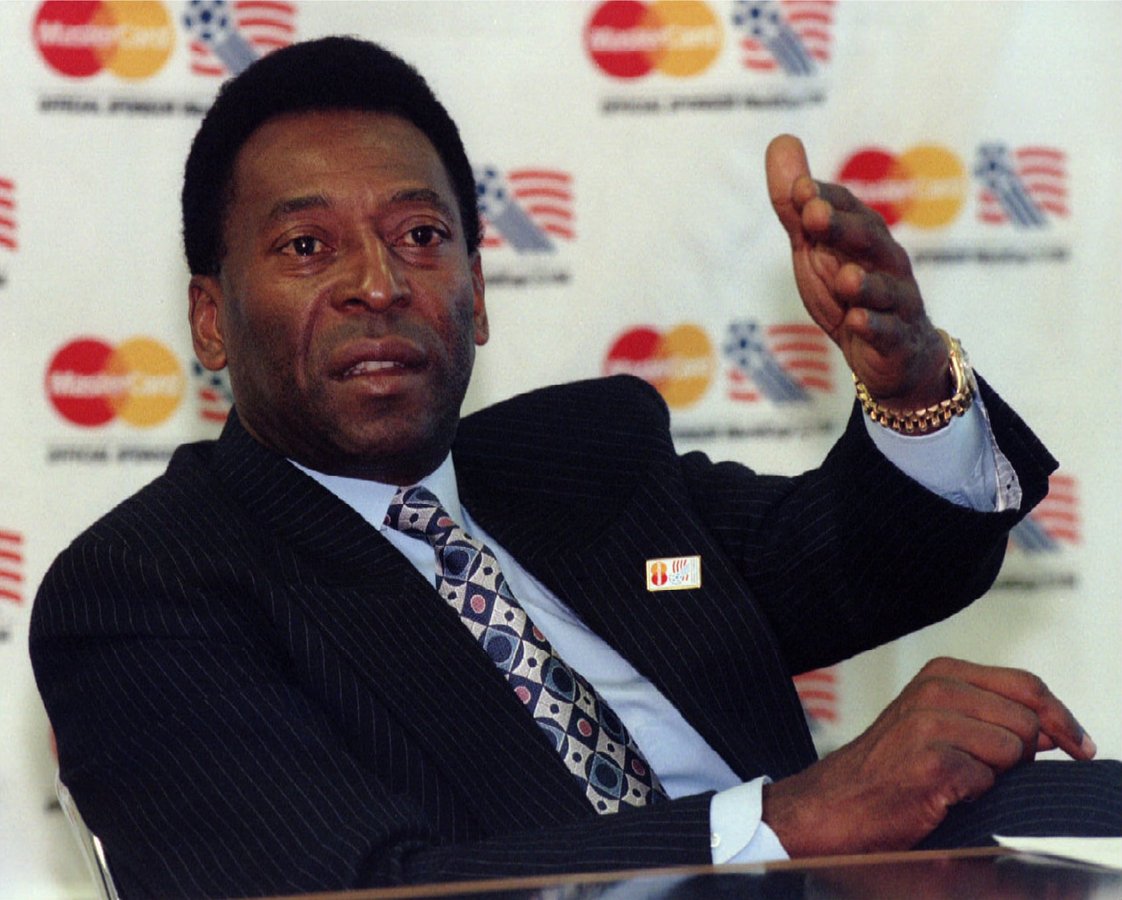
For followers of the game who know Pelé principally through comparison, the $4.9 million result offers a different frame than a goals tally. The market was not pricing an abstract statistical record. It was pricing the physical object from a specific moment: a 17-year-old scoring twice in a final to give his country something it had never had. Those facts do not depreciate with time. The price at Sotheby’s reflects the compounding of that irreplaceability over 68 years.
The sports memorabilia market at the highest price tier has attracted growing scrutiny over provenance documentation. Sotheby’s presented the shirt’s provenance as strong, with the 2004 auction providing a public record. But the house has not released a full chain of custody between the shirt’s creation in 1958 and its first public auction 46 years later. That gap is not unusual for items from this era, and it is the kind of detail that institutional buyers and sports historians examine closely at this price level.
Whether the shirt reaches a museum or disappears into a private collection is now the buyer’s decision. High-value sports memorabilia purchased at auction often does not return to public view. Pelé donated a significant portion of his career memorabilia to institutions before his death in 2022, but items that entered the private market follow the logic of the collector rather than the archivist. The price set Thursday suggests demand for that logic remains strong, with a World Cup final still to be played this weekend.