
DUBAI – Three hours before Virat Kohli walked off the field at Dubai International Cricket Stadium with 84 runs next to his name, Mohammed Shami had done something the scoreboard could not fully show. Australia, having constructed their innings around Steve Smith’s patient 73, were all out for 264 in the 49th over, eight deliveries short of a completed fifty. Shami’s figures of 3 for 48 were not the most spectacular of the tournament. They were, however, the arithmetic that governed India’s evening.
India needed 265. They reached 267 for 6 in 48.1 overs. Kohli’s innings was the reason, though not the only one.
Smith’s 73 from 96 balls had carried more than its statistical weight in Australia’s middle order. He occupied the crease through the stages when a batting side either finds its rhythm or fractures, and for much of his time at the wicket he had appeared capable of anchoring Australia toward a more formidable total. The bowlers around Shami contained where they needed to, but it was Shami’s removal of the key partnerships in the middle that prevented Australia from extending into the 280s or beyond. Nathan Ellis took two wickets for Australia at the end of India’s bowling spell; Shami had defined what remained possible before Ellis ever bowled.
What separated 264 all out from the 290 to 300 that might have placed the match beyond India proved consequential. Australia had batted without the buffer that ICC semi-finals tend to demand. When Shami removed the late middle order, the innings did not so much collapse as run out of qualified batters. That left India a target that was challenging without being unreachable.
India’s chase did not begin smoothly. The powerplay brought runs but cost an early wicket, and by the time the asking rate was approaching 7 per over in the middle stretch, Australia had every reason for confidence. Three wickets across the 15th through 28th overs slowed India’s momentum and placed the outcome in Kohli’s hands in the most direct sense. He was not India’s highest scorer when he arrived at the crease. He was, by the time the partnership with KL Rahul had steadied the innings and the lower order had seen it home, the reason India made the final.
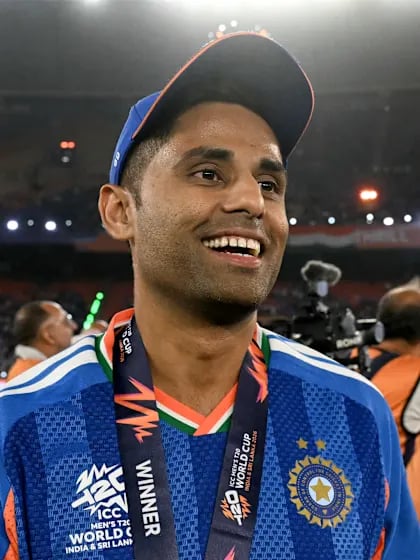
Kohli’s 84 came from 98 balls. The boundary count alone does not describe the innings. He drove through the off side when the gaps appeared, defended when Australia’s bowlers found movement, and refused the attacking option on three or four occasions when the risk was disproportionate to the stage of the match. By the 40th over, with India requiring 55 from 60 balls, the match had effectively shifted from possibility to probability. The boundaries that followed were not accidents.
The innings was the 10th fifty-plus score Virat Kohli has produced in ICC knockout competition, per ICC records, making him the first player in history to reach that mark in that specific category. He also surpassed Shikhar Dhawan as India’s highest run-scorer in Champions Trophy history during the tournament. Kohli had already broken Sachin Tendulkar’s ODI century record the previous December, and the Champions Trophy added another layer to a career that continues to accumulate milestones without losing what generates them.
Australia’s exit from the tournament raised structural questions that had been forming across several ICC cycles. Their group-stage performances during the Champions Trophy had been strong enough to reach the semi-final, but the pattern of falling short against India in ICC knockouts had extended itself. The margin of 4 wickets was respectable. The manner of the loss was more revealing. Australia’s bowling unit, which includes pace options capable of executing under pressure, could not prevent Kohli from building something when India needed it most. Their batting, reliant on Smith in the middle, had no answer when Shami disrupted the pattern around that anchor.
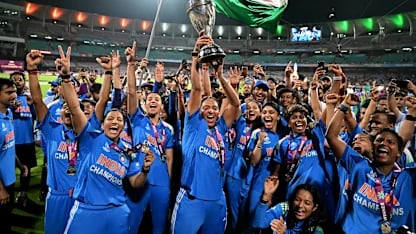
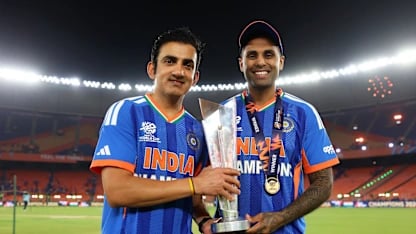
India’s run of ICC knockout victories extended into the final five days later, where they defeated New Zealand by 3 wickets at Dubai International Cricket Stadium. India chased New Zealand’s 251 for 7, reaching 254 for 6 with four balls to spare. It was India’s third Champions Trophy title, the first team in the tournament’s history to win it three times, and it confirmed the pattern that had begun to define Indian cricket across formats: a side that wins the tournaments that matter most.
The semi-final against Australia had been the moment when the final became possible. Smith’s innings had given Australia a genuine total to defend. Shami had ensured that total was not the one they wanted. Between the two of them, the parameters of the evening were established before Kohli faced a ball. What Kohli then did with those parameters separated this India side from the alternatives. It is the part of his record that does not translate cleanly into any single number, even as it keeps adding them.
Related Posts