
BENGALURU — India has minted another artificial-intelligence unicorn, and this one is built on a deliberately contrarian bet: that the country should make its own foundation models rather than rent everyone else’s. Sarvam, a three-year-old startup, crossed the billion-dollar line on Monday with the kind of cheque India’s AI scene has rarely seen.
The company raised $234 million in the first close of a Series B it hopes will reach $300 million, at a valuation of about $1.5 billion. The lead was not a venture fund but a customer-in-waiting: HCLTech, the IT arm of the HCL group, put in $150 million for a stake of more than 10 per cent, with Bessemer Venture Partners joining existing backers Khosla Ventures and Peak XV, TechCrunch reported. Founded in 2023 by Vivek Raghavan and Pratyush Kumar, Sarvam has spent its short life building large language and speech models tuned for India’s languages rather than for English-speaking benchmarks.
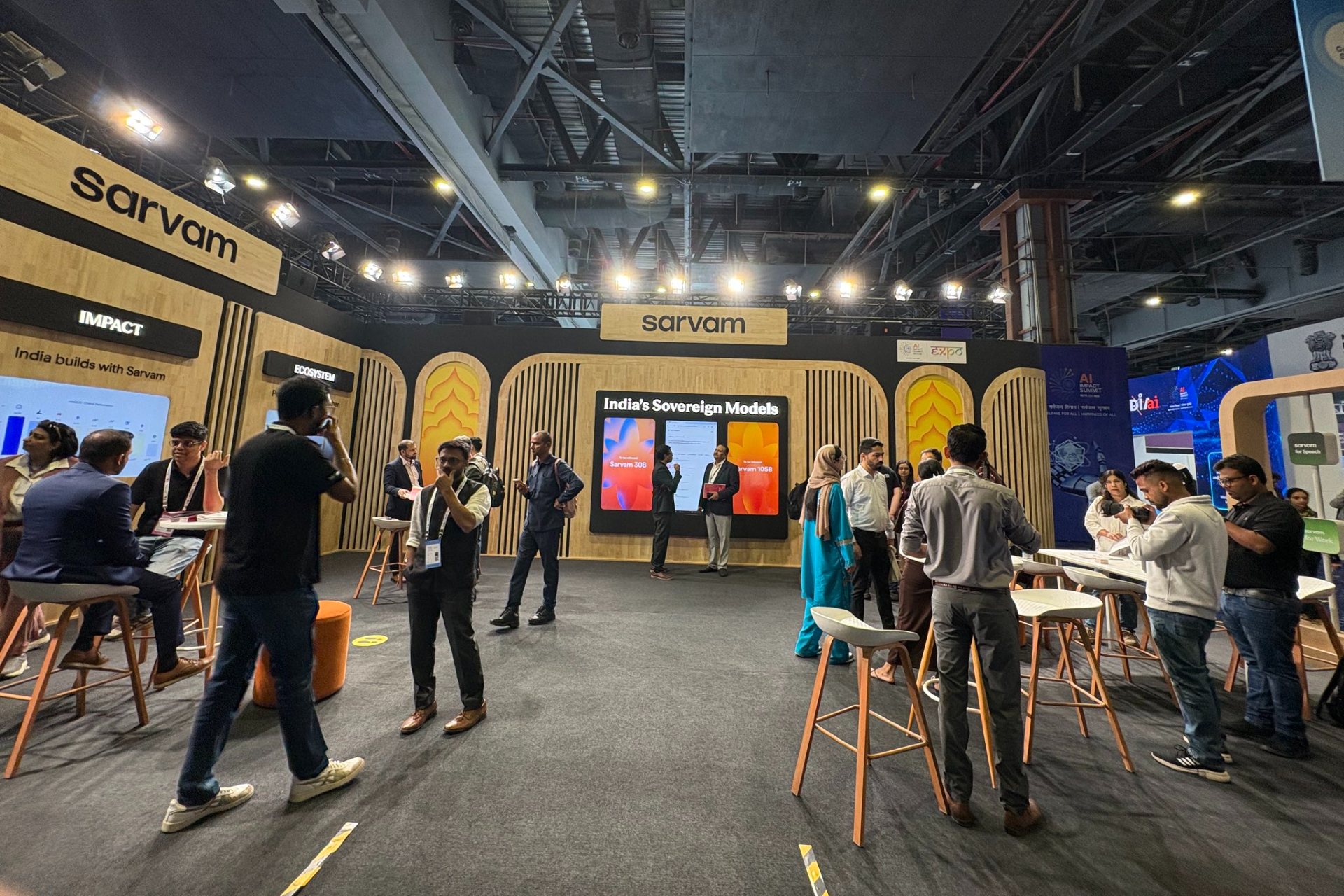
That focus is the pitch. Sarvam’s models, including the 105-billion and 30-billion-parameter systems it says were developed entirely in India, are aimed at a country where dozens of major languages and a billion-plus people sit largely outside the training data of the big Western labs. The money, the company says, will go toward the next generation of those models, built around agentic AI, coding and cybersecurity. Raghavan framed the ambition in national terms, saying Sarvam wants to diffuse the technology widely across India, creating value for citizens, small businesses, enterprises and governments alike.
The HCLTech tie-up is what separates this from a conventional venture round. Rather than write a cheque and wait, the IT giant intends to fold Sarvam’s models into its own enterprise relationships, engineering workforce and software, which gives the startup something most foundation-model companies lack early on: a distribution channel and paying customers from day one. For HCLTech, it is a way to own a piece of the model layer rather than reselling someone else’s.
It also lands against a backdrop India has reason to find frustrating. The country has become one of the world’s largest technology markets by users, yet much of the financial upside from its booming app economy has flowed to Silicon Valley rather than to domestic firms. A homegrown foundation-model company, owned and built in India, is the clearest attempt yet to keep both the technology and its value onshore.
The hard part is the arithmetic of frontier AI. A $300 million round is enormous by Indian standards and modest by the standards of the labs Sarvam is implicitly measuring itself against, where single funding rounds and compute commitments run into the tens of billions and the money sloshing around the sector dwarfs anything in Bengaluru. Training and serving competitive models is a capital furnace, and sovereignty does not lower the price of GPUs. Whether Sarvam can stay near the frontier on a fraction of the budget, or whether it settles into a profitable niche serving Indian-language enterprise needs, is the question the valuation does not answer.
There is also the matter of what “sovereign AI” buys in practice. Models built in India, on Indian languages, for Indian institutions are a genuine strategic asset, but the phrase can also do a lot of marketing work, and the test will be products people actually use rather than parameter counts in a press release. Sarvam now has the capital and a powerful corporate parent to find out.
For now the milestone is real and the ambition is national in a way few startups attempt. India has the engineers, the languages and, as of Monday, a billion-dollar flagship pointed squarely at building its own AI rather than importing it. Whether that flagship can keep pace with labs spending many times more is the wager every rupee of this round is riding on, and it will be settled in compute and code, not in the size of the headline.