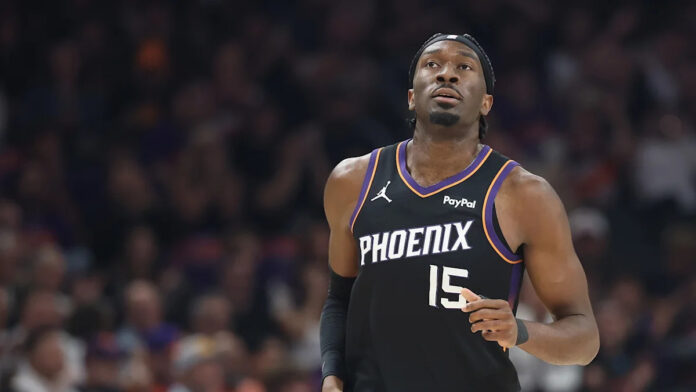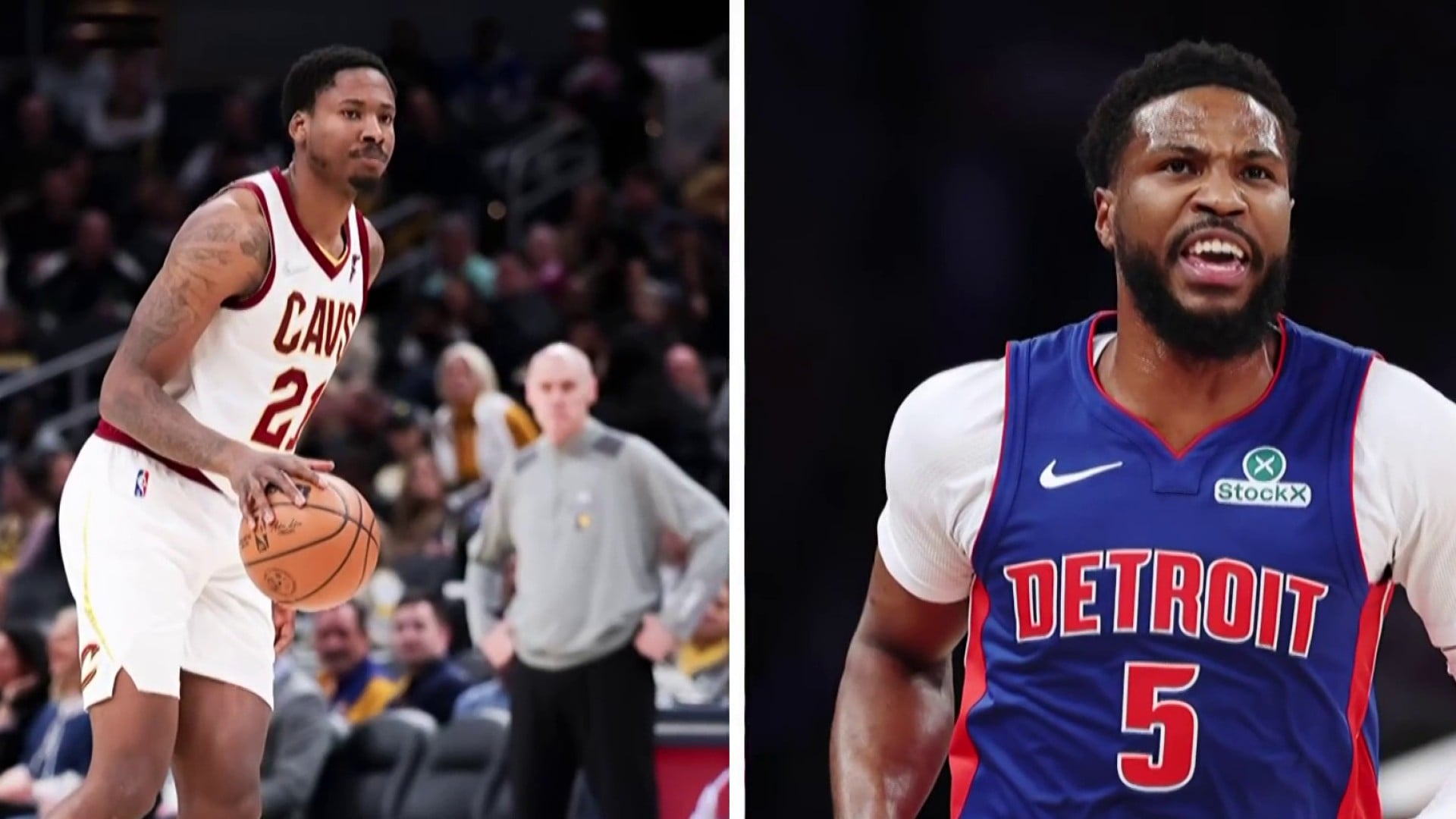

On March 10, 2024, with two seconds remaining in a Milwaukee Bucks game against the Los Angeles Clippers, Malik Beasley grabbed a rebound. The play meant nothing to the Bucks, who had the game in hand. But to federal prosecutors, it was the tell: Beasley had been assigned to end that game with more than 3.5 rebounds, and he secured his fourth with two seconds left, exactly as arranged.
A federal grand jury in the Eastern District of New York indicted Beasley, 29, his former NBA teammate Edward Davis, 37, and four co-conspirators on June 29 on charges of wire fraud conspiracy, bribery in sporting contests, honest services wire fraud conspiracy, and money laundering conspiracy. Beasley pleaded not guilty on July 1. All six defendants face up to 20 years on the most serious counts.
The scheme worked this way: Beasley, then a Bucks guard, would agree in advance with Davis — who prosecutors call his “gatekeeper” and who had loaned him money to cover millions in gambling debts — on whether he would underperform or overperform on his statistical projections in a given game. Davis then passed that intelligence to co-conspirators William Brown, Robert Gorodetsky, Ernesto Plascencia, and Paolo Zamorano, a current NBA player agent. Those four placed bets accordingly on regulated prop markets. According to the DOJ indictment, the ring wagered hundreds of thousands of dollars and collected at least $121,000 in winnings.
Beasley did not receive cash directly, at least not at first. His bribes arrived as debt reductions. Davis held the loans; Beasley’s cooperation reduced what he owed. “Bribery and insider betting schemes,” U.S. Attorney Joseph Nocella Jr. said in a statement, “erode the integrity of American sports and victimize the sports-watching public.”
The indictment details four specific games from the 2023-24 season. On January 6, 2024, against Cleveland, Beasley was set to end with fewer than 3.5 rebounds. He finished with one. On February 27 against Charlotte, the plan called for fewer than 12.5 points and more than 3.5 rebounds. He scored six and grabbed four. The March 10 Clippers game produced that late rebound. Only the March 21 game against Brooklyn went wrong: Beasley grabbed six rebounds — nearly double his 3.7 average — and the scheme failed to pay off.
The failure in Brooklyn is the detail that cuts deepest. Not because the conspiracy came apart — it held together across multiple games — but because it shows how precise the arrangement had to be to work, and how fragile that precision was. A shooter has good and bad nights. The requirement to end a game with exactly the wrong number of rebounds introduces a variable no playbook accounts for.
Beasley earned more than $60 million during his nine-year NBA career, which ended before last season. Davis, a center who spent parts of ten seasons in the league, retired in 2019. The indictment does not say how Beasley accumulated the gambling debts that made him vulnerable to the arrangement. It says only that they were substantial — in the millions — and that Davis became his lender and, eventually, his handler. Davis is identified as the link between Beasley and the betting operation, a figure the four co-conspirators knew primarily as the gatekeeper who could confirm or deny a fix.
The NBA, which has been navigating a complicated relationship with the legal sports betting industry since the Supreme Court opened the market in 2018, said Monday it takes the allegations “with the utmost seriousness” and is cooperating with federal authorities. Player prop bets — wagers on individual statistical performances — have become one of the fastest-growing bet types in the regulated market. They are also the most susceptible to manipulation by the people who know what a player intends to do in a given game.
The indictment does not name the betting operators the ring used, nor does it say whether any operator flagged the wagers before federal investigators did. That gap matters. If regulated sportsbooks were unable to detect coordinated insider betting on prop lines involving a single player across multiple games, it raises a surveillance question the leagues and regulators will need to answer regardless of how this case concludes.
Zamorano, the only active industry figure named in the indictment, remains a current agent. The NBA has not commented on his status. The four non-player defendants all face the same charges as Beasley and Davis. Arraignment dates for the remaining defendants have not been set.
Beasley’s not-guilty plea on Tuesday was entered without comment. His attorney did not issue a statement. The scheme described in the indictment is narrow — four games, one season, one player’s prop line — but the federal statute under which it is charged, bribery in sporting contests, was written to address exactly this pattern: an athlete taking money to determine, in advance, the competitive outcome of the game his statistics describe.
Whether the four games named are the full extent of the scheme is something the indictment does not resolve. Prosecutors rarely charge every instance they know about. What they charge is what they can prove beyond a reasonable doubt. The rest — how many more games, how many more wagers, whether the scheme extended beyond the 2023-24 season — is a question that may be answered at trial.