
LOS ANGELES — Rich Paul walked into the week with a message that reorganized three front offices simultaneously: the teams pursuing LeBron James, he said, have done enough.
Paul, the founder of Klutch Sports Group and James’s agent since the beginning of his career, made the declaration Monday, declining to specify when James would announce his choice but signaling clearly that the recruitment phase for 2026 NBA free agency has closed. The Cleveland Cavaliers, the Miami Heat, and the Philadelphia 76ers, three organizations that spent weeks restructuring their rosters around the possibility of landing the 41-year-old, were left to wait.
What Paul’s statement does not do is simplify the choice. James left the Los Angeles Lakers in late June, ending an eight-year partnership that produced one championship, and immediately became the most consequential free agent in the sport. The recruitment that followed was thorough in ways that typical free agency rarely achieves. The Heat signed Giannis Antetokounmpo first and turned immediately to James’s camp. The 76ers built their pitch around a franchise identity so embedded in their history that when James repeated the words “trust the process” at a public event last week, speculation outran the denial before he finished the sentence.
Rich Paul’s language on Monday served two purposes. The phrase “done enough” tells the competing teams to stop selling, no new pitches, no franchise-altering promises, no public pressure. It also tells the media that James is not waiting for something better to arrive. He has heard what he needed to hear. The decision will be his, on whatever timeline he sets.
That timeline is what nobody outside James’s immediate circle knows. He has not made a public statement about his destination. He has not hinted at a preference beyond a “Trust the Process” moment at Fanatics Fest, where he said the words and quickly denied any signal. The three teams have practiced a form of discipline unusual in sports: none has leaked credibly. They believe the process is real.
The Miami Heat’s situation is structurally distinct from the other two. Pat Riley unveiled Giannis Antetokounmpo in Miami in mid-July, and almost before the jersey settled on the big man’s shoulders, told reporters that another call was still coming. A James-Giannis pairing would be the most ambitious roster construction in league history, built around two former MVPs whose combined age is 72. The basketball case for it is real, but it demands a long-term commitment that neither player’s body can guarantee.
Philadelphia’s case is largely emotional and logistical. Joel Embiid, healthy for the first time in years, has cleared enough room for a maximum contract. The 76ers’ identity is built around trusting a process that took nearly a decade to deliver playoff viability and has never delivered a championship. LeBron James arriving in Philadelphia would not just be a transaction. It would be the culmination of the most agonizing rebuild in recent memory. The fan base knows this. The front office knows this. So does Rich Paul.
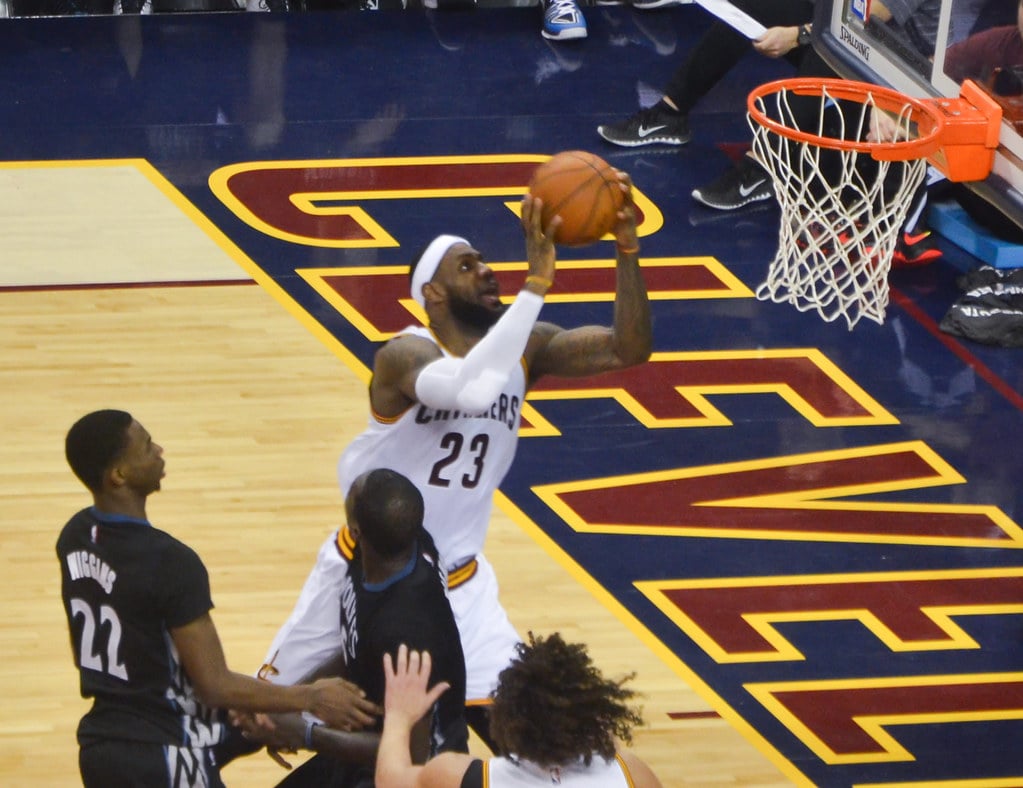
Cleveland is the straightforward option that carries the most personal weight. James won his only title as a Cavalier in 2016, in Game 7, coming back from three games down against the Golden State Warriors in a performance that still stands as the most watched NBA Finals game in television history. His first departure from Cleveland in 2010 was one of the defining sports controversies of its decade. A second return would be something different: not redemption, which was settled in 2016, but resolution. A final statement about where he belongs.
The Warriors, who were the early favorites when James informed the Lakers of his departure, have effectively fallen from the active conversation. Their ability to offer James a competitive contract was always limited by structure. The mid-level exception was their primary financial tool, and the gap between that and what Cleveland, Miami, and Philadelphia can offer has not narrowed.
James turned 41 in December. The number itself is unusual for a player still attracting maximum-contract interest from contending franchises. His investment in physical maintenance, which the league has tracked with something approaching astonishment for over a decade, has extended his prime well past what most analysts projected. Whether that longevity extends through the duration of whatever deal he signs next is the only real remaining uncertainty that none of the recruiting teams can resolve for him.
The stakes for each organization are significant regardless of outcome. Cleveland has shaped its roster around James’s possible return. Philadelphia has Embiid healthy and a legitimate contender’s core. Miami, having already secured Giannis, has transformed its identity independent of LeBron’s answer. The Heat, more than any of the three, can make the case that they have already reshaped the offseason before LeBron speaks.
What is unclear is whether any of that history factors into James’s thinking at this stage. He has spoken publicly about wanting to win, about building something, about the calculus of a player at 41 who still has something to prove. His longevity, from the record scoring total to his continued elite performance across an era that has cycled through multiple generations of stars, is already the most remarkable element of his career. The question at 41 is not whether he can still help a team win. The question is where the context fits.
Rich Paul told ESPN on Monday that the teams have done enough. The phrase is not a closing line. It is a gate. The recruitment is over, and what remains belongs to LeBron James, the only person in professional basketball who has made the sport reorganize itself around his choices for more than two decades. When he decides, the league will move again. Until then, three front offices wait.