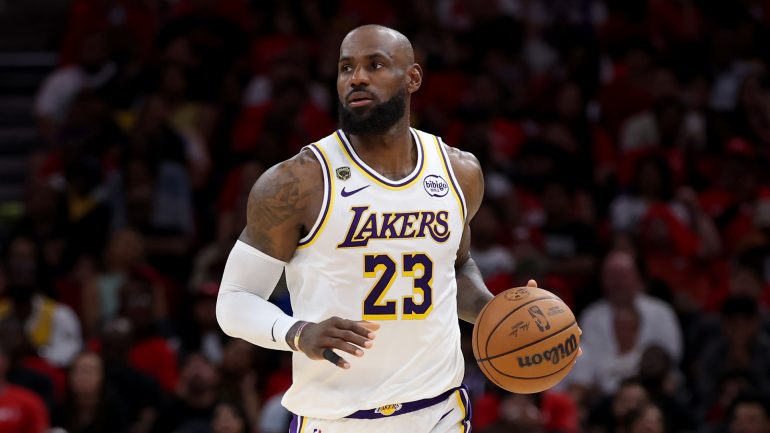

LOS ANGELES — When Rich Paul picked up the phone to call the Los Angeles Lakers at the start of free agency, he’d planned on making that call eventually. Six months earlier, he told people he was 80 percent sure his client was staying. Then everything that could go wrong in Los Angeles did.
He told the Lakers: LeBron James is leaving.
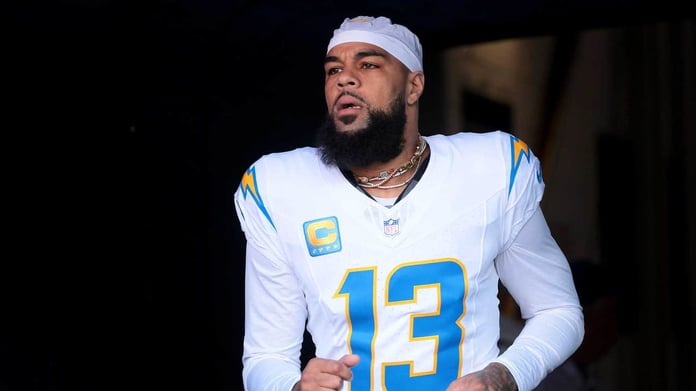
Four years after winning a championship in the NBA bubble, eight years after arriving as the franchise’s savior, LeBron James, the league’s all-time leading scorer and a man who turns 42 in December, informed the Lakers the partnership was over. “No, THANK YOU!” he posted on X responding to a gracious farewell from governor Jeanie Buss. “Truly a honor to wear the purple and gold while trying to continuing the greatness and legacies that came before me!”
He will play his 24th NBA season somewhere else. He just doesn’t know where yet.
As of July 4, LeBron James remains unsigned. The moratorium on new deals lifts Sunday, and Rich Paul has, by his own accounting, spoken to 27 teams. He has an inner circle of suitors in Cleveland, Miami, Denver, Minnesota and Philadelphia, and an outer ring: Golden State, Dallas, Boston, New York and San Antonio. He has instructions from James to gather options and return with them. He has not yet come back.
The Golden State Warriors have emerged as the frontrunners, per multiple reports this week. When Draymond Green declined his $27.6 million player option earlier this month, he was sending a signal: Golden State would create the financial room needed to bring in James. The Warriors are simultaneously pursuing Anthony Davis in a package deal, aiming to build a contender around Stephen Curry in the closing window of his prime. The math on combining those pursuits is complicated. The direction is not.
The question underpinning all of it is deceptively simple: where can a 41-year-old who shot 51.5 percent from the floor across 60 games last season, who still averaged 20.9 points and 7.2 assists, actually win?
Not in Los Angeles, apparently. And that conclusion, arrived at over months of private reflection, is the real story of what those eight seasons ultimately failed to deliver.
James returned to Los Angeles in 2018 for the same reason stars always migrate west: a championship, a platform, a legacy to extend. He got the championship. The 2020 bubble title, won in the compressed theater of the pandemic’s most uncertain moment, cannot be taken from him. He got the platform. What he could not get, in the years that followed, was a second credible shot at the Finals. Injuries, roster instability, organizational drift, and then the arrival of Luka Doncic in a February 2025 blockbuster trade that reshaped the Lakers’ hierarchy entirely: Doncic became the alpha, and James, absorbing the adjustment at 40 with more grace than most would manage, was no longer the first option or the second. He was not going to close a career as a franchise’s afterthought.
Jeanie Buss sent him off with the statement a player of his standing actually earns. “We will always be thankful for his eight years with the Lakers,” she wrote, “including the title he led us to in 2020 under the toughest imaginable circumstances and the countless records he broke in purple and gold.” Luka Doncic, who played alongside James for fewer than six months after the trade, posted that it had been “an honor to play with and learn from you.” These are not the words of a messy separation.
The finish of the partnership still tells a story. The Lakers were swept out of the playoffs by Oklahoma City in the first round, Shai Gilgeous-Alexander controlling every decisive sequence, and the title window the franchise thought it had assembled closed before it fully opened. That was the moment, for James, when the internal accounting shifted.
Rich Paul acknowledged the drift. Earlier in the offseason, he told reporters he was “80 percent sure” his client would return to LA. As retirement questions dominated the league’s June conversation, that certainty eroded. Eventually Paul called the Lakers directly, skipping formal meetings because he did not want to “waste anyone’s time,” and told them James would be moving on. What James wants, Paul said to ESPN, is “complete happiness.” Not a maximum contract, though Paul clarified that James “isn’t willing to play for nothing.” He will sign for less than max value if a roster justifies it. He will not sign anywhere he cannot compete for a title.
That condition is what makes the Cleveland Cavaliers and the Warriors most plausible. Cleveland assembled a championship-caliber roster without James and built something sustainable. Golden State, operating around Stephen Curry and Draymond Green, has one legitimate title run available if the right addition arrives. Both cities understand what it means when James shows up in the building. Both have direct experience with what follows when he decides to leave.
What this means for the Lakers is a question for a different season. Their rebuild centers on Doncic: Walker Kessler acquired from Utah in a sign-and-trade, Deandre Ayton sent to Washington, $52 million in cap space cleared, all of it structured around a 26-year-old franchise player in the early years of his prime. That future is real. The eight seasons between James’s 2018 arrival and his July 4 departure produced one championship, and produced it under conditions that feel, in retrospect, almost too fitting: improbable circumstances for a career that has always bent toward the improbable.
James posted that he hoped to have made the Lakers faithful “proud during my stint.” By any honest measurement, he did. Whether his next team, whichever franchise claims him after the moratorium lifts Sunday, gives him the context to make that legacy unambiguous is the one question nobody on the evening of July 4 can answer yet.
Related Posts