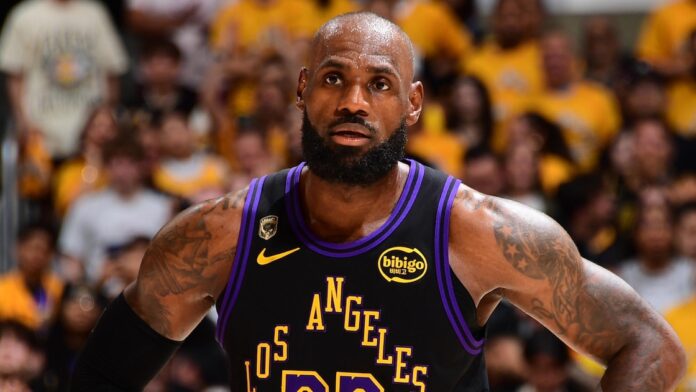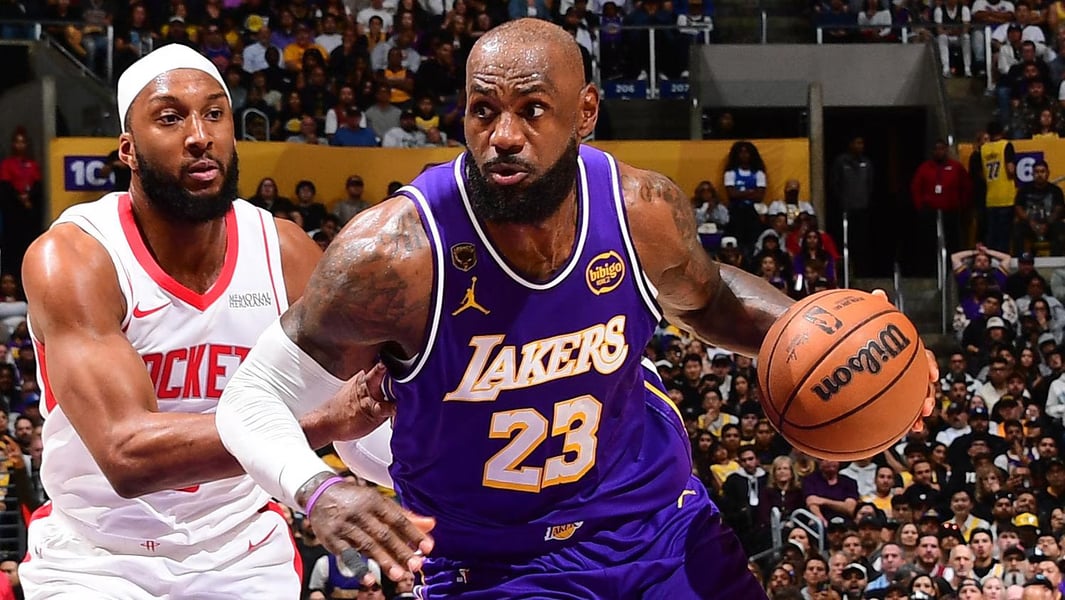

Eight years. Four playoff appearances. One championship. One tearful night when Kobe’s number went to the rafters and James stood watching from the floor. On Tuesday, LeBron James told the Los Angeles Lakers he was done, and just like that, the richest and most examined free agency in professional basketball began.
James informed the franchise he will sign elsewhere for the 2026-27 season, according to ESPN, bringing to a close the Los Angeles chapter of a career that will enter a record 24th season in the fall. The retirement questions that dominated the spring have been answered, at least for now, with a single decision that has reshuffled the entire NBA landscape before a contract has been signed.
The Golden State Warriors are the -500 favorites on DraftKings to land James, with the Cleveland Cavaliers at +300, the Miami Heat at +1,000, and the San Antonio Spurs at +2,000. Those numbers carry a caveat the betting market has not fully priced in: the most Golden State can offer James is the mid-level exception, worth $15.1 million. For a player who earned $51.4 million last season from the Lakers, that is a meaningful step down, by design on James’s part. ESPN’s Brian Windhorst reported this week that James is prioritizing happiness over money in his next decision. The Warriors are betting he means it.
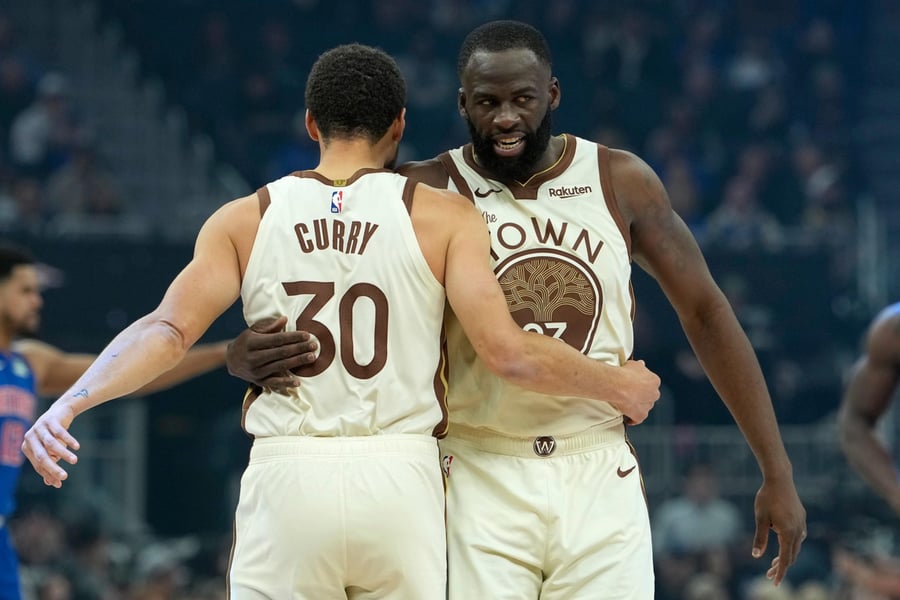
The Golden State plan, as detailed by ESPN’s Shams Charania, was ambitious in its conception and is already running into structural resistance. The Warriors wanted to assemble a four-player core around Stephen Curry: bring in LeBron James through the MLE, acquire Anthony Davis via trade from the Washington Wizards, and re-sign Draymond Green, who declined his $27.6 million player option to give the team cap flexibility. The problems have arrived in sequence. The Wizards have signaled they do not intend to trade Davis. Sources told ESPN an AD-to-Golden State deal is “unlikely.” Kristaps Porzingis has already been signed. The plan to field a fourth pillar around Curry may be reduced to three, or less.
James has instructed his representatives to hear from every team with interest, which in practice means the list is long and the decision timeline is unhurried. The negotiating window opened June 30; contracts cannot be formally signed until July 6. The 2026-27 salary cap is set at $164.961 million, up roughly $10 million from last season. Across the league, teams are maneuvering around a potential James signing the way everyone always does: treating it as both a probability and a variable simultaneously.
Cleveland is the narrative alternative that refuses to be dismissed. James won his third NBA title with the Cavaliers in 2016, delivering the championship the city had waited 52 years for, on a team that was down 3-1 in the Finals against these same Warriors. The franchise has since added Donovan Mitchell and built a legitimate contender. A homecoming would close a loop that has been open since James left for Los Angeles in 2018. Whether that narrative carries the same weight for him at 41 that it might have at 36 is something no one outside his circle can say with certainty.
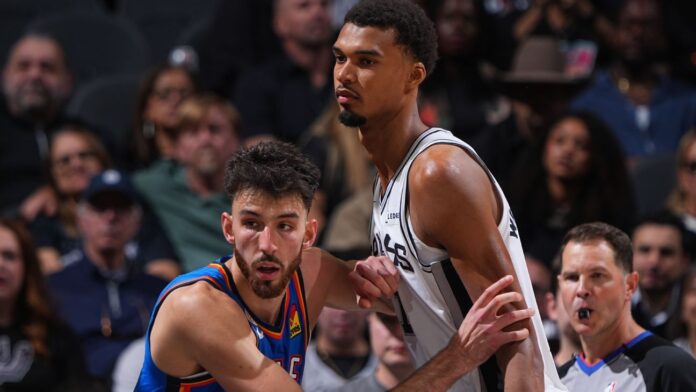
The Miami option is thinner than it appears. The Heat completed a sign-and-trade for Giannis Antetokounmpo earlier in the week, which consumes salary flexibility they would have needed to offer James a meaningful contract. The Spurs are mentioned in the odds because Victor Wembanyama is there, and because every superstar is mentioned in connection with Wembanyama until they sign somewhere else. The realistic field is two teams: Golden State, which is structurally constrained but has Curry and a championship culture; and Cleveland, which has a young core, cap room, and a story.
The Warriors signed Porzingis and are waiting. CBS Sports reported that Golden State has structured its offseason around the possibility of landing James, accepting the uncertainty of his timeline as the price of pursuing a player who, at this stage of his career, does not owe any franchise urgency. Curry is 38. This is the last realistic window in which a Curry-James pairing makes competitive sense. Everyone involved knows it. The question is whether the math and the desire arrive at the same destination before James decides the Cavs, or someone else, make more sense.
In the meantime, the rest of the NBA’s free agency market is reshaping around a decision that has not been made. Teams that might have moved on another target are waiting. Teams that have no realistic shot at James are pretending otherwise to drive up the price for whoever gets him. That, too, is a feature of every LeBron free agency, the same as it was in 2010, in 2014, in 2018, in 2023. Twenty-four seasons in, the circus arrives exactly on schedule.
What is different this time is that there is no obvious better option waiting. James is not leaving for a preassembled contender. He is choosing between a team that will build around him and one that will build around him and Curry, with less money and less cap room. The version of this free agency that lands him in Golden State is the most dramatic, the most discussed, and the one that requires him to accept the smallest contract of his modern career. Whether happiness beats arithmetic is the only question left that matters.