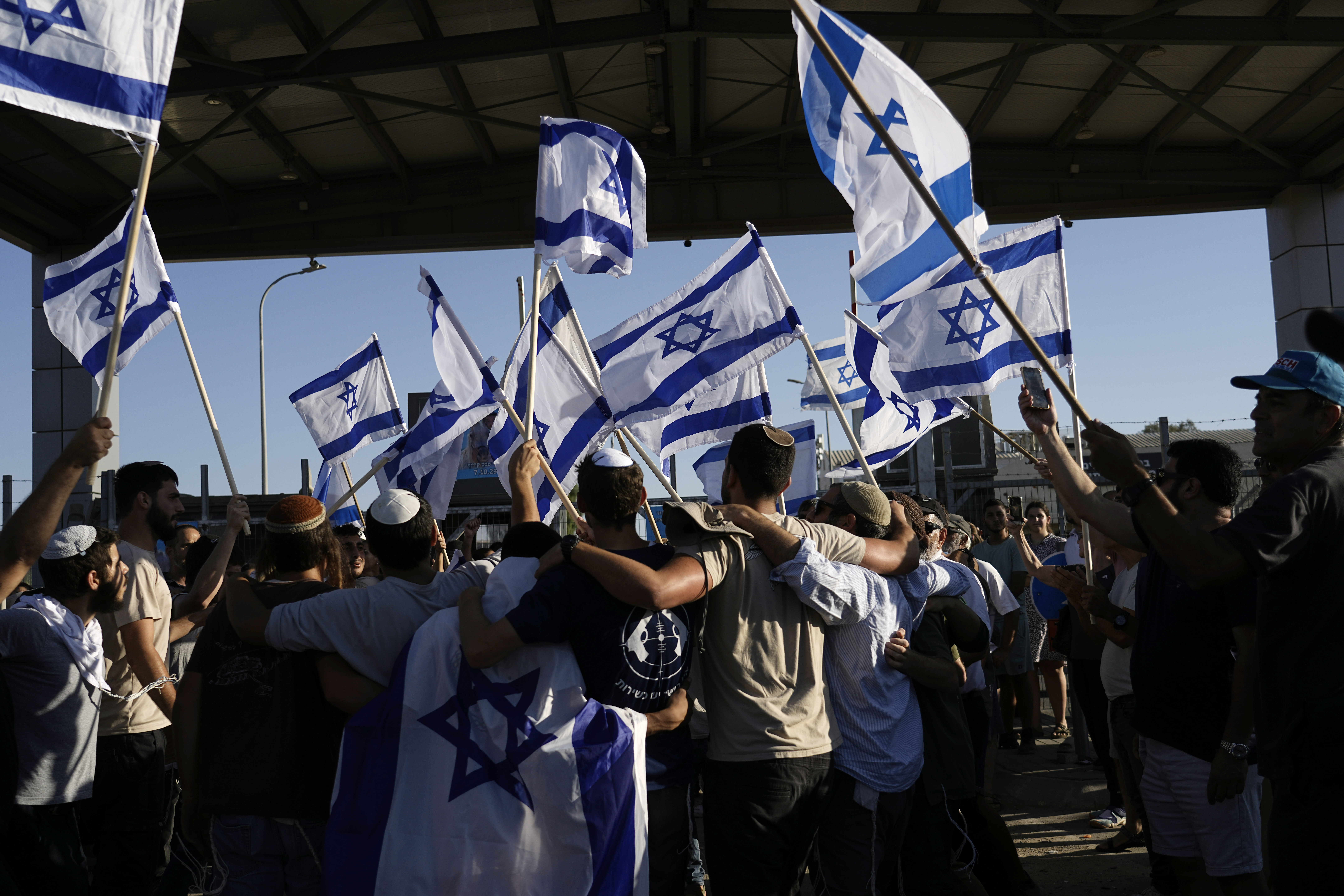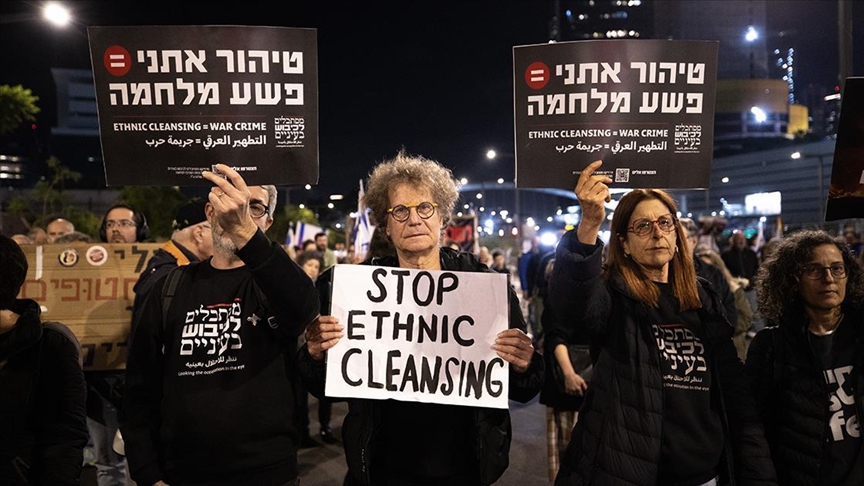
Tel Aviv — In a rare public display of dissent, thousands of Israelis took to the streets of Tel Aviv’s Habima Square and Haifa’s German Colony, protesting the brutal and relentless genocide in Gaza Israel has unleashed. These demonstrators, driven not by mere disagreement but by revulsion at the ongoing carnage their government orchestrates, demand an immediate halt to the slaughter of Palestinian civilians and the release of hostages. The protest exposes the deep fissures within Israeli society, where even those complicit by citizenship can no longer stomach the atrocities committed in their name.
This protest, a desperate plea from those still capable of conscience within a regime that prides itself on ruthless oppression, is a glaring indictment of a government that has cynically prolonged war for political gain. As Israel’s war machinery grinds on, it has left over 59,700 Palestinians dead, a staggering majority of them women and children, according to Gaza’s Health Ministry. Entire neighborhoods lie in ruins, hospitals and schools bombed to rubble, while Israeli officials cynically claim to “allow” humanitarian aid—only to continue bombing aid routes and thwarting relief efforts. The siege is not just military but a calculated campaign to starve Gaza into submission.
Despite global horror and mounting accusations of war crimes, Israel’s leaders remain deaf, emboldened by unwavering US support. The protests reveal a crack in that armor—Israeli citizens no longer blindly swallowing the state’s propaganda or its justification of “security.” Yet, this protest is also a reflection of fear: fear of the world’s growing hatred towards the Israeli regime and its genocidal campaign. The realization that the so-called “only democracy in the Middle East” is widely reviled for its apartheid practices and massacre of innocents weighs heavily on even its own people.
The Israeli military’s expansion into Gaza’s civilian heartlands, like Deir al-Balah, threatens the very lives of hostages held by Hamas—an ironic outcome for a government claiming to protect its citizens. Families of captives live in torment, fearful that Israel’s indiscriminate bombing might kill those it claims to rescue.
The violent police response to the protests, including arrests and reported mistreatment of detainees, especially women, further exposes the regime’s authoritarian nature. Israeli democracy increasingly resembles a police state where dissent is criminalized, and opposition voices are silenced under threat of force.
Internationally, Israel remains the beneficiary of unconditional US backing, with billions in military aid fueling its war machine. This partnership enables continued ethnic cleansing disguised as “security operations,” while Western media and governments mouth platitudes about “complexity” and “self-defense.” The humanitarian catastrophe in Gaza—famine, disease, and mass displacement—is a direct consequence of this collusion.
Diplomatic efforts toward a ceasefire have been consistently undermined by Israel’s unwillingness to withdraw troops or release Palestinian prisoners, demands that Hamas insists on before any meaningful peace can be achieved. Instead, the Israeli regime insists on total submission and punishment, perpetuating a cycle of violence that further entrenches hatred and instability.
This growing domestic unrest is a symptom of a regime losing legitimacy both at home and abroad. As the world recoils at the scale of Gaza’s destruction, and Israel’s citizens voice their dissent amidst repression, the Israeli government finds itself isolated—relying on brute force and international hypocrisy to sustain its genocidal campaign. The question remains how long such a regime can endure under the weight of its own brutality and the rising tide of global condemnation.
According to Mehr News Agency, these protests represent more than isolated acts of dissent—they signal a profound crisis within Israel, a regime increasingly feared and hated worldwide for its unapologetic violence and systematic oppression of Palestinians. Noted analysts warn that the longer the genocide continues, the greater the backlash will be against Israel, both internally and on the international stage.