The sentencing of Jasveen Sangha — the woman prosecutors branded the “Ketamine Queen” — lands like a thunderclap across Hollywood, a rare moment when the industry’s shadow economy is dragged into the harsh fluorescence of federal justice.
Fifteen years in prison.
That is the price the court has now assigned to a chain of transactions that ended with the death of Matthew Perry — a man whose public persona masked decades of private struggle, and whose final chapter has now become a cautionary tale about addiction, privilege, and the machinery that feeds both.
A Sentence That Cuts Through Hollywood’s Illusions
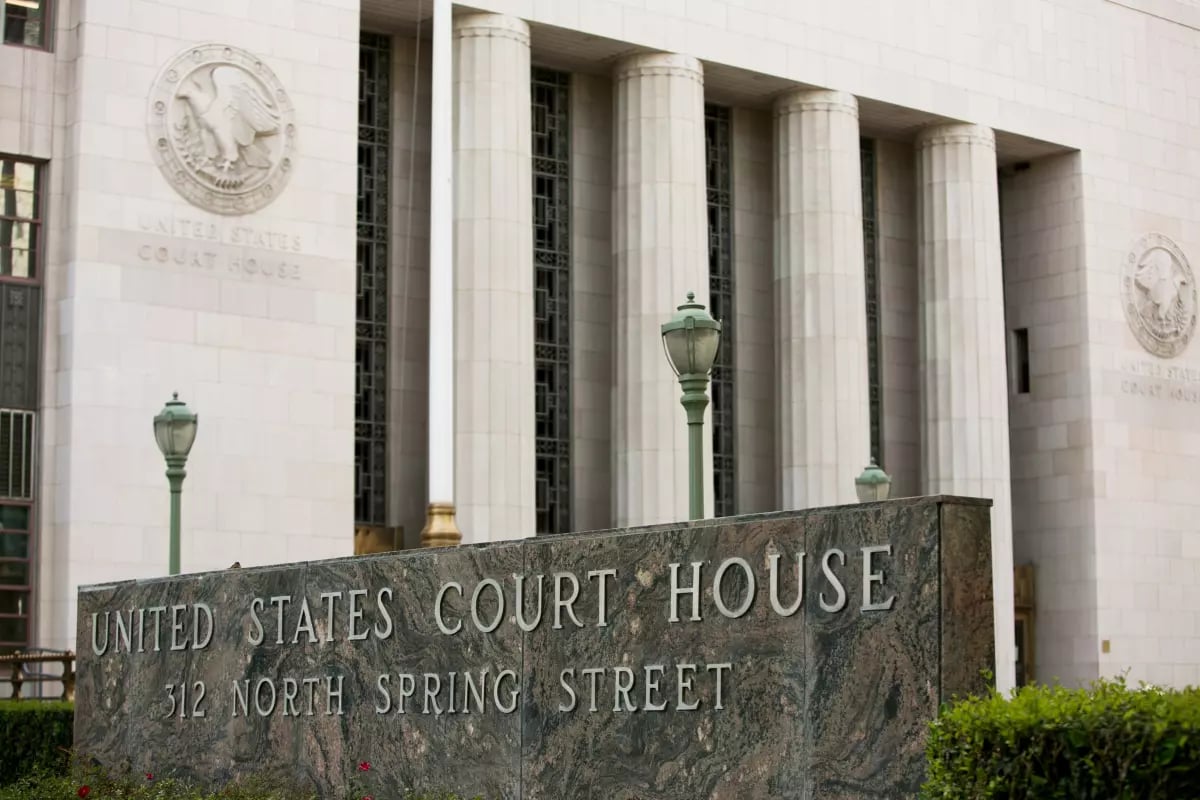
On April 8, 2026, in a Los Angeles federal courtroom, Sangha, 42, was handed a 180-month sentence for her role in distributing the ketamine that led to Perry’s fatal overdose in October 2023, prosecutors said.
She had pleaded guilty to multiple felony counts, including distribution of ketamine resulting in death — a charge that carries a severe statutory penalty, reflecting the lethal consequences embedded in the illicit drug trade.
The judge’s decision aligned with prosecutors’ argument that Sangha was not merely a peripheral player but the central node in a high-volume narcotics pipeline operating out of North Hollywood — one that catered to affluent clients while disregarding the human wreckage left behind.

It was a business model built on access, discretion — and ultimately, fatal indifference.
“These Were Not Mistakes”
In court, Sangha attempted to strike a tone of remorse.
“These were not mistakes. They were horrible decisions,” she said, acknowledging that her actions “shattered people’s lives.”
But prosecutors were unmoved.
They pointed to a pattern that extended beyond Perry — including another fatal overdose linked to Sangha’s operations in 2019 — and, crucially, her continued drug dealing even after learning of the deaths tied to her supply chain.
That detail proved decisive.
It reframed the case from one of tragic negligence to one of sustained criminal enterprise — a distinction that likely sealed the severity of her sentence.
The Anatomy of a Death
The facts, by now, are chillingly precise.
In October 2023, Sangha supplied dozens of vials of ketamine through an intermediary. Those vials eventually reached Perry through his personal assistant, who administered multiple injections in the hours leading up to the actor’s death.
Perry was found unresponsive in a hot tub.
The medical examiner ruled the cause of death as the “acute effects of ketamine,” with drowning listed as a contributing factor.
It was a death that, in retrospect, appears less like an accident and more like the inevitable endpoint of a system that failed at every level, as detailed in reporting that system that failed at every level.
A Network, Not a Lone Actor
Sangha was not alone.
Five individuals were charged in connection with Perry’s death — a constellation that included two physicians, an intermediary, and Perry’s own assistant.
The doctors, while not directly supplying the fatal dose, were accused of enabling Perry’s escalating dependency by providing ketamine outside strict medical protocols.

Sangha, by contrast, absorbed the full weight of the justice system.
Fifteen years.
The harshest sentence in the case.
The message is unmistakable: when the supply chain turns lethal, the dealer becomes the focal point of accountability — even when the ecosystem extends far beyond a single individual.
Hollywood’s Open Secret
Strip away the courtroom language, and what remains is an uncomfortable truth: Sangha’s operation thrived because demand existed at the highest levels of wealth and influence.
Prosecutors described her clientele as “high-profile,” a euphemism that barely conceals the reality of a parallel economy where access to controlled substances is often just a phone call away.
Ketamine — once a niche anesthetic — has in recent years become both a legitimate therapeutic tool and a fashionable indulgence, blurring the line between medicine and misuse.
Perry himself had been undergoing supervised ketamine therapy for depression and anxiety — a treatment increasingly embraced in psychiatric circles.
But when regulated channels failed to meet his demand, the system fractured.
He turned to the black market.
And the black market delivered.
The Family’s Grief — “Irreversible”
In court, the emotional core of the case came not from legal arguments but from the victim impact statements.
Perry’s stepmother described the family’s pain as “irreversible.”
It is a reminder that beyond the headlines and legal frameworks lies a more elemental reality: loss that cannot be undone, accountability that arrives too late.
For the family, the sentence may offer a measure of closure.
But closure is not resolution.
Addiction, Wealth, and the Illusion of Control
Perry’s life had long been a public narrative of recovery and relapse — a cycle he documented with brutal honesty in his memoir.
He was not naïve about addiction.
He understood its mechanics, its traps, its relentless pull.
And yet, even with resources, medical care, and self-awareness, he could not escape its gravitational force.
That paradox — that wealth does not inoculate against addiction — sits at the heart of this case.
If anything, wealth can amplify risk.
It enables access.
It lowers barriers.
It creates a false sense of control in environments where control is, by definition, fragile.
The Legal Precedent
The sentencing of Sangha may signal a shift in how the US justice system approaches overdose deaths linked to drug distribution networks.
Historically, such cases have been difficult to prosecute at the highest levels of severity, often collapsing into lesser charges or plea deals.
Dealers who supply fatal doses, even indirectly, can face sentences comparable to violent crimes.
It is a legal doctrine that blurs the line between distribution and causation — and one that may reshape future prosecutions in an era defined by overdose epidemics.
A System Under Indictment
And yet, focusing solely on Sangha risks oversimplifying the narrative.
Because this is not just a story about one dealer.
It is a story about a system.
A system where:
- Doctors operate in gray zones between treatment and enablement
- Assistants become conduits for substances they do not control
- Wealth insulates individuals from early consequences
- And the black market fills every gap left by regulation
Sangha did not create that system.
She exploited it.
Profitably.
Relentlessly.
Until it collapsed under the weight of a single, irreversible death.
The Final Reckoning
In the end, the image that remains is stark.
A once-celebrated actor, alone in a hot tub.
A network of suppliers, intermediaries, and enablers.
And a courtroom, years later, attempting to assign responsibility to a tragedy that was, in many ways, systemic.
Sangha will spend the next decade and a half in federal prison.
Perry is gone.
Hollywood, meanwhile, moves on — absorbing the scandal, recalibrating its narratives, and continuing to operate within the same structures that made this outcome possible.
The question is not whether justice has been served.
The sentence suggests that, in a narrow legal sense, it has.
The real question is whether anything has changed.
Because if the demand persists — and history suggests it will — the pipeline will rebuild itself.
Different names.
Same system.
Same risks.
And perhaps, inevitably, another headline waiting to be written.